• You have no items in your shopping cart.

Choosing the Right Casters for Your Carts and Dollies

OEM Carts web

Selecting the right casters for your OEM carts and dollies is more than just a detail—it's a vital decision that impacts your equipment's performance, longevity, and safety. With the wide variety of options available, from materials and sizes to durabilities and mobility features, choosing the perfect casters can be overwhelming. In this post, we'll guide you through the key factors to consider when selecting casters, helping you make informed decisions that will keep your operations running smoothly and efficiently.

OEM Carts web

1. Understand Your Application Needs

Before selecting casters for your carts and dollies, there you should consider. It's essential to thoroughly understand the specific needs of your application so you can ensure that your casters perform reliably. Consider factors such as the surface type the casters will roll on, the amount of weight they need to support, and whether they will be exposed to certain environmental conditions or harsh substances.

Load Capacity

It's essential to accurately assess the total weight your carts and dollies will need to handle to ensure that each caster is rated to handle its share of the load. Overloading casters can lead to a range of issues, including increased rolling resistance, difficulty in maneuvering, and premature failure. This not only risks damaging your equipment but also poses safety hazards for operators. Select casters with an appropriate load capacity to ensure greater performance, a longer lifespan, and increased safety in your material handling processes.

Weight Icon

Flooring Conditions

Consider the type of flooring your casters will be used on, such as concrete, tile, or carpet, and evaluate its condition, whether it's smooth, rough, or uneven. Hard floors like concrete or tile may require casters with softer tread materials, such as rubber or polyurethane, to reduce noise and prevent damage to the floor. On the other hand, rough or uneven surfaces might necessitate casters with larger wheel diameters and shock-absorbing capabilities, like spring-loaded casters, to reduce vibration. By carefully matching the caster to the flooring type and condition, you can enhance mobility, while protecting your flooring.

Floor Tile Graphic

Environment

Think about the environment in which the equipment will be used. For example, wet or corrosive environments, such as food processing facilities, outdoor areas, or chemical plants, require casters made from materials that resist rust and corrosion, such as stainless steel or zinc-plated casters. Casters with sealed bearings can also prevent water or corrosive substances from penetrating and damaging the internal components. In contrast, dry and clean environments, like indoor warehouses or office spaces, may not require such specialized materials, allowing for a broader range of options. However, other factors, such as extreme temperatures or the presence of debris, should be considered. Selecting casters designed to withstand the specific environmental conditions ensures reliability, reduces maintenance needs, and extends the lifespan of your equipment, ultimately leading to more streamlined operations.

Spill Icon

2. Caster Rig Types

The caster rig, or bracket, is the framework that holds the wheel and attaches it to the equipment. The design and functionality of the caster rig determine how the caster moves, whether it swivels or remains fixed, and how it performs under various conditions. By familiarizing yourself with the primary rig types—such as rigid, swivel, and specialty rigs—you can make informed decisions that provide the perfect balance of mobility, stability, and durability for your specific needs. Here are some common rig types used for material handling carts and dollies.

Rigid Casters

Rigid Fork

Rigid casters are mounted on a fixed bracket, limiting the wheel to single-directional movement. These provide a fixed direction and are ideal for straight-line movement. Unlike swivel casters, rigid casters do not rotate, but they make up for their reduced maneuverability with increased stability and control. Rigid casters are best suited for applications requiring the movement of heavy loads in a single direction, like dollies, heavy-duty platform trucks, pallet jacks, conveyor carts, and tool carts.

Swivel Casters

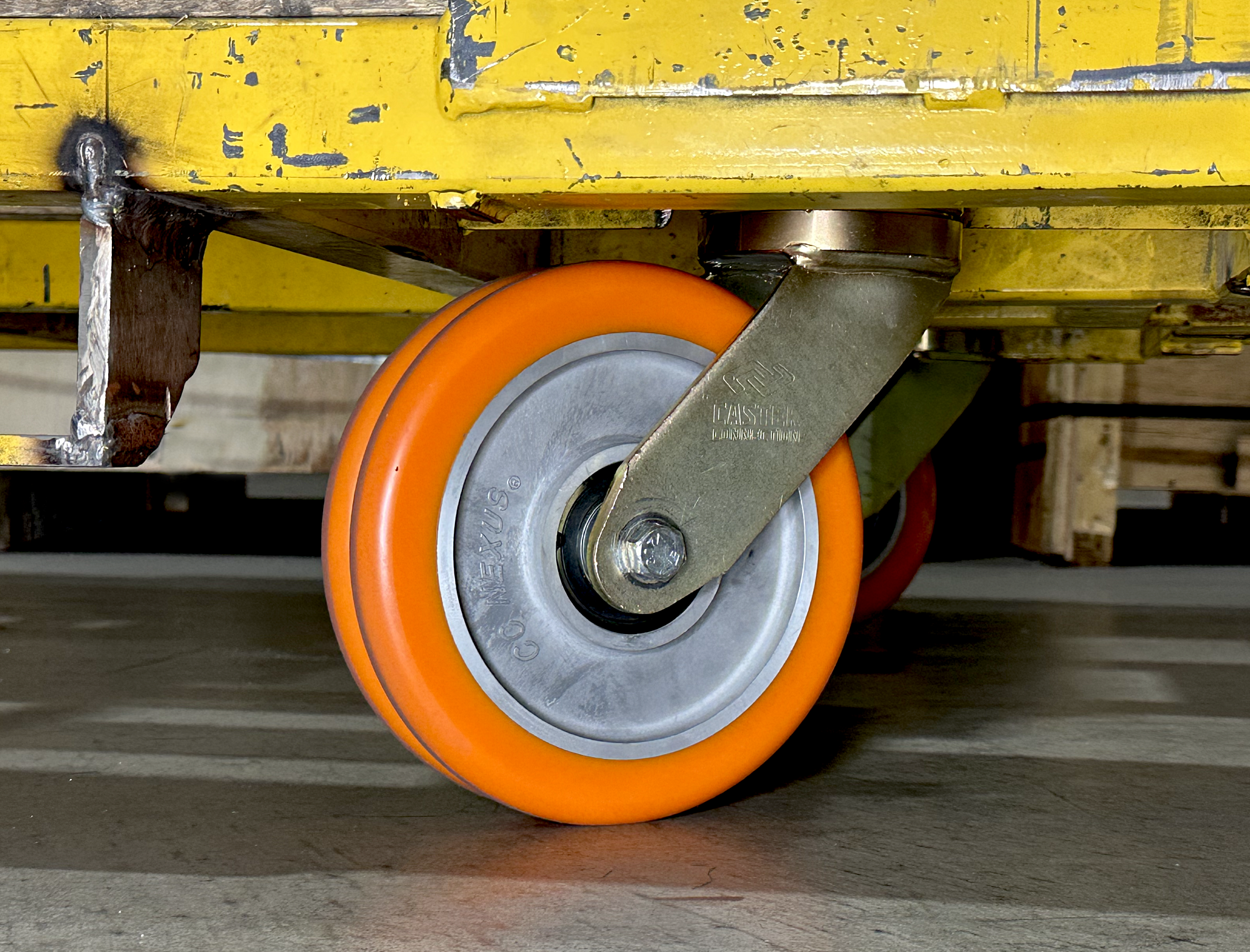
Ergonomic CC Nexus Caster on Cart

Swivel casters are mounted on a rotating bracket, allowing the wheel to turn in any direction. Because swivel casters can rotate 360 degrees, they are ideal for applications requiring tight turns or frequent changes in direction, like platform carts, utility carts, and order picking carts. Swivel casters equipped with locks allow for greater flexibility, providing the option to fix them in place, as needed.

Specialty Casters

Dual

Specialty caster rigs are designed for specific applications that require unique features beyond the standard swivel or rigid caster. These rigs are engineered to meet particular operational demands, offering enhanced functionality, safety, or performance in challenging environments. Here are a few common types of specialty rigs:

  • Spring-Loaded Rigs: These rigs incorporate a built-in spring mechanism that absorbs shock and reduces vibration when moving over uneven surfaces or rough terrain. They're ideal for transporting delicate or sensitive equipment, as the spring mechanism helps protect the load from impacts and jolts.
  • Outrigger Rigs: Outrigger caster rigs are designed to enhance the stability of material handling carts and other heavy-duty equipment by extending the base outward, preventing tipping and wobbling, especially with heavy or uneven loads. These rigs are ideal for applications where stability is crucial, such as large carts or platforms that need to stay steady during movement. By distributing weight over a larger area, outrigger caster rigs ensure smoother operation and greater safety, making them a smart choice for challenging environments or uneven surfaces.
  • Dual-Wheel Rigs: Dual-wheel rigs feature two wheels mounted side by side in a single rig, providing increased load capacity and better weight distribution. These rigs also offer improved maneuverability and reduced rolling resistance, making them ideal for heavy-duty applications.

3. Material Considerations

Choosing the right caster material is crucial to ensuring optimal performance and longevity in your specific application. The material of the caster affects not only how smoothly and quietly it rolls but also how well it can handle different types of loads and withstand various environmental conditions. Whether you need to protect sensitive flooring, manage heavy-duty loads, or operate in harsh or sterile environments, understanding the properties of different caster materials will help you make the best choice. Here are some common wheel tread materials for material handling carts and dollies.

Caster Materials

Polyurethane Casters

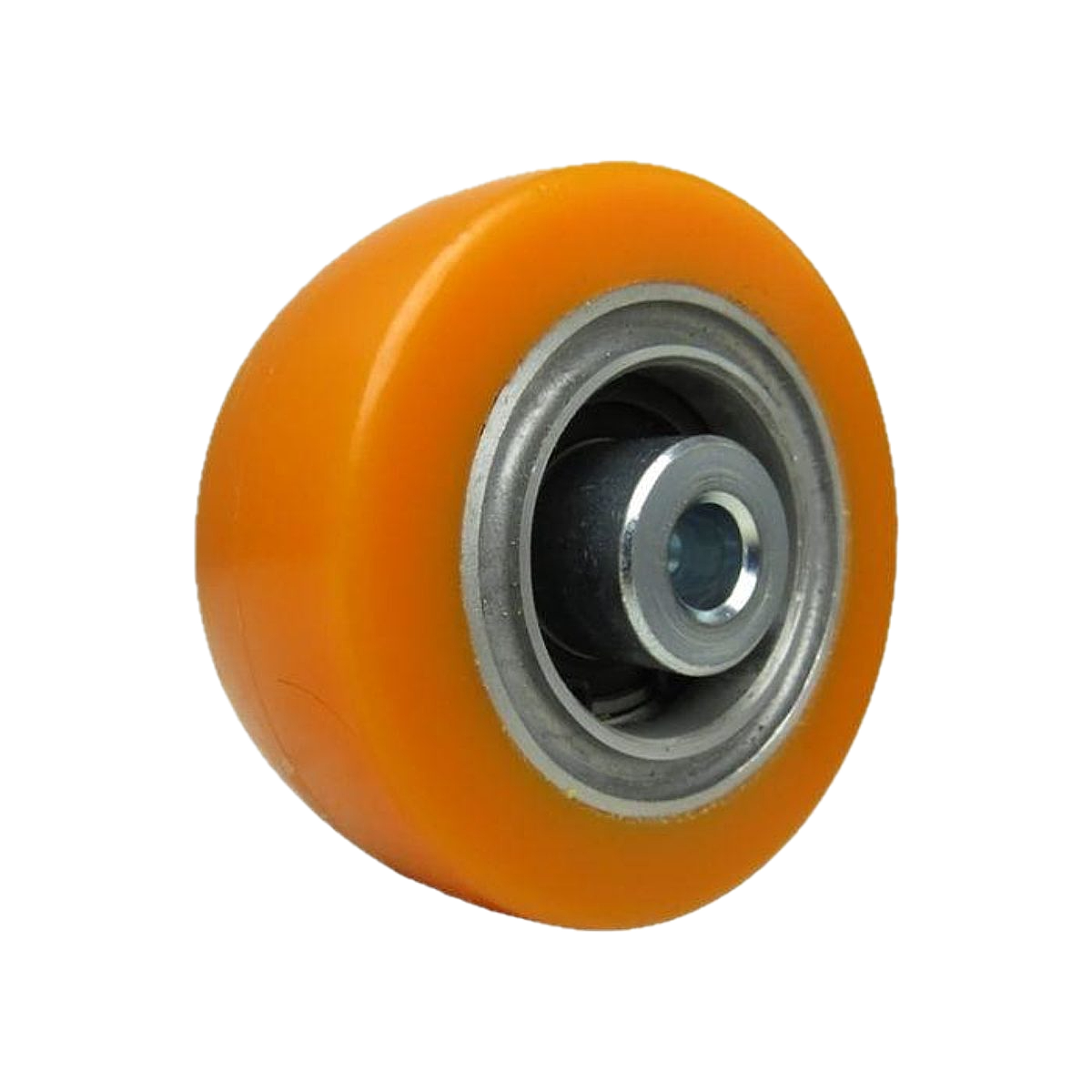
Polyurethane casters are particularly well-suited for material handling carts and dollies due to their combination of durability, noise reduction, and floor protection. In environments such as warehouses, manufacturing plants, and distribution centers, where heavy loads are frequently moved, polyurethane casters excel at absorbing the impact. These shock-absorbing properties help reduce the noise associated with transporting heavy equipment or materials, making them ideal for settings where minimizing disruption is important.

Moreover, material handling carts and dollies often traverse a variety of floor surfaces, from concrete to polished tiles. Polyurethane casters are gentle on these surfaces, preventing scratches, scuffs, and other damage, which is particularly beneficial in facilities where maintaining floor integrity is a priority. Additionally, the durability of polyurethane ensures that these casters can withstand the demands of constant use, bearing heavy loads without wearing down quickly. This makes them a reliable, long-lasting option for material handling applications where both performance and floor protection are critical.

Shop Polyurethane Casters
Capex 325

Nylon Casters

Lightweight yet robust, nylon casters, like CC Nylex, are an excellent choice for material handling carts and dollies, particularly in environments where cleanliness, chemical resistance, and durability are paramount. Their lightweight nature makes them easy to maneuver, reducing the effort required to move carts and dollies, even when carrying significant loads. This is especially beneficial in industries like food processing, pharmaceuticals, and healthcare, where frequent movement of carts is necessary.

Nylon casters are highly resistant to a wide range of chemicals, oils, and greases, making them ideal for environments where exposure to harsh substances is common. This chemical resistance ensures that the casters maintain their integrity and performance over time, even in demanding conditions. Additionally, nylon casters are non-porous, which means they do not absorb moisture or contaminants, making them easy to clean and sanitize. This characteristic is crucial in sterile environments, such as laboratories or cleanrooms, where maintaining strict hygiene standards is essential.

Shop Nylon Casters
CCNYLEX 6 1 2 C 1

Rubber Casters

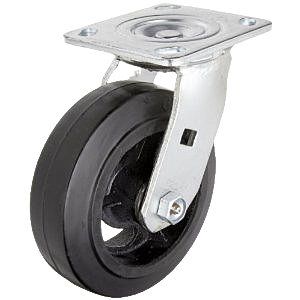
Known for their excellent cushioning, rubber casters are an excellent choice for material handling carts and dollies, especially when moving light to medium loads across hard surfaces. The natural elasticity of rubber absorbs shocks and vibrations, making these casters ideal for transporting delicate items that require gentle handling. This shock absorption also reduces noise, which is particularly advantageous in environments like offices, hospitals, and retail stores where a quiet operation is preferred.

On hard surfaces such as concrete, tile, or wood, rubber casters ensure that carts and dollies glide smoothly without causing damage to the flooring. This makes them a popular choice in settings where preserving the integrity of floors is important. Additionally, rubber casters provide good grip and traction, preventing carts from slipping, which enhances safety during transport, especially in areas where spills or slick surfaces might be a concern.

For material handling applications that involve frequent movement over hard surfaces, rubber casters deliver a combination of comfort, floor protection, and noise reduction, making them a reliable choice for operating maintaining both efficiency and a pleasant working environment.

Shop Rubber Casters
6 x 2 rubber on steel swivel

Steel Casters

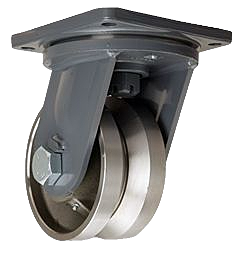
Steel casters, also referred to as metal casters, are engineered for handling extremely heavy loads and performing in harsh environments. These casters are built to withstand the rigors of demanding industrial applications, such as those found in manufacturing plants, warehouses, and construction sites. Their robust construction allows them to support significant weight, making them ideal for material handling carts and dollies that need to transport heavy machinery, large pallets, or other substantial loads.

While steel casters offer unmatched strength and durability, they do have some drawbacks to consider. Their hard, rigid design can generate significant noise when rolling over hard surfaces like concrete or metal, which might be disruptive in certain environments. Additionally, steel casters can be harsh on flooring, potentially causing scratches, dents, or other damage, particularly on softer surfaces like tile or wood.

To mitigate these issues, steel casters are often used in settings where the focus is on load capacity and durability rather than noise reduction or floor protection. For instance, they are well-suited for use with heavy-duty industrial carts or dollies in environments where the flooring is either protected or not a primary concern, such as outdoor areas, factory floors, or settings with reinforced concrete surfaces.

Shop Steel Casters
Hamilton caster s md 84fvh

4. Specific Applications and Recommendations

Choosing the right casters for your material handling carts and dollies requires a careful consideration of the specific demands of your environment. Whether you're working in heavy-duty industrial settings, quiet office spaces, or rugged outdoor terrain, the type of casters you select can significantly impact performance, safety, and efficiency. From heavy-duty industrial carts that need maximum load capacity and shock absorption to office carts where floor protection and noise control are key, and even outdoor carts that must endure rough terrain and harsh weather conditions, understanding these specific needs will guide you to the ideal caster solution for your particular application.

Heavy-Duty Industrial Carts

For industrial carts designed to transport heavy machinery or large quantities of materials, selecting the right casters is critical to ensuring safety, efficiency, and longevity. These carts often operate in demanding environments where reliability under heavy loads is essential.

  • High Load Capacity: Select casters made of steel or reinforced nylon for their strength and durability. These materials are designed to support substantial weights without compromising performance, making them ideal for demanding industrial environments.
  • Shock Absorption: Consider polyurethane casters with shock-absorbing features to protect sensitive equipment from vibrations and impacts. These casters provide a smoother ride, reducing the risk of damage to both the load and the flooring.


Office, Hospital, and Retail Carts

For carts used in environments like offices, hospitals, or retail settings, it's important to prioritize features that enhance both functionality and comfort.

  • Floor Protection: Opt for soft rubber or polyurethane casters to protect delicate flooring from scratches and scuffs. These materials are gentle on surfaces like tile, hardwood, and vinyl, helping to maintain a clean and undamaged appearance.
  • Quiet Operation: In environments where a peaceful atmosphere is essential, such as hospitals or offices, noise-reducing casters made from soft materials help minimize sound, ensuring carts move quietly and without disruption.


Outdoor Carts and Casters for Rough Terrain

When your carts and dollies are used outdoors or on uneven surfaces, it's important to choose casters that can withstand these demanding conditions.

  • Durability: Pneumatic or semi-pneumatic casters are ideal for rough terrain. Their air-filled or foam-filled tires absorb shocks, allowing carts and dollies to move smoothly over gravel, dirt, and other uneven surfaces, making them perfect for outdoor applications like construction sites or agriculture.
  • Corrosion Resistance: In outdoor or harsh environments, where exposure to moisture or chemicals is common, stainless steel casters provide excellent corrosion resistance. This ensures your carts and dollies remain durable and functional in wet or corrosive settings, such as marine facilities or outdoor storage areas.


5. Maintenance Tips

Proper maintenance of your casters is essential to extending their lifespan and ensuring the operation of your material handling carts and dollies is up to speed. Regular upkeep not only enhances performance but also prevents unexpected breakdowns that could disrupt your workflow. Whether your carts are used in industrial settings, warehouses, or other demanding environments, following these guidelines will ensure they continue to operate efficiently and safely over time.

Regular Inspection Icon

Regular Inspections

Regularly inspecting your casters is vital for keeping your material handling carts and dollies in safe, efficient working order. Check for signs of wear and tear, such as cracks, flat spots, or wobbly movement, and listen for unusual noises. If you spot any damage, replace the casters promptly to prevent further issues. Timely inspections and replacements help ensure reliable performance and extend the lifespan of your equipment.

Cleaning Icon

Cleaning

Keeping your casters clean is crucial, especially in industrial settings where dirt and debris can accumulate quickly. Regularly remove any buildup from the wheels and swivel mechanisms to reduce wear and keep the bearings in working order. Clean casters roll more easily and last longer, helping to maintain the efficiency and longevity of your material handling carts and dollies.

Lubrication Icon

Lubrication

Properly lubricating the swivel bearings is key to ensuring your casters rotate smoothly and easily. Regularly apply lubricant to prevent friction and keep the casters moving freely, especially in high-use environments. This not only enhances maneuverability but also extends the life of your casters, ensuring your material handling carts and dollies operate efficiently. To avoid continual maintenance, consider self-lubricating, maintenance-free casters, like CC Peak.

Best Casters for Carts and Dollies

CC Apex HD casters are engineered using our unique polyurethane formula, which helps to minimize decibel output, preserve flooring conditions, and reduce the need for maintenance. CC Apex HD casters are great for heavy-duty applications, with a load capacity of 2,700-3,500 lbs. per caster, depending on the wheel diameter.

8" CC Nexus Heavy Duty Rigid Caster - 4-1/2" X 6-1/4" top plate

SKU: CC-4215-800200-40-T2

  • Overall Height
    10-1/8"
    Wt. Capacity
    1,750 lbs.
    Wheel Width
    2"
    Wheel Diameter
    8"
$165.64

8" X 3" CC APEX HD KINGPINLESS SWIVEL CASTER 10-1/8 OVERALL HEIGHT

SKU: CC-6120-800300-40-T2

ALT-SKU: CCAPEXHD-830-S-KP

  • Overall Height
    10-1/8"
    Wt. Capacity
    2,700 lbs.
    Wheel Width
    3"
    Wheel Diameter
    8"
$319.80

CC Nexus casters boast a modular wheel design that allow you to customize your caster according to your needs. Strong enough to handle the demand of hauling weighty payloads, the multi-wheel design of the CC Nexus improves ergonomic performance, especially when maneuvering in tight spaces.

8" CC Nexus Heavy Duty Rigid Caster - 4-1/2" X 6-1/4" top plate

SKU: CC-4215-800200-40-T2

  • Overall Height
    10-1/8"
    Wt. Capacity
    1,750 lbs.
    Wheel Width
    2"
    Wheel Diameter
    8"
$165.64

8" CC Nexus Heavy Duty Maintenance-Free Swivel Caster with Extended Swivel Lead - 4-1/2" X 6-1/4" top plate

SKU: CC-4415-800200-40-T2

  • Overall Height
    10-1/8"
    Wt. Capacity
    1,750 lbs.
    Wheel Width
    2"
    Wheel Diameter
    8"
$259.85

Other Casters for Carts and Dollies

6" Polyurethane Swivel Caster

SKU: 6-81-220G

  • Overall Height
    7-1/2"
    Wt. Capacity
    720 lbs.
    Wheel Width
    2"
    Wheel Diameter
    6"
$38.97

6" Polyurethane on Steel Swivel Caster

SKU: 6-81-919-7

  • Overall Height
    7-1/2"
    Wt. Capacity
    800 lbs.
    Wheel Width
    1-1/2"
    Wheel Diameter
    6"
$58.52

6" Polyurethane Swivel Caster

SKU: 6-81-919

  • Overall Height
    7-1/2"
    Wt. Capacity
    600 lbs.
    Wheel Width
    1-1/2"
    Wheel Diameter
    6"
$65.32

6" Thermoplastic Rubber Swivel Caster

SKU: 6-81-220GF

  • Overall Height
    7-1/2"
    Wt. Capacity
    500 lbs.
    Wheel Width
    2"
    Wheel Diameter
    6"
$47.19

6" Phenolic Swivel Caster

SKU: 6-81-339

  • Overall Height
    7-1/2"
    Wt. Capacity
    1,200 lbs.
    Wheel Width
    2"
    Wheel Diameter
    6"
$30.20

Maximize Cart Performance with the Perfect Casters

Choosing the right casters for your carts and dollies is about enhancing the efficiency, safety, and longevity of your operations. By carefully considering factors like load capacity, flooring conditions, environment, and specific application needs, you can select casters that not only meet but exceed your expectations. The right casters will ensure that your equipment rolls smoothly, handles heavy loads with ease, and stands up to the demands of your industry.

At Caster Connection, we're here to help you make the best choice for your material handling needs. With a wide range of casters designed for various applications, we're confident we can provide the perfect solution to keep your operations moving forward.

If you need assistance, our experts are ready to guide you through the selection process. Contact us today or explore our selection of products to find the ideal casters for your carts and dollies.

Contact Our Team
Caster Connection Stacked FINAL FILES LB 72dpi 1

FAQ: Caster Configurations for Tight Aisles, Long Carts, and High-Maneuverability Equipment

What caster solutions are available for very tight warehouse aisles?

For very tight warehouse aisles, the best caster solution usually depends on the cart size, load weight, turning radius, and how often the cart needs to change direction. In most cases, swivel casters, dual-wheel casters, ergonomic casters, and carefully planned caster layouts can help carts maneuver more easily in confined spaces.

Swivel casters are useful when a cart needs to turn frequently or pivot in place. Dual-wheel casters can also be helpful because they distribute weight across two wheels while improving maneuverability under load. For carts that need to move straight down narrow aisles but still turn at the end of a route, a combination of rigid casters, swivel casters, or swivel locks may provide the best balance of control and flexibility.

The key is not simply choosing the smallest caster. Smaller wheels may reduce overall height, but they can also increase rolling resistance and make carts harder to push over uneven floors, debris, thresholds, or expansion joints. In tight aisles, the goal is to choose a caster setup that improves maneuverability without sacrificing load capacity, ergonomics, or stability.

How do I decide between rigid and swivel casters for a specific cart design?

Rigid casters are best when the cart needs to travel in a straight line with strong directional control. Swivel casters are best when the cart needs to turn, pivot, or move through tight spaces.

For many carts and dollies, the best solution is a combination of both. For example, two rigid casters and two swivel casters can help a cart track more predictably while still allowing it to turn. Four swivel casters can make a cart highly maneuverable, but it may be harder to control over longer straight-line travel. Four rigid casters can improve tracking but may make turning difficult.

When deciding between rigid and swivel casters, consider:

- Cart length and width

- Total loaded weight

- Aisle width

- Turning radius

- Travel distance

- Floor conditions

- Whether the cart is pushed, pulled, or towed

- Whether the cart needs to dock precisely

If the cart needs both maneuverability and directional control, swivel locks may be a smart option. They allow a swivel caster to act more like a rigid caster when straight-line travel is needed.

How do I design a caster setup for both stability and maneuverability?

To design a caster setup that balances stability and maneuverability, start by looking at how the cart moves during a normal workday. A cart that travels long distances in a straight line needs a different setup than a cart that pivots frequently in a small work cell.

Stability usually comes from proper load distribution, the right wheel size, a wide enough cart base, and a caster configuration that prevents tipping or drifting. Maneuverability comes from swivel action, wheel material, rolling resistance, and caster placement.

Common configurations include:

- Two rigid casters and two swivel casters for better tracking and controlled turning

- Four swivel casters for maximum maneuverability in tight areas

- Swivel casters with swivel locks for flexible movement and improved straight-line control

- Dual-wheel casters for heavy loads that still need easier turning

- Outrigger-style caster setups for added stability on large or top-heavy carts

The best setup depends on whether the cart is long, narrow, heavy, top-heavy, frequently turned, or used in tight aisles. If the cart feels unstable or difficult to control, the issue may be the full caster layout rather than the wheel material alone.

How do I improve maneuverability of long or awkward carts in narrow aisles?

Long or awkward carts can be difficult to maneuver because they often resist turning, drift out of alignment, or require too much force to reposition. In narrow aisles, those issues become even more noticeable.

To improve maneuverability, start by reviewing the caster configuration. A cart with only rigid casters may track well but turn poorly. A cart with four swivel casters may turn easily but drift during straight travel. Many long carts perform better with a combination of rigid casters, swivel casters, or swivel locks.

Other ways to improve maneuverability include:

- Using larger diameter wheels to reduce rolling resistance

- Choosing polyurethane wheels for smoother rolling and floor protection

- Adding swivel locks for better directional control

- Using ergonomic casters to reduce push/pull force

- Reviewing load placement so weight is distributed evenly

- Checking whether the cart frame is flexing or out of square

For long carts, the right caster placement is just as important as the caster itself. Even a high-quality caster can underperform if the cart layout creates excessive scrub, drag, or turning resistance.

What caster configurations work best for long, narrow carts?

Long, narrow carts usually need a caster configuration that improves tracking while still allowing the cart to turn safely. The best setup depends on whether the cart is moved manually, pulled by a tugger, used in narrow aisles, or docked into fixtures.

Common options include:

- Two rigid casters and two swivel casters for predictable movement and easier steering

- Four swivel casters with two swivel locks for flexible movement and straight-line control

- A diamond caster pattern for certain carts that need to pivot more easily

- Kingpinless swivel casters for demanding applications with heavy loads or frequent turning

- Dual-wheel casters when higher load capacity and maneuverability are both needed

For long carts, avoid choosing a caster configuration based only on load capacity. The cart also needs to track well, turn safely, and remain stable when loaded. If the cart is hard to steer, fishtails, or requires constant correction, the caster layout may need to be redesigned.

What casters are suitable for compact, high-maneuverability carts?

Compact, high-maneuverability carts often benefit from swivel casters, dual-wheel casters, or ergonomic polyurethane casters. These options help carts turn in tight spaces, pivot near workstations, and move through crowded warehouse or production areas.

For lighter compact carts, smaller swivel casters may be appropriate. For heavier carts, larger diameter wheels or dual-wheel casters can improve rolling performance while still supporting tight turns. Polyurethane wheels are often a strong choice because they balance durability, floor protection, and smoother movement.

If the cart needs to stay in place after being moved, brakes or total-lock casters may also be important. If the cart needs to move straight over longer distances, swivel locks can help improve control without sacrificing maneuverability when unlocked.

The best caster for a compact cart should make the cart easy to start, easy to turn, easy to stop, and stable when loaded.

What is the best caster layout for carts that need to turn in place?

For carts that need to turn in place, four swivel casters are often the most maneuverable configuration. This allows the cart to rotate, pivot, and move laterally more easily than a setup with rigid casters.

However, four swivel casters are not always the best choice for every application. While they improve turning, they can make the cart harder to control during long straight-line travel. The cart may drift, fishtail, or require more operator correction.

If the cart needs to both pivot tightly and travel straight, consider using swivel locks on two of the swivel casters. This gives operators the flexibility to lock the casters for straight movement and unlock them when tight maneuvering is needed.

Are dual-wheel casters a good option for tight spaces?

Yes, dual-wheel casters can be a good option for tight spaces, especially when the cart carries a heavier load but still needs to turn easily. Because the load is spread across two wheels, dual-wheel casters can reduce the effort needed to swivel under load.

Dual-wheel casters can also help reduce overall caster height while maintaining higher load capacity. This makes them useful for carts where stability, clearance, or compact design matters.

They are commonly considered for heavy carts, mobile workstations, equipment dollies, and carts that need improved maneuverability in tight aisles or production areas.

How does wheel diameter affect maneuverability in narrow aisles?

Wheel diameter affects how easily a cart starts, rolls, and moves over floor imperfections. Larger wheels usually roll more easily and require less effort over long distances, rough floors, thresholds, or debris. Smaller wheels can reduce overall cart height and may help with compact designs, but they may increase rolling resistance.

In narrow aisles, it can be tempting to choose smaller casters to save space. However, the wheel still needs to support the load and roll efficiently. If the wheel is too small for the application, operators may experience higher push force, more vibration, and more difficulty moving the cart.

The best wheel diameter depends on load weight, floor condition, clearance requirements, and how often the cart needs to turn or travel long distances.

When should I use swivel locks on warehouse carts and dollies?

Swivel locks are useful when a cart needs both maneuverability and straight-line control. They allow a swivel caster to be locked into a fixed direction, making the cart behave more like it has rigid casters.

Swivel locks are especially helpful for:

- Long carts

- Narrow carts

- Carts used in tight aisles

- Carts that travel long distances

- Carts that need to dock into a specific location

- Carts that are sometimes pushed manually and sometimes pulled or guided

When unlocked, the cart can turn more easily. When locked, it can track more predictably. This flexibility can improve control, reduce operator frustration, and help prevent drift during straight movement.

Get Expert Guidance On Caster Selection

Choosing the right caster for hyperscale infrastructure is complex—but critical. The wrong mobility solution can lead to inefficiencies, equipment risk, and costly delays. The right solution improves how your entire operation moves.

A properly engineered mobility system can:

  • Reduce downtime and installation delays
  • Improve equipment handling and positioning accuracy
  • Enhance worker safety and reduce push force
  • Support scalable, repeatable workflows

Caster Connection’s Caster Needs Evaluation is designed to take the guesswork out of this process.

Through this evaluation, our mobility engineers will assess:

  • Your equipment type and application
  • Total and dynamic load requirements
  • Floor conditions and environmental factors
  • ESD and safety considerations
  • Movement patterns and workflow needs

Based on your inputs, we provide a custom, application-specific mobility recommendation—not a generic product suggestion.

Caster Connection Stacked FINAL FILES LB 72dpi