FAQ: Choosing Casters for OEM Carts, Kitting Carts, Conveyor-Side Carts, and High-Mix Manufacturing
How do I select casters for use in packaging and kitting areas?
Casters for packaging and kitting areas should be easy to maneuver, quiet enough for operator comfort, and durable enough for frequent movement throughout the day. These carts are often used near workstations, conveyors, packing lines, inventory areas, and fulfillment zones, so they need to move smoothly without slowing down the team.
Start by evaluating the loaded cart weight, floor surface, aisle width, travel distance, and how often the cart is repositioned. If employees move the carts manually, ergonomic performance matters. Low rolling resistance, smooth swivel action, and the right wheel diameter can help reduce push/pull force and make carts easier to control.
Polyurethane wheels are often a strong fit for packaging and kitting areas because they offer a good balance of floor protection, durability, and smooth rolling performance. If the carts need to stay in place during picking, packing, or assembly, consider brakes, total-lock casters, or floor locks. If the cart must move in and out of tight spaces, swivel casters or swivel locks may help improve maneuverability and control.
How do I pick casters for carts that interface with conveyors and lifts?
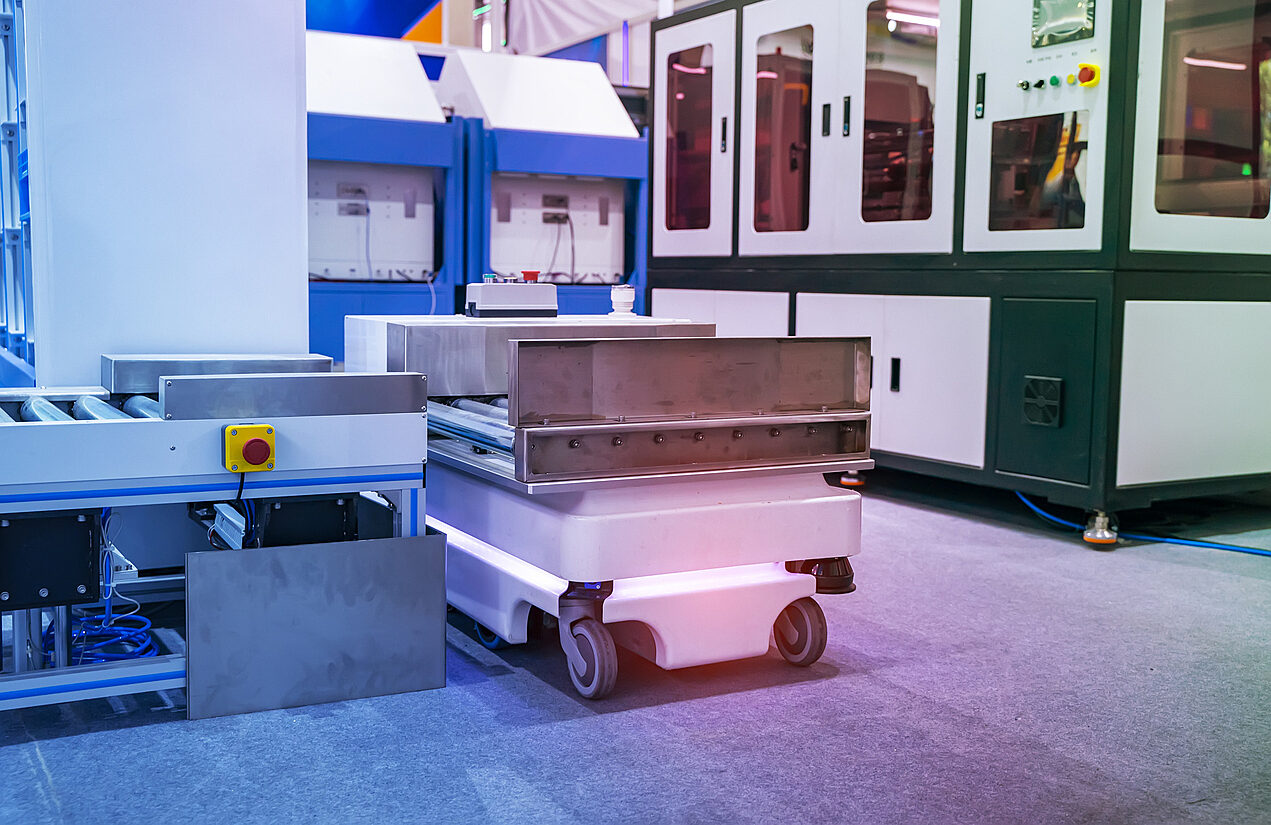
Carts that interface with conveyors and lifts need casters that support precise positioning, stable loading, and predictable movement. These applications are different from standard cart movement because the cart may need to align with conveyor height, dock into a specific location, or remain stable while parts or packages are transferred.
Important factors include overall caster height, load capacity, wheel material, brake or locking requirements, and whether the cart needs to dock repeatedly in the same position. If the cart is even slightly too tall, too low, unstable, or hard to control, it can create problems at the conveyor or lift interface.
For these applications, consider casters that provide smooth rolling, strong load support, and secure positioning. Swivel locks can help carts track straight into a conveyor or lift area, while brakes or floor locks can help hold the cart in place during transfer. If the cart carries sensitive or fragile items, wheel material should also be selected to reduce vibration and shock.
The goal is to choose a caster system that helps the cart move easily, align accurately, and stay stable while interacting with the conveyor or lift.
How do I specify casters for high-mix, low-volume manufacturing flows?
High-mix, low-volume manufacturing environments require flexibility. Carts may carry different parts, serve multiple work cells, move through changing routes, and support frequent changeovers. That means the caster setup needs to be versatile, durable, and easy for operators to use.
When specifying casters for high-mix production, start by identifying the heaviest expected load, the most common travel routes, the tightest turning areas, and the most demanding floor conditions. The caster should be selected for the toughest realistic use case, not just the average load.
Ergonomic polyurethane casters are often a strong choice because they help carts roll smoothly while protecting floors and reducing operator strain. Swivel casters can improve maneuverability in tight work cells, while rigid casters or swivel locks can help carts track better over longer routes. If carts are frequently reconfigured or moved between production areas, standardizing caster specs across similar cart families can simplify maintenance and replacement.
In high-mix environments, the best caster is usually the one that supports flexibility without creating unnecessary push force, downtime, or handling problems.
What caster features matter most for OEM cart design?
For OEM cart design, the most important caster features are load capacity, wheel material, wheel diameter, mounting type, overall height, swivel or rigid configuration, bearing type, brake options, and environmental compatibility.
OEM carts are often designed for repeatable use in specific workflows, so the caster should be selected early in the design process rather than added at the end. The wrong caster can affect cart height, stability, maneuverability, ergonomics, and long-term reliability.
Key questions to answer include:
- How much will the cart weigh when fully loaded?
- Will the cart be pushed manually, towed, or integrated with automation?
- What floor surfaces will it travel across?
- Does the cart need to dock, lock, brake, or align with equipment?
- Will the cart carry fragile, sensitive, or high-value components?
- How often will it move during a normal shift?
The more clearly the application is defined, the easier it is to choose a caster that supports the cart’s purpose.
What casters work best for line-side material handling carts?
Line-side material handling carts need casters that are easy to position, safe to control, and durable enough for repeated movement near production areas. These carts may carry parts, packaging, tools, components, or work-in-progress materials, so reliability and maneuverability are both important.
For line-side use, ergonomic casters can help reduce operator strain during frequent movement. Polyurethane wheels are often a strong fit because they roll smoothly, protect floors, and reduce noise compared with harder wheel materials. If the cart needs to remain stationary during picking, assembly, or loading, brakes or total-lock casters may be useful.
If carts move between storage, staging, and production areas, consider a caster configuration that balances turning with tracking. Four swivel casters may work well in tight work cells, while two rigid and two swivel casters may be better for longer straight-line travel.
How do I choose casters for carts used in lean manufacturing or 5S systems?
Carts used in lean manufacturing or 5S systems should support fast, organized, repeatable movement. The goal is to make materials, tools, and work-in-progress items easier to access without creating clutter, wasted motion, or ergonomic strain.
Choose casters based on the cart’s load, route, frequency of use, and workstation layout. In many lean environments, carts are moved frequently over short distances, so smooth swiveling, low starting force, and predictable control are important. Ergonomic polyurethane casters can help operators move carts more easily while protecting floors and reducing noise.
If carts must return to a specific location, consider brakes, floor locks, or visual standardization so carts stay where they belong. If several carts perform similar jobs, standardizing caster specifications can also simplify maintenance and make replacements easier.
What caster setup is best for mobile workstations and production carts?
Mobile workstations and production carts need a caster setup that balances maneuverability, stability, and secure positioning. These carts may be moved around a work cell, parked during tasks, and repositioned several times a day.
For maximum maneuverability, four swivel casters can make the cart easy to turn in tight spaces. For better straight-line tracking, two rigid casters and two swivel casters may be a better choice. If the cart needs both options, swivel locks can allow operators to switch between easier turning and better directional control.
Wheel material should match the floor and load. Polyurethane wheels are often a strong choice for production environments because they provide smooth rolling, durability, and floor protection. If operators use the cart as a workstation, brakes, total-lock casters, or floor locks can help keep the cart stable while work is performed.
How do I choose casters for carts that carry fragile or high-value parts?
Carts carrying fragile or high-value parts should use casters that reduce vibration, improve control, and protect the load during movement. This is especially important for electronics, glass, finished components, painted parts, precision assemblies, medical products, or sensitive equipment.
Look for wheel materials that provide smooth rolling and vibration reduction. Polyurethane wheels are often a strong fit because they help cushion movement while maintaining durability and floor protection. Larger wheel diameters may also help carts roll more smoothly over seams, thresholds, and minor floor imperfections.
The caster configuration should make the cart easy to control. Sudden starts, rough turns, caster flutter, or poor tracking can increase the risk of product damage. If the cart needs to stop at a workstation or dock into a fixture, brakes, swivel locks, or floor locks may help improve stability.
When should OEMs use custom caster solutions instead of standard casters?
OEMs should consider custom caster solutions when standard casters do not fully match the cart’s load, movement, mounting, height, environmental, or performance requirements. This is common when the cart has unique geometry, tight clearance, heavy loads, automation interfaces, sensitive cargo, or frequent movement cycles.
Signs that a standard caster may not be enough include repeated failures, difficult maneuvering, high push force, vibration complaints, floor damage, instability, or trouble docking the cart into equipment.
A custom caster solution can help optimize wheel material, diameter, mounting, bearing type, braking, swivel performance, and overall cart behavior. For OEMs producing carts at scale, improving the caster specification can also reduce warranty issues, improve user experience, and create a stronger final product.
How can caster standardization help OEM cart programs?
Caster standardization can help OEM cart programs reduce complexity, improve consistency, and simplify maintenance. When similar carts use the same caster families, it becomes easier to manage replacement parts, train maintenance teams, and predict performance across multiple cart models.
Standardization is especially useful when OEMs build carts for multiple plants, departments, or customers. Instead of selecting a different caster for every cart variation, the OEM can group carts by load range, floor type, movement style, and application.
This approach can reduce SKU complexity while still allowing the right caster to be used for the right job. The goal is not to use one caster everywhere, but to create a smart caster standard that supports performance, replacement efficiency, and long-term reliability.
What questions should I ask before adding casters to a new OEM cart design?
Before adding casters to a new OEM cart design, ask questions that define the full application:
- What is the maximum loaded weight?
- How often will the cart move?
- Will it be pushed manually, towed, or used with automation?
- What floor surfaces will it travel across?
- Does it need to turn tightly or travel long distances?
- Will it interface with conveyors, lifts, racks, or fixtures?
- Does it need brakes, swivel locks, floor locks, or leveling capability?
- Will it carry fragile or high-value parts?
- What overall height or clearance limits must be maintained?
- Will the cart be used in wet, chemical, ESD, cleanroom, or high-temperature environments?
Answering these questions early helps prevent problems with stability, ergonomics, floor protection, load capacity, and long-term durability.