• You have no items in your shopping cart.

Casters for Towlines Education

Casters for towlines 1024x570

Your Towline Depends on the Right Casters

Towlines, also known as tugger cart systems, are a series of carts pulled by a motorized vehicle to move materials efficiently throughout a facility. They play a critical role in manufacturing and distribution operations, keeping production flowing and reducing reliance on forklifts.

At the center of every towline system are the carts, and at the base of those carts are the casters that carry the load and keep everything moving. When casters are not properly matched to the application, it can lead to increased maintenance, downtime, and operational inefficiencies.

Because of this, it is essential to select casters that are built to handle the specific demands of towline applications. When evaluating options, there are four key factors to consider.

Ready to Buy? Shop Casters for Towlines →
Your Towline Depends on the Right Casters

Choosing the Right Towline Caster: Important Factors to Consider

1. Load Rating ("The Rule of 3") in Towlines

Our clients need to know exactly how much weight each caster can support. Caster load ratings are based on a speed of 3 mph, or walking speed.

However, speed plays a major role in towline applications. As speed increases, the load capacity of your casters decreases due to heat buildup and increased revolutions per minute.

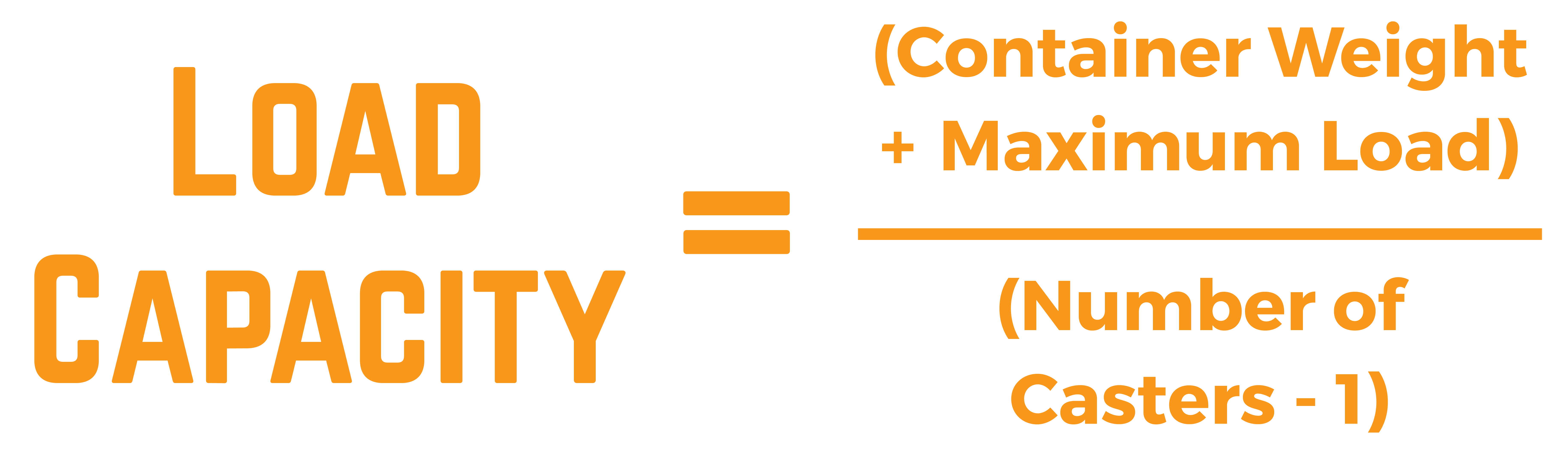
In addition, carts may only be supported by three wheels at times when traveling over uneven surfaces. For these reasons, we use the “rule of 3” to calculate load capacity. This rule accounts for situations where load is not evenly distributed, such as uneven floors, inclines, or transitions, by building in a safety factor.

The rule of 3 means calculating load capacity based on three casters instead of four.

Formula:
C = (L + W) ÷ 3

C = Required load capacity per caster
L = Maximum cart load
W = Cart weight

For example, a 300-pound cart carrying an 1,800-pound load has a total weight of 2,100 pounds. Divided by three, each caster must be rated for at least 700 pounds.

700 = (1,800 + 300) ÷ 3

2. Speed in Towlines

SPEED'S EFFECT ON LOAD

Speed is a critical factor when determining load rating. Once you calculate the initial load using the rule of 3, you must adjust for speed to prevent tread failure.

Using the previous example, if the cart travels at 5 mph with an ANSI duty cycle of 2 minutes on and 4 minutes off, the polyurethane tread loses approximately 20% of its rated capacity. To compensate for this loss in load capacity at higher speeds, the required caster load rating increases from 700 pounds to 840 pounds.

Failing to account for speed or incorrectly dividing by four instead of three can lead to premature failure and unsafe conditions.

SPEED AND DUTY CYCLE

Towline casters must be able to handle higher speeds than standard manual applications. A caster that performs well ergonomically does not necessarily perform well in a towline.

Duty cycle is another important factor that is often overlooked. As casters move, heat builds up in the wheel tread, core, and rig. This heat is released most rapidly after motion stops. The caster must remain at rest long enough to cool before the next cycle begins.

Stronger bearings and aluminum cores help dissipate heat more effectively, reducing cooldown time and improving overall performance.

Speed and duty cycle must both be considered when selecting towline casters to prevent failure and ensure long-term reliability.

3. Tread and Bearing Type for Towlines

TREAD

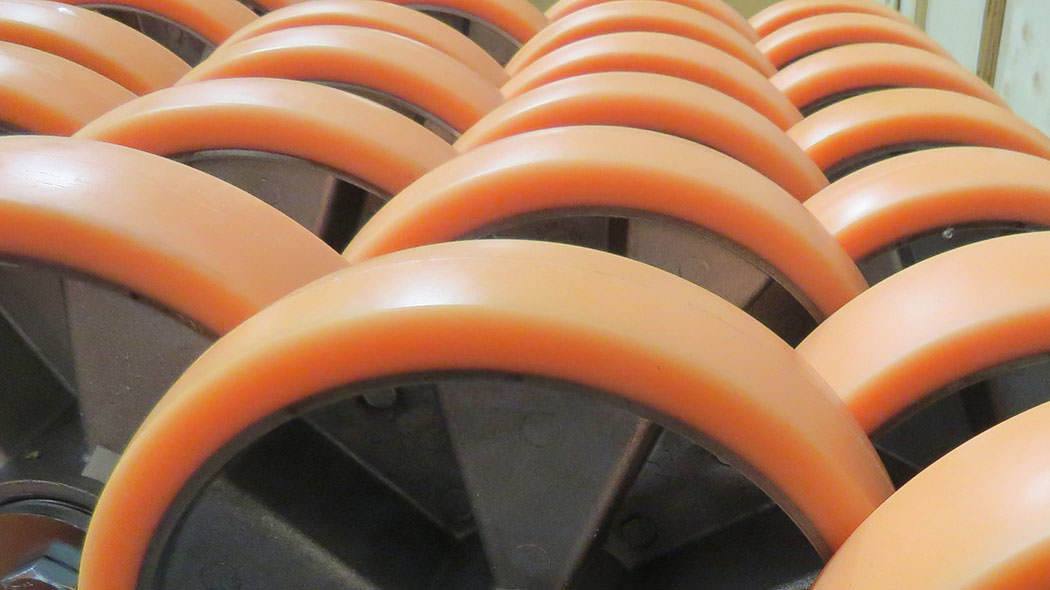
Because towlines involve heavy loads and higher speeds, tread selection is critical. For most towline applications, we recommend polyurethane treads in the Shore A durometer range because they provide the compression needed for traction.

Polyurethane offers several advantages:

  • Strong grip
  • Shock absorption
  • Tear resistance
  • Debris rejection
Hard wheels in the Shore D range, such as nylon, steel, or phenolic, can create issues in towline applications, especially at higher speeds or in applications requiring high traction. These materials tend to have lower grip, generate more noise, and can increase the risk of sliding or floor damage.

This becomes especially important during turns, where reduced traction can cause trailing carts to slide, potentially leading to equipment damage or safety concerns. In lower-speed applications involving very heavy loads, harder wheels like CC Dynamo 70D, can be appropriate when traction is not the primary concern.

BEARINGS

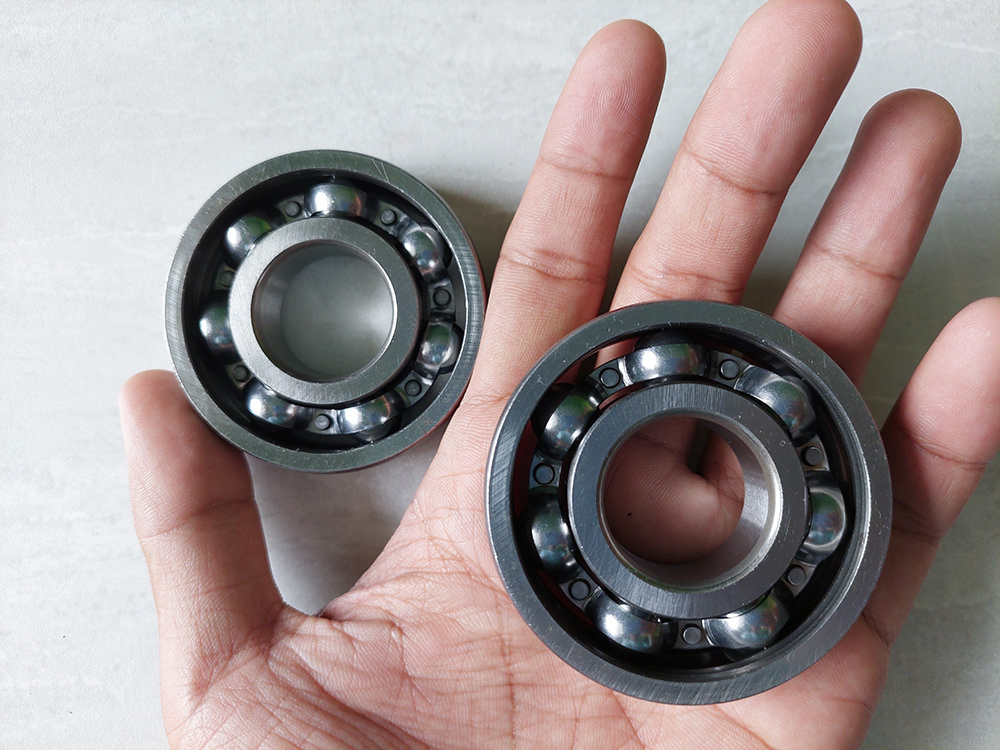
Bearings are just as important as tread selection. Many casters use caged roller bearings, which are not suitable for towline applications due to constant speed and high rotation.

We use precision ball bearings, which are larger and more durable. These bearings perform better under the continuous motion and stress found in towline systems.

Selecting the correct tread and bearing combination is essential to avoid long-term issues and failure.

4. Swivel Fork and Raceway Type

SWIVEL FORK

When designing carts for towlines, selecting the correct swivel fork is important for maintaining stability, ensuring proper tracking, and preventing issues like caster flutter at higher speeds. An extended lead is recommended to keep the caster aligned and stable during movement.

Lead refers to the horizontal distance between the center of the swivel raceway and the center of the wheel's hub. Increasing this distance helps the caster follow the direction of travel more consistently, improving stability in towline applications.

Flutter occurs when a wheel rapidly oscillates back and forth during movement. By increasing the lead, the caster is better able to trail properly and avoid this issue.

CASTER RACEWAY

The raceway design determines whether a caster can withstand the forces of a towline.

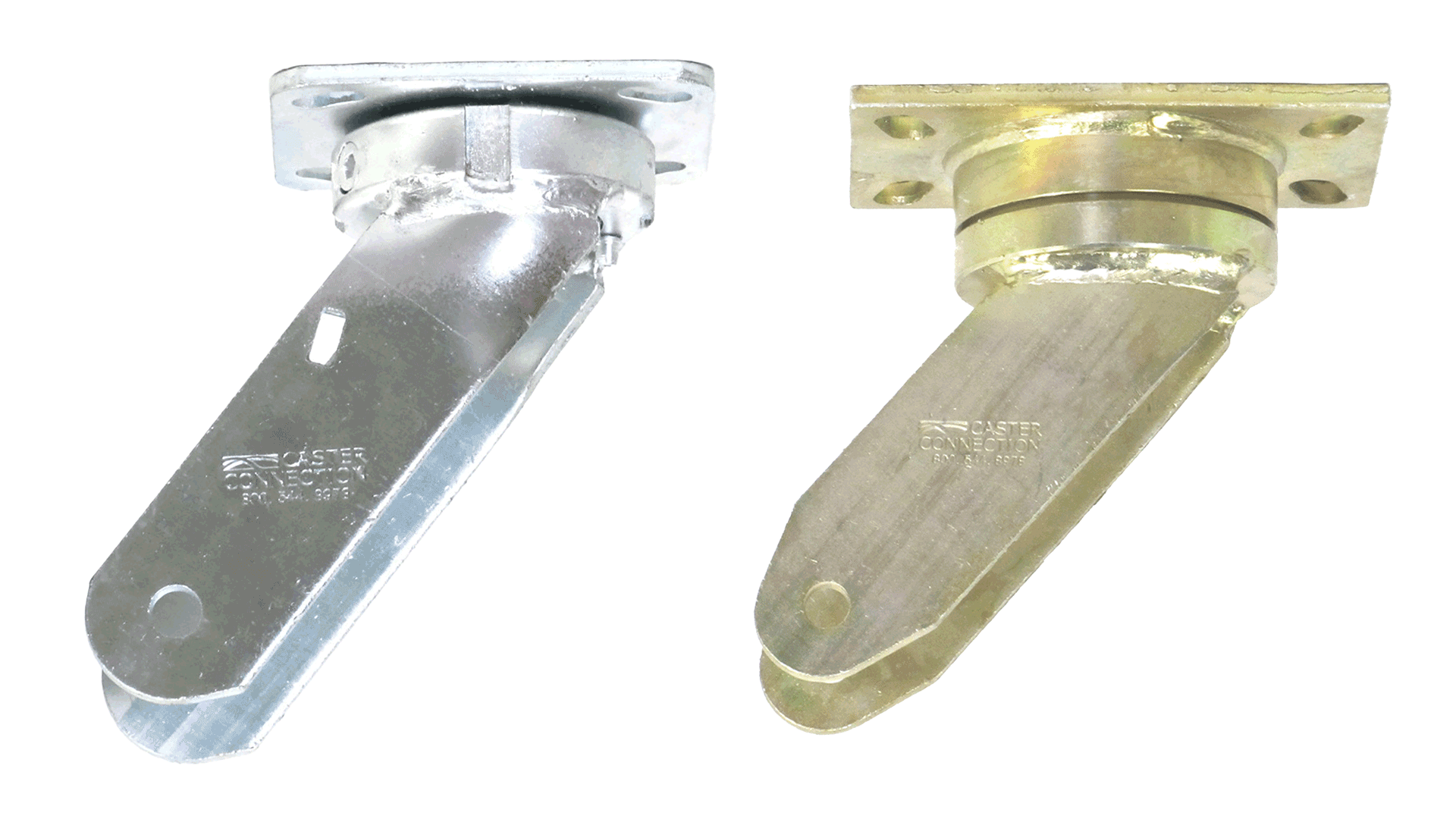
Standard kingpin rigs are not suitable for towline applications. The kingpin and ball bearings can stretch or fail under constant motion and stress, leading to raceway failure. This can result in equipment damage, downtime, and potential injury.

To eliminate this failure point, we recommend:

  • Kingpinless raceways
  • Forged kingpin raceways

These designs are built to handle the demands of towline applications.

While standard kingpin casters may have a lower upfront cost, they often result in higher long-term costs due to maintenance, repairs, and downtime.

SWIVEL FORK

When designing carts for towlines, selecting the correct swivel fork is critical. An extended lead is recommended to prevent caster flutter at higher speeds.

Flutter occurs when a wheel rapidly oscillates back and forth during movement. By increasing the lead, the caster is able to trail properly, eliminating this issue.

4) SWIVEL FORK AND RACEWAY TYPE

SWIVEL FORK

When our clients design carts for their towlines, we help them select the right swivel fork and raceway.

The swivel fork is an easy one. You need your fork to be an extended lead so that you don’t get any flutter in your caster wheel as you move at higher speeds. Flutter–you’ve probably experienced it in the supermarket–is when your wheel flutters back and forth as you move the cart. When you extend your caster’s lead, this gets rid of the flutter because you are giving the caster room to trail properly.

CC Peak Rig Only

CASTER RACEWAY

Your raceway is extremely important in towline casters. First, you need a rig that is durable enough to handle the constant motion and turning of the towline. The design of the rig raceway will determine whether or not your rig can handle the stress of being in a towline. For example, a kingpin rig with its kingpin and ball bearings cannot handle the stress and rigors of towing speeds and forces. The kingpin will stretch and/or snap, causing the swivel raceway to fail. When your caster raceway fails while you transport products in a towline, you risk injury to employees, damage to goods, and downtime in general.

To remove this failure point of the standard kingpin, we recommend using a kingpinless raceway (we remove the pin so we remove the failure) or a forged kingpin raceway. Simply put, there are towline rigs and there are not towline rigs. Kingpinless and forged kingpin caster rigs are your options here. We highly recommend that you not use a standard kingpin caster for towlines. You may save a few bucks upfront, but you will spend MUCH MORE in repair cost, downtime, and maintenance labor. You’ll also happen to prevent injuries if you’re also pushing or pulling your dolly by hand, but we’re focusing on towlines here.

Shop Casters for Towlines Here
Disassembled Kingpinless Raceway w Bearings

Towline Caster Solutions

Selecting the right caster for a towline system depends on load, speed, duty cycle, and how your carts move throughout the facility. Some casters are built to handle a wide range of applications, while others are designed specifically for super heavy-duty use with more demanding conditions.

Below are the primary caster solutions used in towlines, starting with the most versatile options and moving into solutions built for more taxing applications.

Standard Towline Caster Solutions

These caster lines cover the majority of towline applications and provide a strong balance of durability, load capacity, and maneuverability.

CC APEX

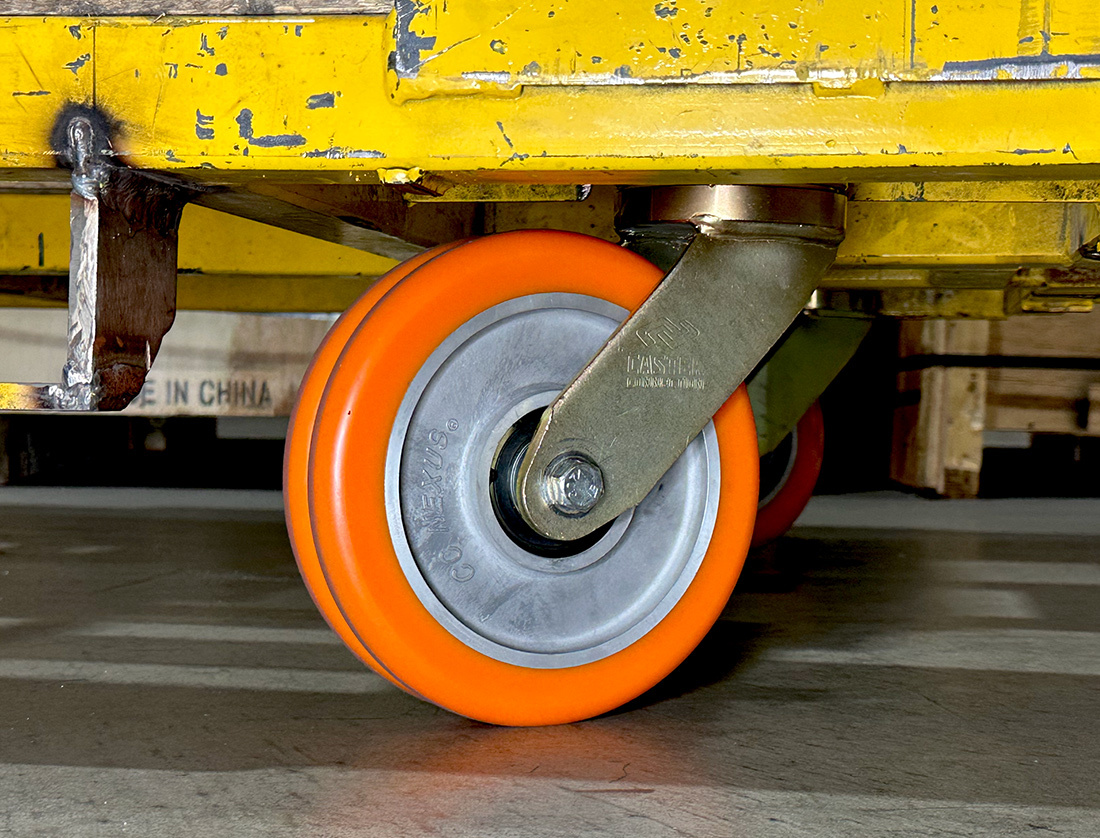
CC Apex is our most versatile caster, designed to perform in both powered towing and manual push/pull applications. Its polyurethane donut tread provides excellent grip, shock absorption, and debris resistance. It also helps lower decibel levels by minimizing noise output, making it well suited for almost any manufacturing or distribution environment.

The aluminum core helps dissipate heat away from the wheel, helping extend wheel life in high-cycle towline systems.

CC Apex can be paired with an extended lead kingpinless rig (CC Alpha) or a maintenance-free forged kingpin rig (CC Peak). Both options provide smooth, reliable movement in towlines and manual applications, allowing you to match the caster setup to your specific operation.

Shop CC Apex Casters
2017 CC Apex Large Logo

CC APEX HD

CC Apex HD builds on the performance of CC Apex with larger sizes and higher load capacities, allowing you to move more weight in a single trip. Its wider polyurethane donut tread helps reduce noise and absorb impact, making it a strong option for heavier towline applications while still supporting ergonomic performance.

CC Apex HD can be paired with a maintenance-free forged kingpin rig (CC Peak), a kingpinless rig (CC Alpha), or the heavier-duty CC Armor kingpinless rig for larger wheel sizes.

Shop CC Apex HD Casters
2018 CC Apex HD Tagline Logo 1

CC STARK

CC Stark is designed for towline applications that prioritize speed and durability in fast-paced environments. Its slightly crowned tread reduces rolling resistance and limits compression, allowing heavier loads to move more efficiently through the system.

Unlike CC Apex and CC Apex HD, which use a donut tread for versatility and debris handling, CC Stark is more specialized. It trades some versatility for increased efficiency in dedicated towline applications.

CC Stark is paired with a forged kingpin rig, providing exceptional strength and long-term durability under constant movement and heavy use. The design is built to handle long duty cycles with minimal maintenance.

CC Stark is backed by a 4-year warranty, helping reduce replacement frequency and downtime.

Shop CC Stark Casters
CC STARK 01

Super Heavy-Duty Caster Solutions

For applications involving extreme weight or high-impact conditions, these super heavy-duty solutions provide the additional strength and durability required to maintain uptime and prevent failure.

CC DYNAMO 95A

CC Dynamo 95A is a super heavy-duty polyurethane on cast iron wheel designed for towline, AGV, and tugger applications. It provides a balance of strength and shock absorption, helping reduce vibration and protect equipment during transport.

Available in 6", 8", 10", and 12" diameters, it supports load capacities ranging from 2,500 to 7,000 lbs per wheel, making it well suited for high-weight, controlled movement in demanding industrial environments.

Its 95A polyurethane tread allows for a small amount of compression, making it a strong choice for applications where floor protection and reduced vibration are important alongside high load capacity.

Shop CC Dynamo 95A Casters
CC Dynamo 95 A Logo

CC DYNAMO 70D

CC Dynamo 70D is the harder alternative to the 95A version, built for maximum strength in towline, AGV, and tugger applications. Its ultra-hard polyurethane tread minimizes deflection under load, allowing it to carry extreme weights with stability.

Available in 6", 8", 10", and 12" diameters, it supports load capacities from 2,500 to 7,000 lbs per wheel, making it a strong choice for applications that demand maximum durability and minimal deflection.

This makes it ideal for slow-speed towing and applications where load support and durability take priority over vibration reduction.

Shop CC Dynamo 70D Casters
CC Dynamo 70 D logo

CC BRAWN

CC Brawn is a super heavy-duty kingpinless rig built for demanding towline systems. Its kingpinless design eliminates a common failure point, allowing it to withstand constant motion, shock, and side loading.

CC Brawn is a super heavy-duty kingpinless rig built for towline, AGV, and extreme industrial applications where durability and maximum load capacity are critical. Its kingpinless design eliminates traditional failure points, allowing it to withstand constant motion, repeated impact, and heavy loads without loosening or degrading over time.

With a load capacity of up to 10,000 lbs per rig, CC Brawn is designed to support the demands of heavy-duty industrial towing, tugger carts, and automated material handling. The heavy-gauge steel top plate is built to withstand continuous torque and high stress, making it a dependable choice in environments where standard rigs fail.

Learn More
CC Brawn Logo

CC FORGE

CC Forge is a super heavy-duty forged kingpin rig designed for applications where extreme weight and repeated impact are present. Its forged steel kingpin provides far greater strength and fatigue resistance than traditional kingpin designs.

With a load capacity of up to 10,000 lbs per rig, CC Forge is engineered to support massive loads under harsh conditions. The sturdy forged kingpin helps reinforce the rig, allowing it to withstand continuous stress and shock without compromising performance.

CC Forge is ideal for powered and automated applications where durability and load support take priority, especially in heavy manufacturing, tool and die handling, and other environments where failure is not an option.

Learn More
CC Forge Logo

HAVE MORE QUESTIONS? LET'S TALK!

Get Rolling with Caster Connection →
HAVE MORE QUESTIONS? LET'S TALK!