Surviving Glass Shops: Choosing the Right Caster Materials for Glass Handling Carts

Why Caster Wheel Material Matters in Glass Manufacturing and Installation
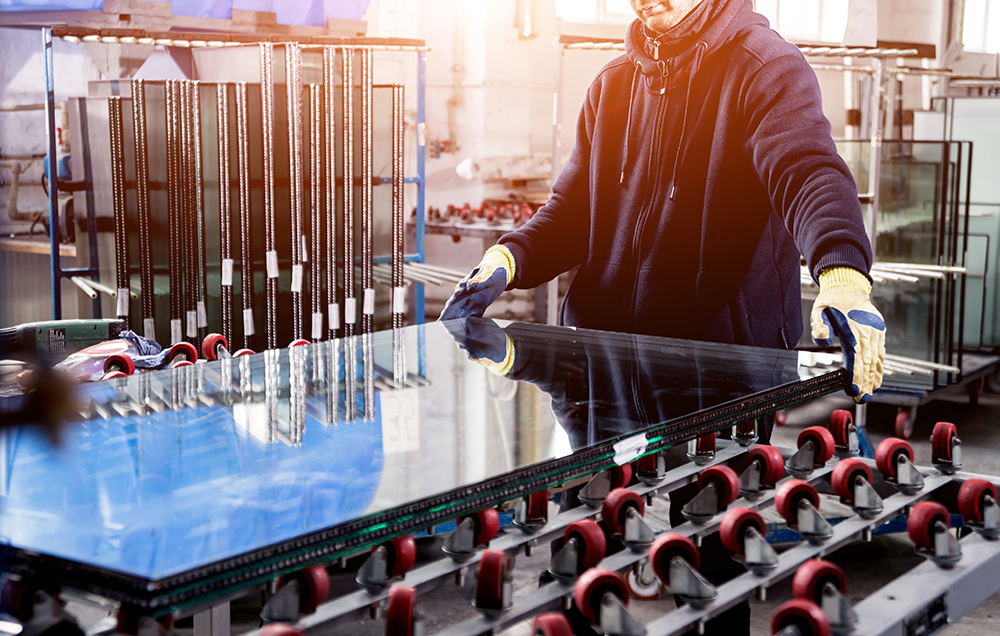
Glass manufacturing and installation environments are uniquely demanding. Heavy loads, fragile materials, smooth floors, and constant exposure to debris like glass dust all combine to create serious challenges for material handling equipment. In these conditions, caster wheel material selection is vital to an operation's safety, quality, and ergonomics.
Choosing the wrong wheel material can lead to:
- Increased glass breakage
- Excessive vibration transferred into panels
- Higher push/pull force and worker fatigue
- Poor performance when debris is present on the floor
Choosing the right wheel material helps protect people, product, and productivity.
In this guide, we’ll compare polyurethane, nylon, and phenolic caster wheels through the lens of real glass shop conditions and explain why polyurethane wheels are often the best-performing choice for glass handling carts.
Polyurethane Wheels: The Best Overall Choice for Glass Environments

For most glass manufacturing and installation applications, polyurethane wheels are the preferred solution — especially when debris, ergonomics, and product protection are priorities.
Polyurethane wheels perform exceptionally well in glass manufacturing environments because they offer a rare combination of strength, resilience, and forgiveness.

Debris Resistance
Polyurethane tolerates fine debris far better than rigid wheel materials. Glass dust and small fragments are less likely to cause vibration, skidding, or performance loss.

Reduced Vibration & Shock Transfer
The slightly resilient tread absorbs micro-impacts that would otherwise travel directly into fragile glass panels. This helps reduce rattling during transport and lowers the risk of edge damage caused by constant shock and chatter.

Improved Ergonomic Push/Pull Performance
Polyurethane maintains low rolling resistance under load, reducing the force required to start, stop, and maneuver carts. This makes daily material handling easier on operators, especially when moving heavy racks repeatedly throughout a shift.

Excellent Towing Performance
Polyurethane wheels track smoothly and predictably when carts are towed, reducing fishtailing and instability. This is especially important in long aisleways and tight turns where instability can create safety risks.

Floor Protection
Polyurethane is well-suited for polished concrete, epoxy-coated floors, and other finished surfaces. The tread is less likely to scratch or damage coatings compared to harder wheel materials, especially when carts are turned under load.

Noise Reduction
Polyurethane helps reduce rolling noise compared to harder wheel materials on concrete and finished floors. This keeps cart movement quieter in busy glass shops and makes towing and staging operations less disruptive.
Nylon Wheels: Excellent Ergonomics on Clean Floors, but Sensitive to Debris
Nylon caster wheels are often misunderstood in glass applications. In the right conditions, nylon can be an excellent ergonomic choice. However, its performance is highly dependent on floor cleanliness and environmental control.
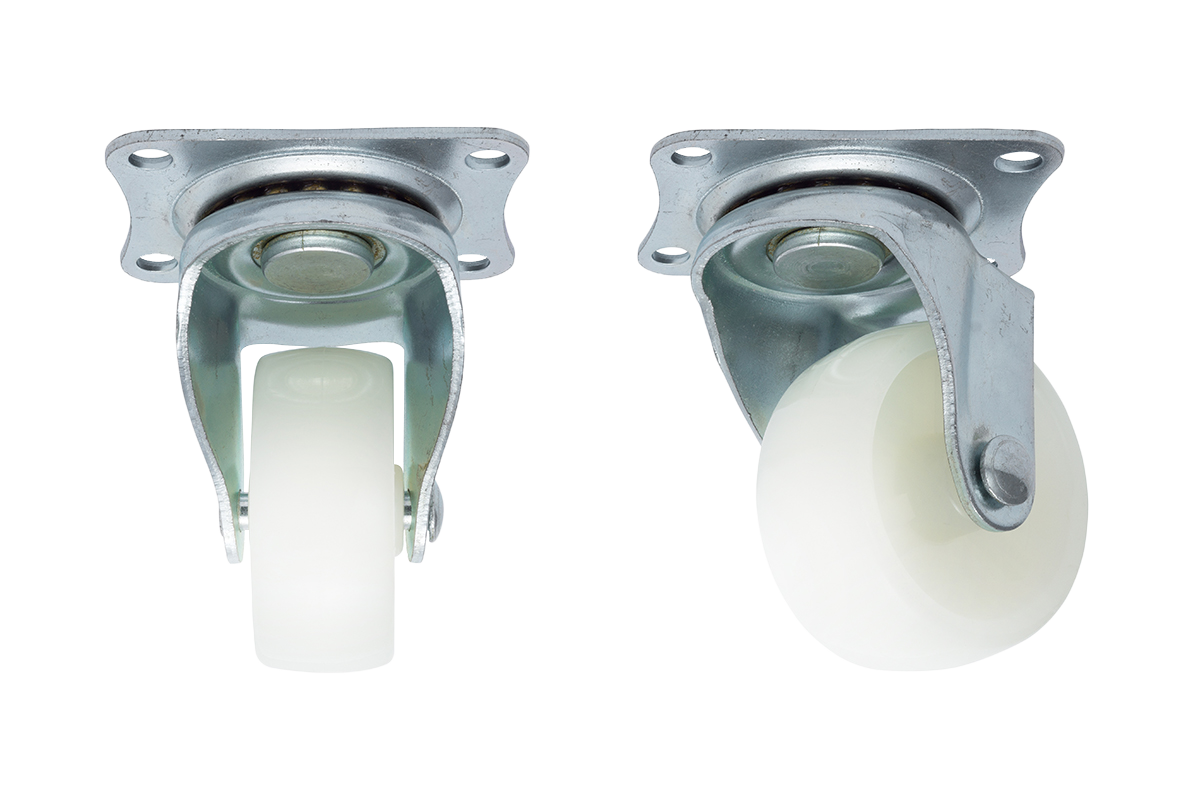
Where Nylon Performs Well
Nylon wheels can deliver smooth, efficient movement and low push/pull force when used in environments that are:
- Clean floors with minimal debris
- Indoor applications
- Exposed to water or steam
- Subject to mild chemicals
- Operating in higher temperature environments
- Used on OEM equipment where conditions are tightly controlled
- Facilities that may encounter animal fats but maintain regular floor cleaning
In these scenarios, nylon wheels roll easily, support heavy loads, and can provide strong ergonomic performance — as long as the floor remains clean and consistent.
Where Nylon Performance Drops
The challenge with nylon wheels in glass environments is their sensitivity to debris. Nylon is a very rigid material, which means fine glass dust or small fragments can quickly impact performance.
When debris is present:
- Push/pull force increases noticeably
- Vibration is transferred directly into the cart and load
- Movement becomes less predictable
- Operator effort and fatigue increase
In most glass shops, debris is unavoidable, and nylon wheels can lose ergonomic performance compared to more forgiving materials like polyurethane.
Phenolic Wheels: Durable, but Not Well-Suited to Debris-Prone Glass Shops
Phenolic wheels are common in heavy industrial environments, but like nylon, they are not debris tolerant. Their rigidity also makes them less forgiving when transporting fragile glass panels.
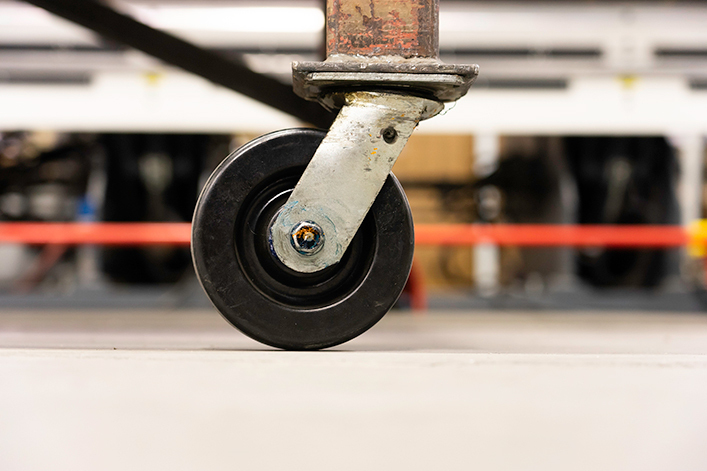
Limitations of Phenolic Wheels in Glass Environments
Phenolic wheels tend to create problems in glass handling applications because they are:
-
Poor at tolerating fine debris like glass dust
-
Very rigid with minimal shock absorption
-
More likely to transfer vibration into fragile loads
-
Noisier on smooth floors
-
Less forgiving during starts, stops, and turns
Phenolic wheels may be appropriate for moving equipment or fixtures within a glass facility, but they are rarely ideal for glass transport carts where stability and product protection matter.
Non-Marking Wheels for Finished and Customer-Facing Spaces
Glass installation often requires carts to move through finished spaces such as:
-
Commercial buildings
-
Retail environments
-
Office interiors
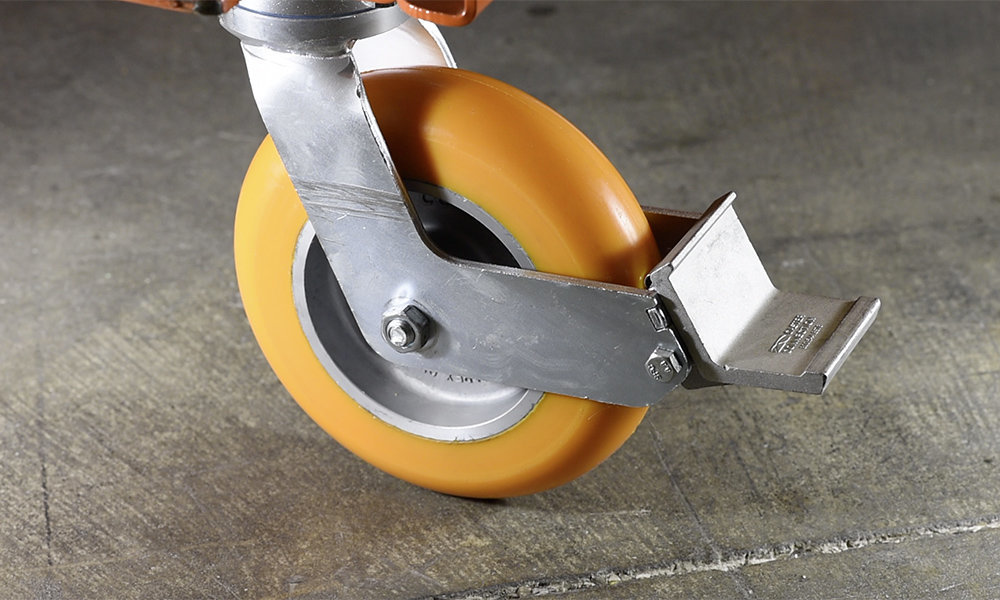
In these environments, non-marking polyurethane wheels are a smart upgrade. They help prevent visible streaks and scuffs while still delivering the load capacity, debris tolerance, and ergonomic performance glass handling demands.
Why CC Apex Polyurethane Wheels Stand Out
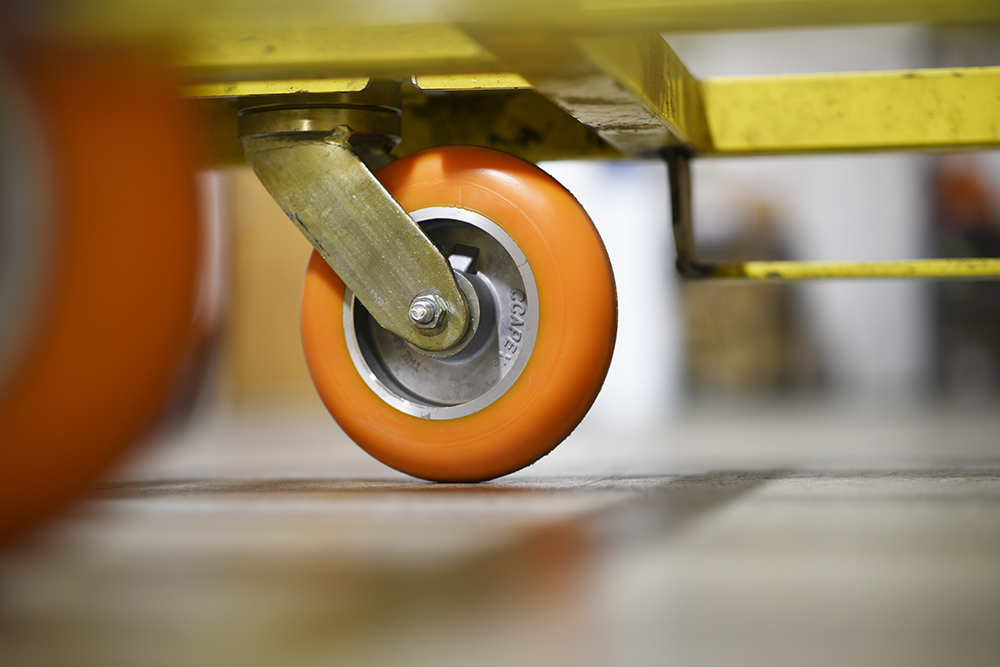
Caster Connection’s CC Apex line is engineered to handle demanding industrial environments like glass manufacturing and installation.
CC Apex polyurethane wheels are designed to:
- Maintain performance in debris-prone conditions
- Support heavy, unevenly distributed loads
- Deliver consistent, low-effort push/pull and towing
- Protect both floors and fragile materials
For glass carts, A-frames, and handling equipment, CC Apex often provides the best balance of durability, ergonomics, and product protection.
Shop CC Apex Casters
CC Apex 6" x 2" Polyurethane Swivel Caster
SKU: CC-1210-600200-40-T1
ALT-SKU: CCAPEX-6S
-
- Overall Height
- 7-1/2"
- Wt. Capacity
- 1,000 lbs.
- Wheel Width
- 2"
- Wheel Diameter
- 6"
CC Apex 6" x 2" Polyurethane Rigid Caster
SKU: CC-1010-600200-40-T1
ALT-SKU: CCAPEX-6R
-
- Overall Height
- 7-1/2"
- Wt. Capacity
- 1,000 lbs.
- Wheel Width
- 2"
- Wheel Diameter
- 6"
CC Apex 6" x 2" Polyurethane Kingpinless Swivel Caster
SKU: CC-2110-600200-40-T1
-
- Overall Height
- 7-1/2"
- Wt. Capacity
- 1,000 lbs.
- Wheel Width
- 2"
- Wheel Diameter
- 6"
CC Apex 6" x 2" Polyurethane Set of Four Casters
SKU: CC-10/1210-600200-40-T1-SET4
ALT-SKU: CCAPEX-6S/R-set-2s/2r
-
- Overall Height
- 7-1/2"
- Wt. Capacity
- 1,000 lbs.
- Wheel Width
- 2"
- Wheel Diameter
- 6"
CC Apex CC Peak Rig 6" x 2" Polyurethane Maintenance-Free Swivel Caster
SKU: CC-3110-600200-40-T1
ALT-SKU: CCAPEX-6S-EMF
-
- Overall Height
- 7-1/2"
- Wt. Capacity
- 1,000 lbs.
- Wheel Width
- 2"
- Wheel Diameter
- 6"
CC Apex 6" x 2" Polyurethane Spring-Loaded Swivel Caster
SKU: DC-3R10-600200-40-T1
ALT-SKU: CCAPEX-6R-SPL-OH9
-
- Overall Height
- 8-3/4"
- Wt. Capacity
- 700 lbs.
- Wheel Width
- 2"
- Wheel Diameter
- 6"
Other Popular Caster Solutions for Glass Handling
5" x 2" Phenolic Swivel Caster
SKU: 5-81-339
-
- Overall Height
- 6-1/2"
- Wt. Capacity
- 1,000 lbs.
- Wheel Width
- 2"
- Wheel Diameter
- 5"
4" x 2" Phenolic Swivel Caster
SKU: 4-81-339
-
- Overall Height
- 5-5/8"
- Wt. Capacity
- 800 lbs.
- Wheel Width
- 2"
- Wheel Diameter
- 4"
3" x 1-1/4" Black Rubber Wheel - 3/8" Bore - Plain Bore - 80 Shore A (+/-5) Durometer
SKU: SR30GB82
ALT-SKU: 3-105
-
- Wheel Width
- 1-1/4"
- Wheel Diameter
- 3"
5" x 1-1/4" Black Rubber Swivel Expanding Stem Caster
SKU: 5-40-105-EXP-STEM
-
- Overall Height
- 6"
- Wt. Capacity
- 300 lbs.
- Wheel Width
- 1-1/4"
- Wheel Diameter
- 5"
TP4000 Series 3" x 1-1/4" Black Rubber Swivel Caster
SKU: 4030-01-HR
-
- Overall Height
- 3-3/4"
- Wt. Capacity
- 250 lbs.
- Wheel Width
- 1-1/4"
- Wheel Diameter
- 3"
2-1/2" x 1-13/16" Polyolefin Swivel Caster with Brake
SKU: CC309PO-SRB
-
- Overall Height
- 3-1/2"
- Wheel Width
- 1-13/16"
- Wheel Diameter
- 2-1/2"
8" x 3" High-Temperature Cast Iron Swivel Caster
SKU: 830-S-179
-
- Overall Height
- 10-1/8"
- Wt. Capacity
- 2,400 lbs.
- Wheel Width
- 3"
- Wheel Diameter
- 8"
8" x 2" High-Temperature Cast Iron Swivel Caster
SKU: 8-81-139-7
-
- Overall Height
- 9-1/2"
- Wt. Capacity
- 1,250 lbs.
- Wheel Width
- 2"
- Wheel Diameter
- 8"
8" x 3" High-Temperature Cast Iron Rigid Caster
SKU: 830-R-179
-
- Overall Height
- 10-1/8"
- Wt. Capacity
- 2,500 lbs.
- Wheel Width
- 3"
- Wheel Diameter
- 8"
How Caster Connection Helps Glass Operations Choose the Right Wheel Material

Glass handling is too critical for guesswork. Caster Connection works directly with glass manufacturers and installers to evaluate:
- Load weight and distribution
- Floor conditions and debris levels
- Push/pull and towing requirements
- Safety and ergonomic goals
From there, our Caster Nerds recommend caster and wheel solutions that improve control, comfort, and confidence in glass handling operations.
Get Help Specifying the Right Caster Wheels for Glass Applications
If your glass carts are difficult to move, struggling in debris-prone areas, or contributing to breakage or worker fatigue, wheel material may be the root cause.
Caster Connection can help you choose the right polyurethane wheel for your glass application. Through a free Caster Needs Evaluation, our team can help you confirm the right wheel material, tread, and rig for your carts.
