Why the Caster Is a Security Component on a Correctional Meal Cart

Why the Caster Is a Security Component on a Correctional Meal Cart
Correctional meal carts move through kitchens, controlled doors, housing units, elevators, ramps, sally ports, and other sensitive areas—often several times each day.
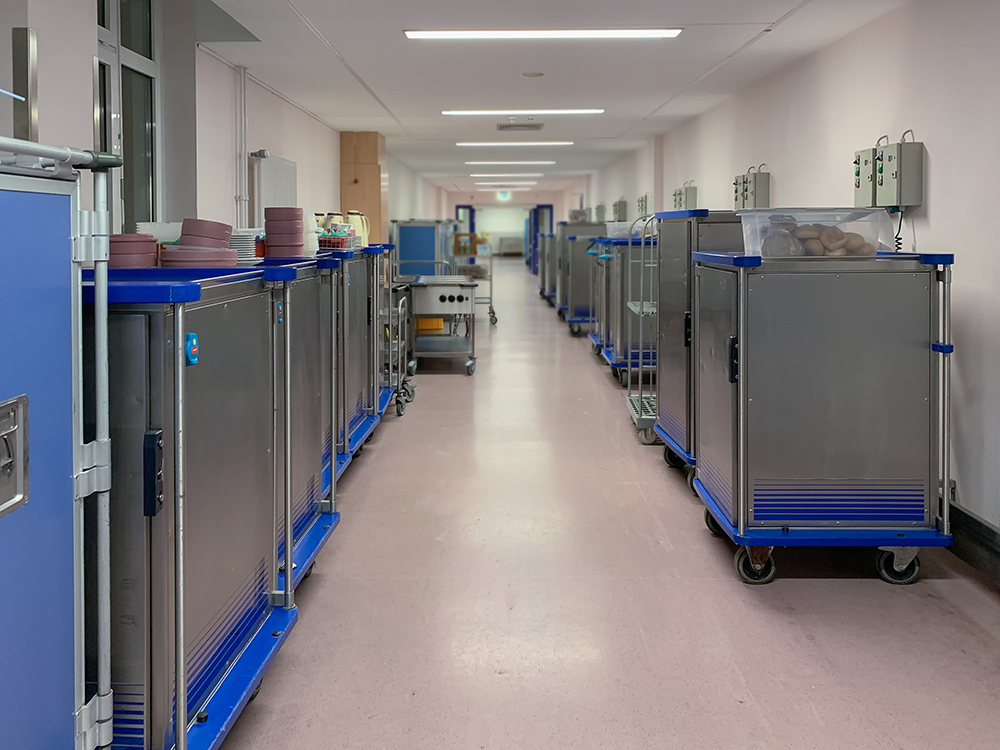
The cart may be designed with reinforced construction, controlled-access doors, secure latches, and restricted compartments. But underneath that equipment is an exposed mechanical system that is sometimes treated as an interchangeable commodity: the casters.
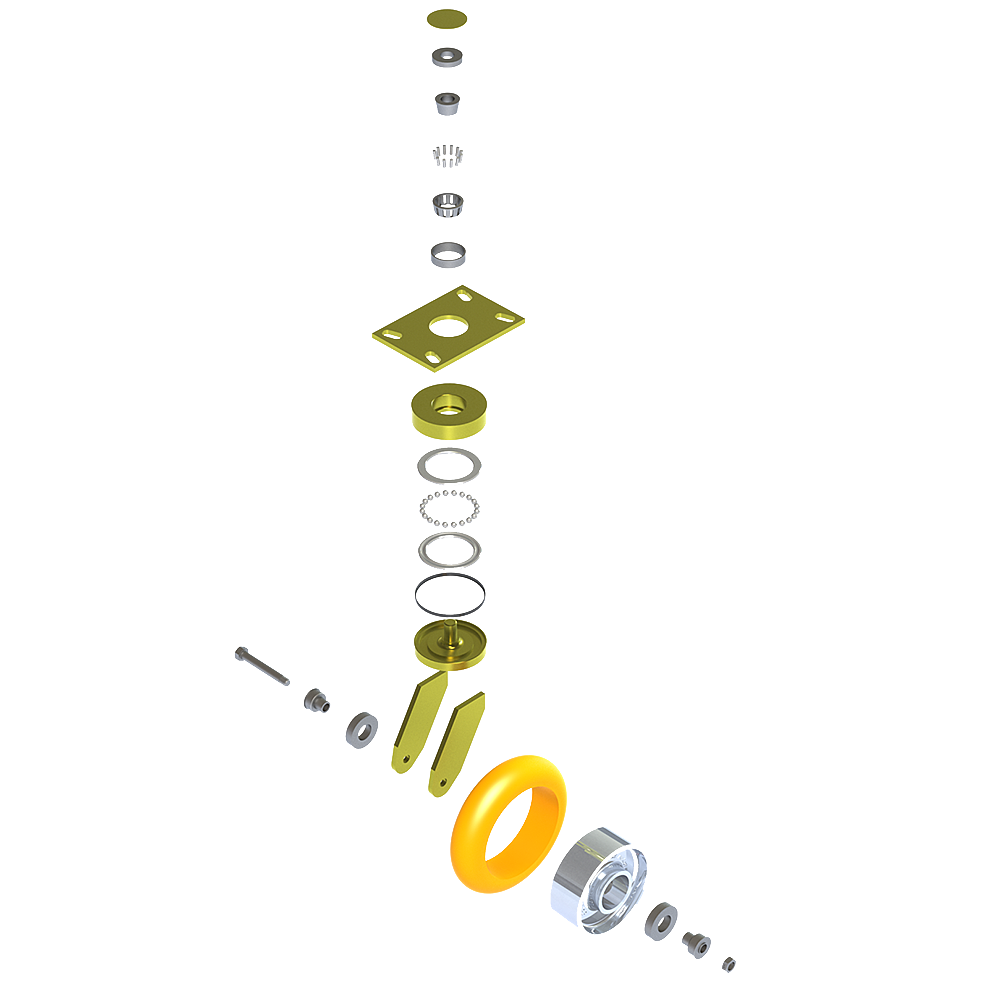
In a correctional environment, a caster does more than carry weight. Its mounting hardware, axle, bearings, brake, wheel, swivel assembly, and other serviceable components must remain secure, intact, inspectable, and controllable throughout demanding daily use.
That makes the caster part of the cart’s security system.
When Mobility Hardware Becomes a Security Consideration
A correctional meal-cart caster is a security component because it is an accessible mechanical assembly attached to a heavy piece of mobile equipment.
If the caster is underspecified, damaged, poorly mounted, or inadequately maintained, it may contribute to:
- Loose or missing components
- Exposed or accessible hardware
- Unreliable braking
- Difficult or unpredictable cart movement
- Mounting damage
- Premature wheel or bearing failure
- Unplanned maintenance
- Cart downtime
- Inconsistent replacement parts
- Unauthorized modifications
The objective is not to describe any caster as “tamper-proof.” That is an absolute claim that would require a defined test method and documented evidence.
A more responsible objective is to design and maintain the caster system in a way that supports component retention, limits unnecessary exposure, allows authorized service, and aligns with the facility’s security-review procedures.
Security Must Be Evaluated as a Complete System
A secure caster installation depends on more than the caster itself.
The complete system includes:
- The caster rig and wheel
- Axles, nuts, bearings, spacers, and brakes
- The mounting plate or stem
- Fasteners and fastener access
- The cart frame and reinforcement
- Welds and mounting surfaces
- Authorized maintenance procedures
- Inspection frequency
- Replacement-part controls
- Facility-specific security requirements
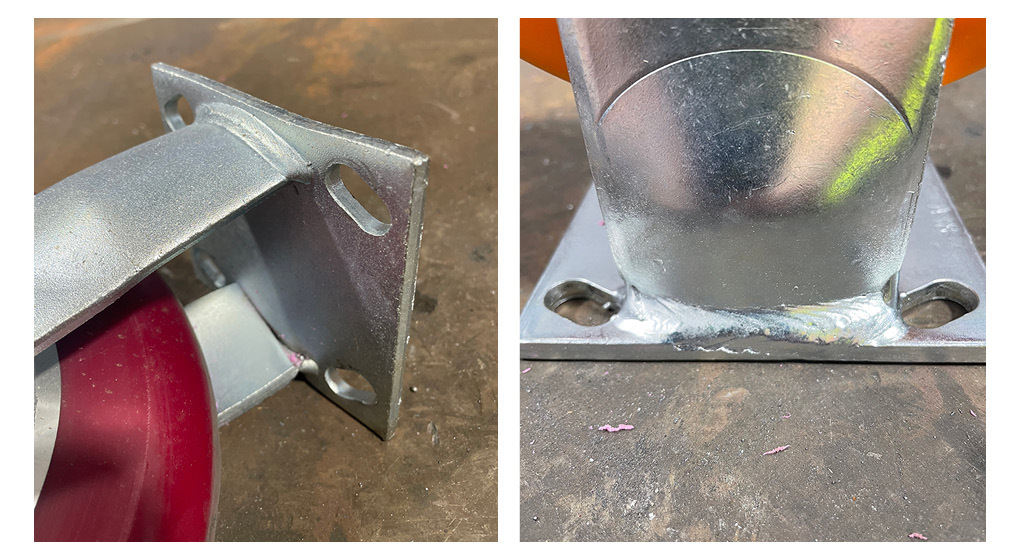
Even a heavy-duty caster cannot compensate for a weakened mounting surface, damaged weld, poorly supported plate, or inconsistent maintenance program.
Public correctional-cart specifications demonstrate this systems approach by addressing reinforced construction, locking hardware, secure fasteners, caster configuration, brakes, bumpers, and cart maneuverability as related equipment requirements—not isolated purchasing decisions.
The right correctional meal-cart caster must therefore be evaluated as part of the entire cart.
Five Ways Casters Affect Correctional Meal-Cart Security
1. Mounting Integrity and Component Retention
The connection between the caster and the cart deserves the same attention as the cart’s doors, hinges, latches, and frame.

Mounting design should be reviewed to:
- Reduce unnecessary exposure to hardware
- Limit readily removable components where practical
- Support the forces created during starts, stops, turns, and impacts
- Prevent fasteners from loosening during normal operation
- Permit inspection by authorized personnel
- Allow controlled maintenance and replacement
- Align with the facility’s approved security criteria
Plate-mounted casters are common on larger institutional carts because they distribute forces over a mounting surface. However, plate dimensions, bolt patterns, fasteners, reinforcement, and surrounding cart construction must function together.
A strong caster mounted to a weak or damaged frame is not a secure installation.
2. Durability Reduces the Risk of Loose or Broken Parts
Correctional meal carts may operate multiple times per day, every day of the year. Frequent movement creates cumulative stress on wheels, swivel sections, bearings, brakes, mounting hardware, and cart frames.
A caster that cracks, bends, loosens, or separates creates more than a maintenance problem. It may also create a component-accountability concern.
High-abuse applications should be evaluated for:
- Wheel-tread durability
- Wheel-core strength
- Tread-to-core bonding
- Swivel-section construction
- Bearing protection
- Axle retention
- Brake durability
- Impact resistance
- Debris resistance
- Corrosion resistance
- Dynamic performance
- Replacement-part availability
“Heavy duty” is not a complete specification. The caster must be appropriate for the actual load, route, speed, movement frequency, cleaning exposure, and handling practices.
3. Brakes and Directional Control Affect Movement Security
A correctional meal cart must move when authorized—and remain controlled when it is being loaded, unloaded, staged, cleaned, parked, or used for meal distribution.

Different caster controls perform different functions:
Wheel brake: Restricts wheel rotation.
Total-lock brake: Generally restricts both wheel rotation and swivel movement.
Directional lock: Controls swivel orientation to improve tracking but does not necessarily prevent the wheel from rolling.
The right configuration depends on the cart, route, load, slopes, operating procedures, and required degree of control.
Brake pedals and operating components should also be evaluated for:
- Accessibility to authorized operators
- Exposure to impacts
- Ground clearance
- Cleaning access
- Component retention
- Inspection requirements
- Holding performance under the loaded cart
A caster brake should not automatically be assumed to function as a parking brake on every incline. Holding performance must be evaluated under the conditions where the cart will operate.
Learn more about caster brake types and functions.
4. Corrosion and Contamination Can Undermine Component Integrity
Correctional kitchens and meal-delivery carts may be exposed to water, steam, food residue, sanitizers, degreasers, and institutional cleaning procedures.
Corrosion, contaminant intrusion, and incompatible cleaning chemicals can affect:
- Fasteners
- Axles
- Bearings
- Brake components
- Swivel assemblies
- Wheel materials
- Lubricants
- Mounting surfaces

A stainless-steel caster rig may be beneficial in a wet or corrosion-prone environment, but “stainless caster” is not a complete washdown specification.
The application review should document:
- Cleaning frequency and method
- Water pressure and temperature
- Chemicals and concentrations
- Steam exposure
- Rinse and drying procedures
- Floor drainage
- Grease and food residue
- Wheel-material compatibility
- Bearing protection
- Lubrication requirements
- Axle, brake, and fastener materials
Every component must be reviewed for the actual cleaning environment.
5. Inspection and Standardization Support Accountability
A documented inspection program can help facilities identify loose, worn, damaged, mismatched, or modified components before they create a larger operational concern.
Standardizing approved caster configurations can also make it easier to:
- Identify the correct replacement
- Control spare-parts inventory
- Document authorized configurations
- Train maintenance personnel
- Recognize mismatched components
- Reduce emergency purchasing
- Maintain consistent cart height and handling
- Track recurring wear or failure patterns
Security depends partly on knowing what should be present—and recognizing when something has changed.
Why Standard Foodservice Casters May Be Inadequate
A caster that performs acceptably on a restaurant utility cart may not be appropriate for a correctional meal-delivery cart.
Correctional foodservice equipment may encounter:
- Heavy and unevenly distributed loads
- Frequent starts, stops, and turns
- Long institutional delivery routes
- Controlled doors and narrow corridors
- Expansion joints and elevator gaps
- Ramps and sloped surfaces
- Indoor and outdoor travel
- Water and cleaning chemicals
- Food debris, hair, and thread
- Repeated brake use
- Rough handling
- Limited maintenance windows
- Facility-specific component-retention requirements
An underspecified caster can contribute to excessive push force, difficult steering, wheel damage, unreliable brakes, noise, vibration, mounting failure, and premature replacement.
Load capacity matters, but it is only the beginning.
How to Specify Correctional Meal-Cart Casters
Start With the Fully Loaded Cart
Calculate the maximum operating weight, including:
- The empty cart
- Food trays
- Food and beverages
- Heating or cooling equipment
- Shelves and racks
- Containers
- Accessories
- Additional transported supplies
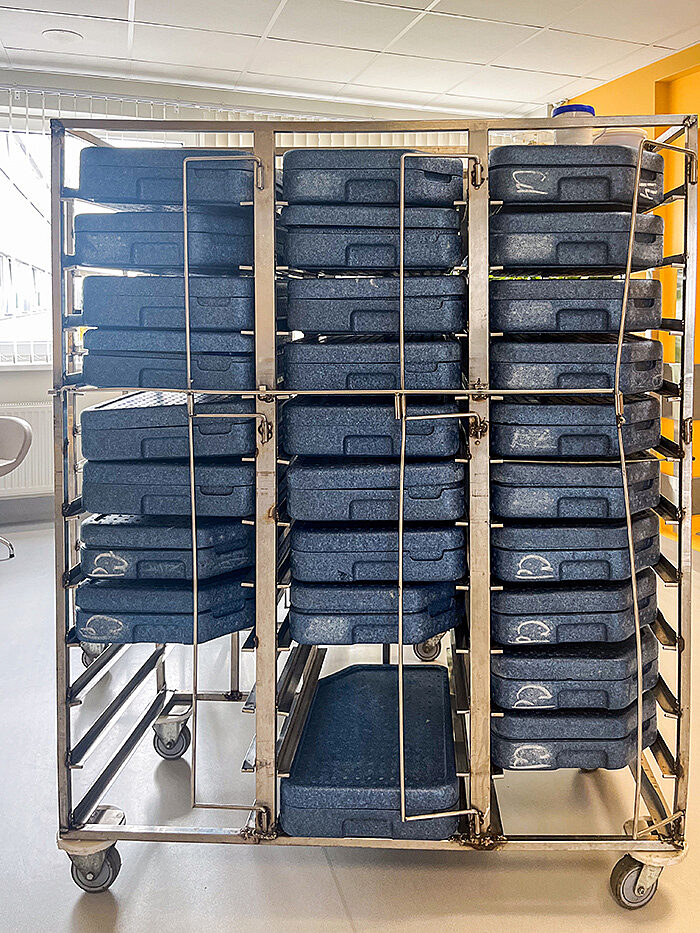
Do not assume that four casters will always divide the load evenly. A cart may temporarily place more weight on fewer casters when crossing a threshold, traveling over an uneven floor, or carrying an unbalanced load.
Caster selection should account for uneven weight distribution, impact loading, wheel diameter, travel speed, movement frequency, cart configuration, floor conditions, and an appropriate application safety factor.
The cart frame and mounting structure must also be capable of supporting the selected caster and the forces generated during movement.
Document the Entire Delivery Route
The route may determine the correct wheel more than the room where the cart is stored.
Document:
- The largest threshold or floor gap
- The roughest part of the route
- The longest travel distance
- The steepest ramp or slope
- The narrowest doorway
- The tightest required turn
- Indoor and outdoor exposure
- Elevator entrances and gaps
- The direction from which the cart is pushed
- Differences among housing-unit routes
Larger wheels generally cross thresholds and surface irregularities more effectively than smaller wheels. However, wheel diameter also affects cart height, center of gravity, turning clearance, storage, and cost.
A short video of the loaded cart traveling its normal route can be valuable during an application review, provided recording is permitted by facility policy.
Choose the Caster Layout Around the Route

Two swivel and two rigid casters can provide directional stability on longer, straighter routes.
Four swivel casters can improve maneuverability in tight spaces but may make a long or heavily loaded cart more difficult to control over extended corridors.
Swivel casters with directional locks can provide swivel movement for confined spaces and straighter tracking for longer routes.
Six-caster configurations may help long carts turn within their own footprint or distribute the load, but caster placement, frame stiffness, wheel diameter, and center-caster height must be engineered carefully.
Adding more casters does not automatically improve performance.
Evaluate Maintenance Before Finalizing the Specification
The best caster on paper may still be a poor choice if the facility cannot inspect, clean, service, or replace it consistently.
Before approval, determine:
- Who inspects the casters
- How frequently inspections occur
- Which components are serviceable
- Which tools and procedures are authorized
- How replacement parts are controlled
- Whether lubrication is permitted or required
- How damaged carts are removed from service
- Who approves substitutions or modifications
These decisions should be documented before the caster is placed into widespread use.
Correctional Meal-Cart Caster Inspection Checklist
Correctional meal-cart casters should be inspected regularly for signs of damage, wear, looseness, or unauthorized modification.
Key areas to check include:
- Mounting hardware, welds, and mounting surfaces
- Bent caster rigs or misaligned rigid casters
- Excessive swivel play
- Wheels that do not rotate freely
- Flat spots, uneven wear, tread chunking, or tread separation
- Embedded debris, damaged bearings, or corrosion
- Brakes that do not engage consistently
- Bent or damaged brake pedals
- Unusual noise or increased pushing and turning effort
- Mismatched wheel diameters or changes in overall cart height
- Exposed, loosened, missing, or modified components
Any security-related concern should be handled through the facility’s approved procedures.
Can Existing Correctional Carts Be Retrofitted?
Facilities with recurring caster problems may not need to replace an entire meal-cart fleet. In many cases, a caster retrofit can help improve cart performance, extend equipment life, and reduce maintenance concerns.
A retrofit may be worth evaluating when carts have:
- Difficult steering or excessive push force
- Worn, damaged, or corroded casters
- Unreliable brakes
- Poor performance over thresholds or uneven surfaces
- Excessive noise
- Mismatched replacement casters
- Frequent maintenance issues
- Obsolete or difficult-to-source components
A controlled one-cart pilot is often the best place to start. Document the current caster configuration, loaded weight, route, performance concerns, cleaning environment, and security requirements. Then test the proposed caster solution under representative conditions before expanding the retrofit to additional carts.
Operator, maintenance, foodservice, engineering, and facility-security feedback should be included as appropriate.
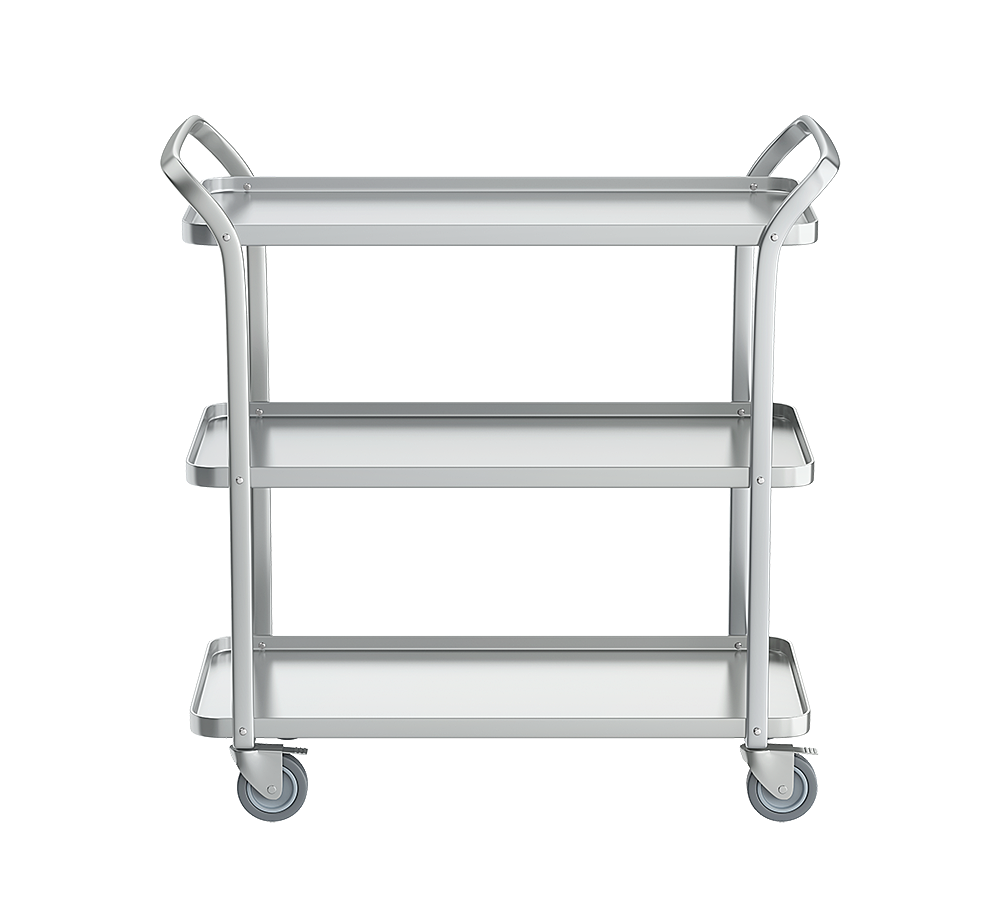
Field Example: Preserving an Aging Meal-Cart Fleet
A maximum-security correctional facility recently ordered 100 CC Apex casters online to upgrade older institutional meal carts already in service throughout its facility.
The facility had previously purchased a small number of new meal carts from a cart OEM that works exclusively with Caster Connection. After seeing the mobility, durability, and overall performance of that caster configuration, the facility chose to retrofit its existing carts with CC Apex casters.
For this application, caster selection was not simply about replacing worn parts. The facility needed a durable caster option that could support daily meal-cart movement, help preserve aging equipment, reduce maintenance concerns, and create greater consistency across both new and existing carts.
The project reinforces an important point: correctional meal-cart caster selection can affect security, operations, sanitation, maintenance, and fleet preservation.
Information to Gather Before Requesting a Recommendation
To help identify the right caster configuration, gather as much of the following information as possible.
Cart Details
- Manufacturer and model
- Empty and maximum loaded weight
- Cart dimensions
- Number and layout of casters
- Mounting-plate dimensions
- Bolt-hole pattern
- Overall caster height
- Wheel diameter and width
Operating Conditions
- Manual or towed movement
- Travel distance and trips per day
- Indoor or outdoor use
- Floor materials
- Thresholds, ramps, and turning-space limitations
- Brake or directional-lock requirements
Cleaning and Environmental Conditions
- Water, steam, or washdown exposure
- Cleaning chemicals and temperatures
- Food debris
- Corrosion history
- Ambient or high-temperature exposure
Security and Maintenance Considerations
- Exposed-hardware concerns
- Component-retention requirements
- Inspection procedures
- Authorized maintenance practices
- Facility review criteria
Do not include confidential operational-security information in an unsecured online form. Sensitive details should be addressed through the facility’s approved communication process.
Frequently Asked Questions
What casters are best for correctional meal carts?
The best caster depends on the cart’s loaded weight, mounting structure, route, floor conditions, cleaning procedures, brakes, movement method, maintenance process, and facility-specific security requirements. There is no universal correctional meal-cart caster.
Are correctional meal-cart casters tamper-proof?
A caster should not be called tamper-proof without a precise definition and documented testing. A caster and mounting system can instead be configured to support component retention and reduce exposed or readily removable parts.
What wheel size should be used on a prison food cart?
Wheel diameter should be selected according to load, route distance, thresholds, cracks, ramps, available clearance, desired cart height, and maneuverability. Larger wheels generally cross obstacles more effectively, but the complete cart must be evaluated.
Should a correctional meal cart use four swivel casters?
Four swivel casters can improve maneuverability in confined spaces but may reduce directional stability on long routes. Two swivel and two rigid casters, directional locks, or an engineered six-caster layout may perform better in some applications.
Can correctional meal carts be towed?
Some carts can be engineered for towing, but the casters, bearings, frame, hitch, speed, load, route, braking, and train configuration must be evaluated. A cart should not be towed solely because its casters have a high static capacity.
Are stainless-steel casters required in correctional kitchens?
Not always. Stainless steel may be appropriate for wet, washdown, or corrosion-prone applications, but wheels, bearings, axles, brakes, fasteners, chemicals, temperature, and maintenance procedures must also be evaluated.
How often should correctional cart casters be inspected?
Inspection frequency should reflect usage, load, route, cleaning exposure, security procedures, manufacturer recommendations, and failure history. High-use carts may require more frequent documented inspections.
Request a Caster Needs Evaluation
Match the caster to the cart, route, and facility.
Correctional meal-cart casters should be selected based on the complete application—not just load capacity. The right configuration depends on cart construction, loaded weight, movement path, cleaning requirements, maintenance practices, and facility-security considerations.
Caster Connection’s complimentary Caster Needs Evaluation can help assess:
- Cart weight, mounting dimensions, and caster layout
- Manual or towed operation
- Floor conditions, thresholds, ramps, and travel routes
- Wheel material, wheel diameter, and swivel/rigid configuration
- Brake, directional-lock, stainless-steel, and washdown requirements
- Push/pull force, maneuverability, durability, and replacement concerns
- Fleet-standardization opportunities
Whether you need to identify an unknown replacement caster, correct recurring failures, or specify casters for a new correctional cart, our Caster Nerds can help evaluate the application.
