The Ultimate Guide to Stone Fabrication Workflow for Construction & Manufacturing

From Quarry to Workshop — Overview of the Stone Fabrication Process
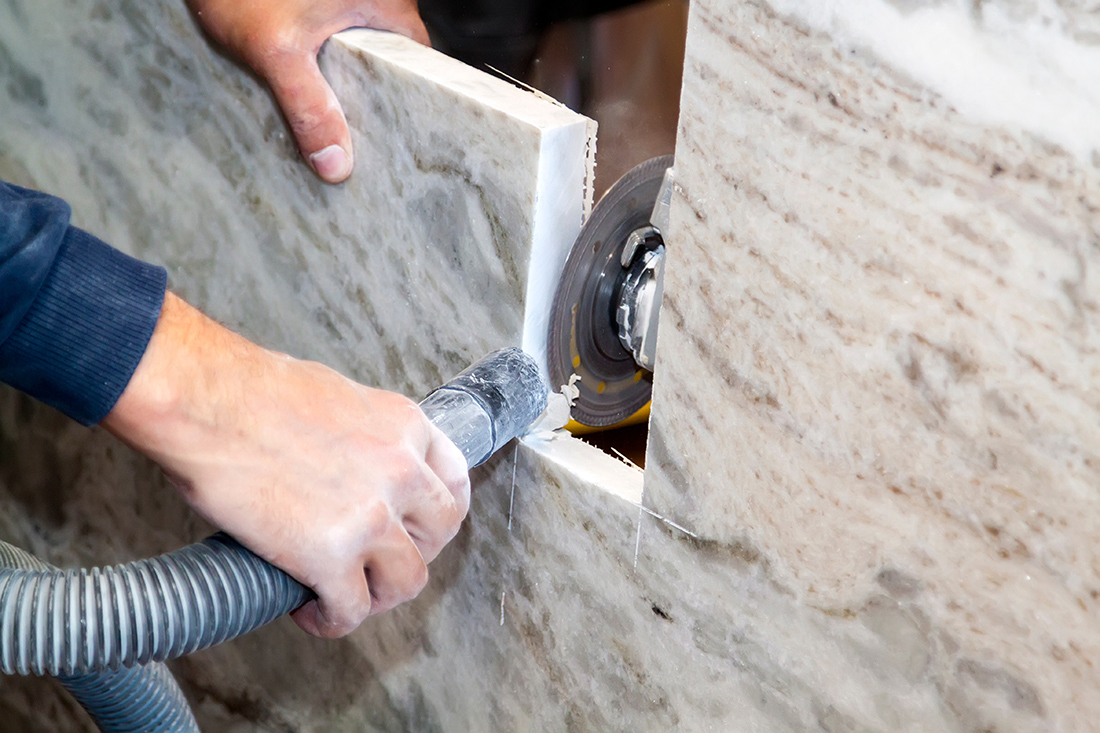
Understanding the complete journey of stone helps clarify where workflow improvements have the greatest impact.
Modern stone fabrication involves far more than cutting countertops. It is a coordinated system of material handling, precision machining, safety planning, and production scheduling that transforms raw slabs into finished products ready for installation.
What Defines the Stone Fabrication Process?

The typical stone fabrication workflow includes several key stages:
-
Slab selection and inspection
-
Transportation to the fabrication facility
-
Slab storage and staging
-
Cutting using bridge saws or CNC routers
-
Edge profiling and shaping
-
Polishing and finishing
-
Dry fitting and quality inspection
-
Packaging and jobsite delivery preparation
Although these steps appear straightforward, slabs are moved repeatedly throughout the process. At nearly every stage they must be lifted, transported, repositioned, and staged for the next operation.
Each movement introduces potential risks, including:
-
Breakage and edge damage
-
Traffic congestion in the shop
The difference between a highly profitable shop and a struggling one often lies in how well these transitions are engineered.
Slab Selection to Production Scheduling
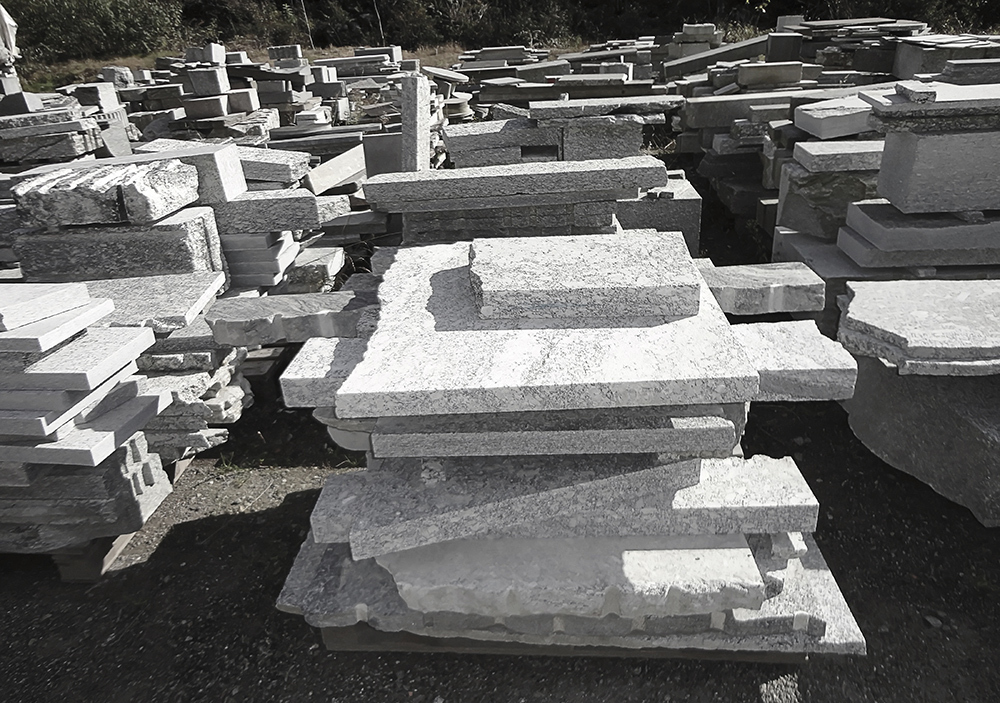
Leading stone manufacturers reduce unnecessary handling by planning workflow before fabrication even begins. Many shops digitally map slabs and nest cut layouts in advance to maximize material usage and minimize movement.
Effective production planning often includes:
-
Digitally mapping slabs before cutting
-
Nesting cut layouts to reduce waste
-
Coordinating job schedules based on slab location
-
Staging materials in logical production sequences
Reducing unnecessary slab movement is one of the largest opportunities for improving efficiency. The fewer times a slab is handled, the lower the overall risk exposure. Every unnecessary move increases the likelihood of microfractures, chipped edges, and employee injury.
Stone Slab Inventory & Storage Strategies
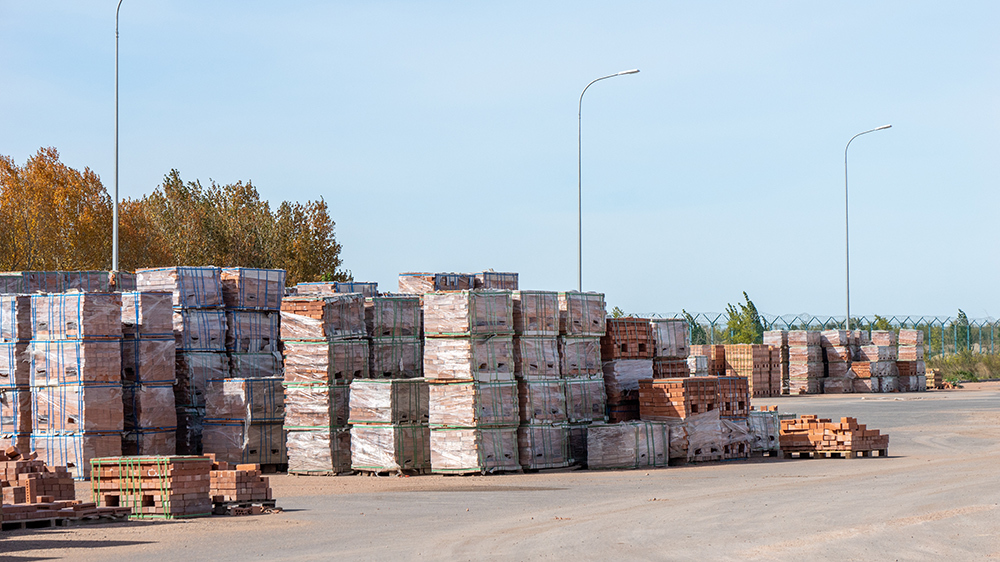
Poor storage planning is one of the most common root causes of accidents in stone fabrication environments. When slabs are difficult to access, workers are forced to repeatedly reposition materials, increasing both handling time and safety risks.
Best Practices for Slab Rack Setup
Most fabrication shops rely on A-frame or vertical rack systems designed to support heavy slabs while keeping them stable and accessible. Properly configured storage systems should:
- Use racks rated for known load capacities
- Keep slabs slightly angled rather than perfectly vertical
- Secure slabs using restraints or locking bars
- Separate materials by thickness, density, and finish
Different materials vary significantly in weight. Granite, quartz, marble, and porcelain slabs should not be mixed randomly without considering load distribution and rack capacity.
Improper rack loading can lead to serious hazards such as:
- Rack collapse
- Domino-style slab tipping
- Workers being exposed to falling material
OSHA-Aligned Spacing & Aisle Planning
Safe storage areas require clear access for equipment and personnel. Effective layouts typically include:
- Aisles wide enough for forklifts and slab carts
- Clearly marked pedestrian walkways
- Visible weight capacity signage
- Routine rack and equipment inspections
These aisles must accommodate the turning radius of equipment such as:
- Forklifts
- Slab dollies
- Mobile fabrication tables
- Carts equipped with heavy-duty casters
Crowded storage areas increase what is known as the fall shadow. This is the zone where a slab could land if it tipped forward. If workers must move several slabs just to reach the correct one, the storage layout likely needs redesign.
Workflow Optimization in Fabrication Shops
High-performing stone fabrication shops are designed to minimize unnecessary movement between workstations. When equipment and storage areas are poorly arranged, slabs may travel back and forth across the facility multiple times.
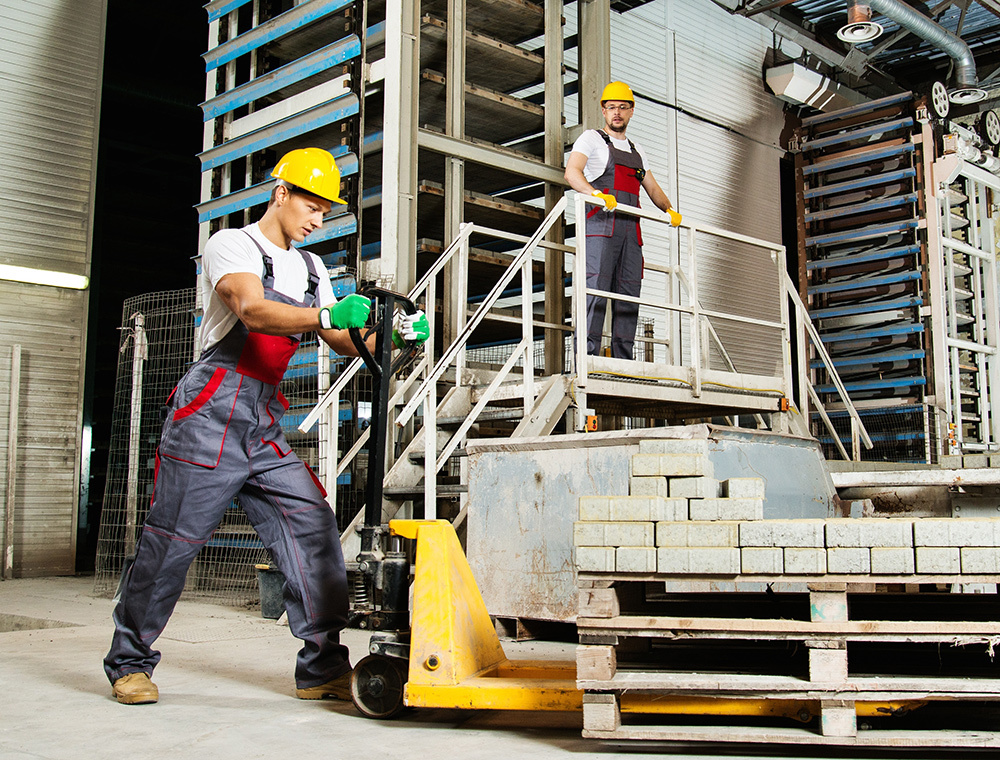
Shop Layout Planning to Reduce Double Handling
Many efficient fabrication shops use a linear or U-shaped production layout that moves materials through each stage in sequence.
Typical production workflow:
Receiving → Storage → Cutting → Finishing → Inspection → Staging → Shipping
Common inefficiencies include:
- Forklift traffic crossing worker paths
- Cutting stations located far from slab storage
- Finishing areas separated from staging zones
- Congestion between carts, forklifts, and workers
Each additional slab move adds labor cost, increases handling risk, and contributes to equipment wear.
Integrating Forklifts, Dolly Zones, & Caster Transport Lanes
Well-organized fabrication shops often designate specific areas for different types of equipment. These zones help prevent congestion and improve overall workflow.
Typical layout elements include:
- Forklift-only traffic lanes
- Mobile cart transport lanes
- Fixed machine footprints
- Staging buffers for incoming and outgoing work
Mobile fabrication tables equipped with heavy-duty casters can significantly increase flexibility within the shop. These systems allow equipment and work surfaces to be repositioned as production needs change.
Benefits of mobile fabrication systems include:
- Flexible machine positioning
- Reduced reliance on overhead cranes
- Adjustable ergonomic working heights
- Faster staging of production jobs
When production equipment can move easily, fixed shop layouts become adaptable workflow systems.
Digital Inventory and Job Tracking
Many modern fabrication shops also use digital inventory systems to track slab location and job scheduling. These systems reduce several common workflow disruptions, including:
-
Searching for misplaced slabs
-
Rotating racks unnecessarily
-
Production scheduling conflicts
When digital tracking aligns with physical workflow, shops can increase throughput without adding labor.
Safe & Efficient Slab Handling & Techniques
Most injuries and product damage in stone fabrication occur during handling rather than cutting. Heavy slabs require careful positioning and reliable equipment to prevent accidents.
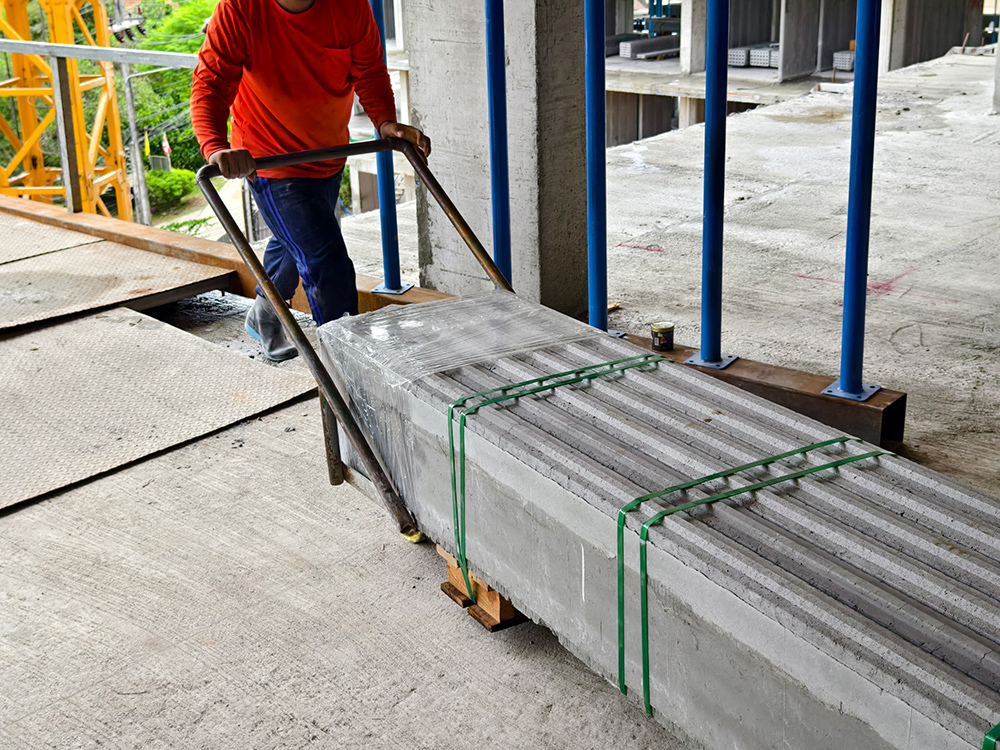
Professional Material Handling Equipment for Stone Shops
Stone fabrication facilities commonly rely on a range of lifting and transport equipment to safely move slabs throughout the shop.
Typical handling tools include:
- Vacuum suction lifters
- Slab clamps
- Gantry cranes
- Forklift boom attachments
- Slab dollies
- Reinforced slab carts with industrial casters
Each tool helps reduce manual lifting and allows operators to control slab movement more safely.
Avoiding "Fall Shadow" Hazards
The fall shadow is the area where a slab would land if it tipped forward. Workers should avoid standing within this zone whenever possible.
Safety practices that reduce fall shadow exposure include:
- Never standing directly in front of vertical slabs
- Avoiding manual slab stabilization
- Using mechanical positioning tools
- Inspecting lifting equipment daily
- Keeping staging areas clear
The safest stone fabrication shops design workflows that eliminate manual slab stabilization entirely.
The Role of Casters in Stone Manufacturing
Mobility systems are often overlooked in fabrication planning, yet they can provide some of the highest return-on-investment improvements in stone manufacturing.
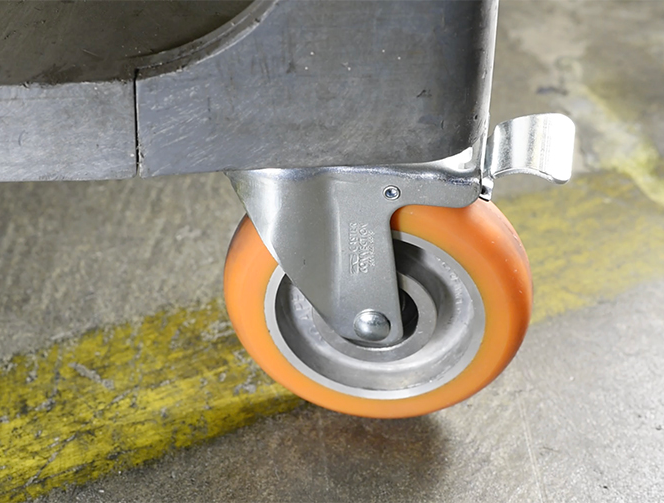
When to Choose Heavy-Duty Casters vs. Powered Dollies
Heavy-duty casters are often the best choice for in-shop slab movement when loads are predictable and floors are smooth concrete.
Casters are typically preferred when:
-
Loads are predictable
-
Floors are smooth and level
-
Movement distances are moderate
-
Equipment flexibility is required
Powered dollies become useful when:
-
Loads exceed safe push thresholds
-
Ramps or uneven surfaces are present
-
Long transport distances are required
For many fabrication shops, reinforced slab carts equipped with heavy-duty casters offer the best balance of maneuverability, cost, and reliability.
Benefits of caster-equipped carts include:
-
Lower upfront investment
-
Minimal maintenance requirements
-
High maneuverability in tight spaces
Calculating Load Capacity for Slab Carts
One of the most common mistakes in stone fabrication shops is underestimating load requirements for slab carts and casters.
Example Scenario
You are transporting one granite slab.
Typical slab dimensions:
10 ft × 5 ft × 3 cm (approximately 1.25 inches thick)
Granite weighs roughly 18–19 pounds per square foot at this thickness.
Step 1: Calculate Surface Area
10 ft × 5 ft = 50 square feet
Step 2: Multiply by Weight Per Square Foot
50 sq ft × 18 lbs = 900 lbs
The slab weighs approximately 900 pounds.
Step 3: Apply a Safety Factor
Industry best practice is to apply a 25–30 percent safety factor.
900 lbs × 1.30 = 1,170 lbs required cart capacity
Step 4: Apply the 3-Caster Rule
Caster Connection follows the Rule of 3. If one caster temporarily loses contact with the floor, the remaining three must support the full load.
1,170 lbs ÷ 3 casters = 390 lbs per caster minimum
This means each caster should be rated for at least 400 pounds, though higher ratings provide additional safety margin.
How Casters Reduce Strain & Save Time
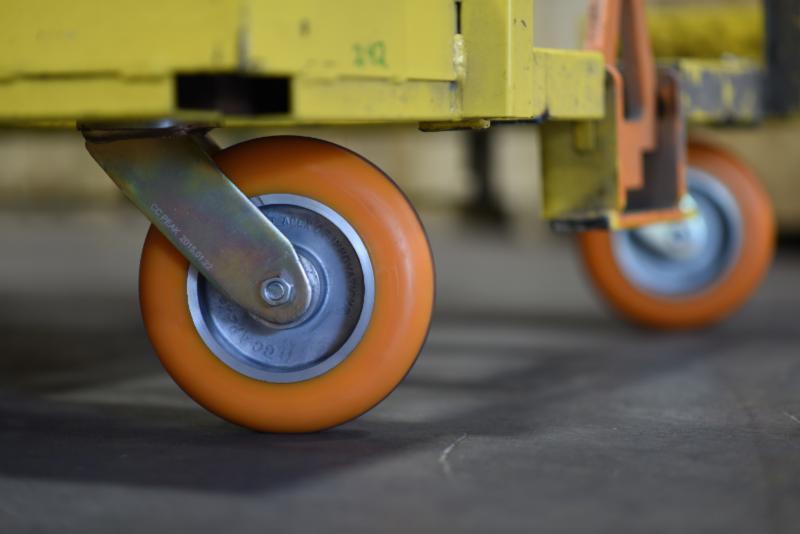
Proper caster selection has a significant impact on shop efficiency and worker safety. The right wheels and bearings can dramatically reduce the force required to move heavy loads.
Well-designed casters improve:
-
Rolling resistance
-
Noise levels
-
Bearing lifespan
-
Worker fatigue
High-capacity precision casters can also absorb vibration and help protect delicate finished edges during transport.
In stone fabrication environments, mobility is not simply about convenience. It is a critical part of managing risk, protecting material, and improving operational efficiency.
Combining Safety & Efficiency for Productivity
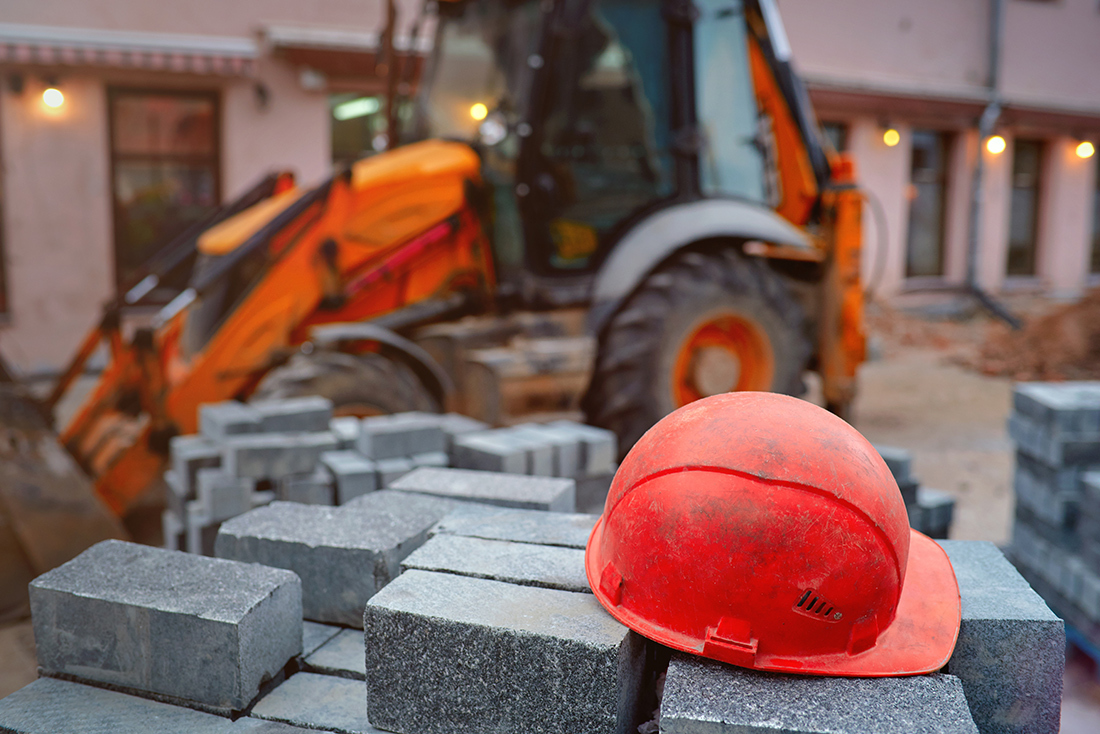
The most successful stone fabrication shops do more than cut and polish stone. They engineer workflows that reduce handling, protect workers, and maintain consistent production flow.
An optimized fabrication workflow can:
-
Reduce slab handling frequency
-
Improve shop traffic flow
-
Minimize injury exposure
-
Lower material breakage
-
Increase production speed
Strategic investments in material handling equipment, including properly rated heavy-duty casters, allow shops to protect workers, protect products, and protect profit margins.
In a competitive construction and manufacturing environment, workflow efficiency is not optional. It is a strategic advantage.
Book A Caster Needs Eval Today
With a Caster Needs Eval, you can spot inefficiencies, test ergonomic performance, and confirm the right fit for your operation. Our team helps you choose the best caster for your carts and environment so you can protect your team, reduce maintenance costs, and keep production moving without interruption.
Take the guesswork out of caster selection and get a clear plan for safer, smarter mobility.

Frequently Asked Questions
What is the stone fabrication process?
The stone fabrication process includes slab selection, cutting, shaping, polishing, inspection, and preparation for installation. Efficient material handling between each stage is essential for reducing breakage and improving productivity.
How can stone fabrication shops improve workflow?
Shops can improve workflow by designing linear production layouts, minimizing unnecessary slab movement, implementing digital slab tracking systems, and using properly rated material handling equipment such as slab carts and heavy-duty casters.
How do you calculate load capacity for a slab cart?
Multiply slab surface area by weight per square foot, apply a 25–30 percent safety factor, and divide the result by three to ensure the remaining casters can support the load if one lifts off the ground.
What type of casters are best for stone fabrication?
Heavy-duty industrial casters rated for high load capacity and low rolling resistance are ideal for smooth concrete fabrication floors. Load ratings should exceed calculated slab weight and include an appropriate safety factor.