Material Handling Equipment You Need for Modern Stone Manufacturing & Install

Moving stone safely through a fabrication shop or job site requires far more than strength—it requires engineered systems designed to control weight, movement, and risk. Granite, quartz, and large-format porcelain slabs can weigh hundreds or even thousands of pounds, and each time they are lifted, staged, or transported, the potential for breakage, injury, or costly delays increases. That’s why modern shops rely on specialized stone material handling equipment—from slab lifters and vacuum systems to industrial dollies, mobile carts, and heavy-duty casters for stone handling.
When these tools work together as part of a well-designed stone transport system, they reduce strain on workers, protect fragile materials, and keep production moving efficiently. In this guide, we’ll break down the essential shop handling tools and mobility systems every stone fabrication and installation operation needs to move slabs safely and efficiently.
Heavy Stone Demands Engineered Mobility
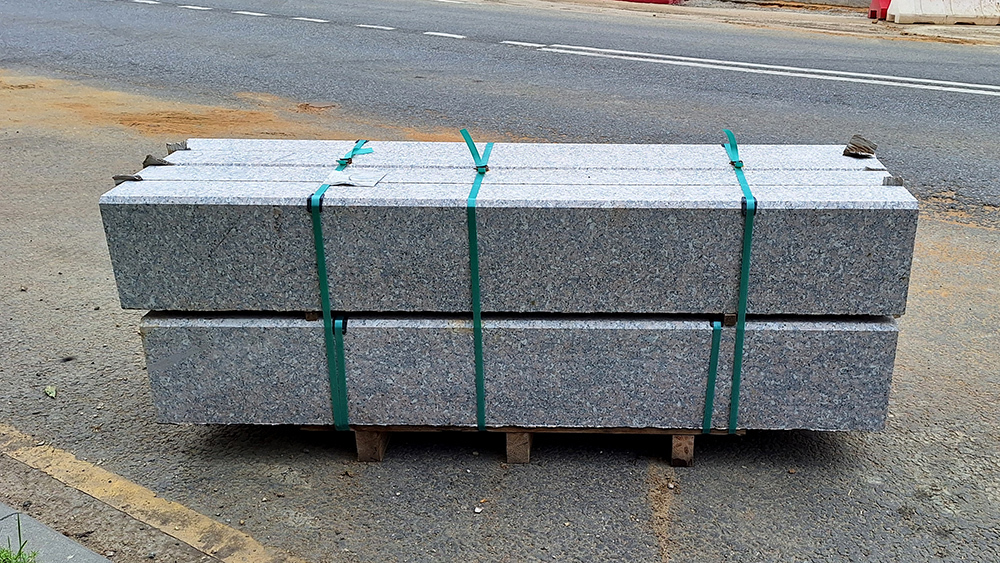
What equipment is needed to move stone slabs?
How do you transport granite slabs safely?
What is the best material handling equipment for stone fabrication?
Whether you're working with granite, quartz, or large-format porcelain, the answer begins with a simple reality:
Stone is heavy and unforgiving.
Stone slabs commonly weigh 300 to over 1,200 pounds, depending on material type and thickness. In addition to their weight, slabs present several challenges during handling. They are:
-
Dense
-
Brittle under torsion
-
Expensive to replace
-
Dangerous to mishandle
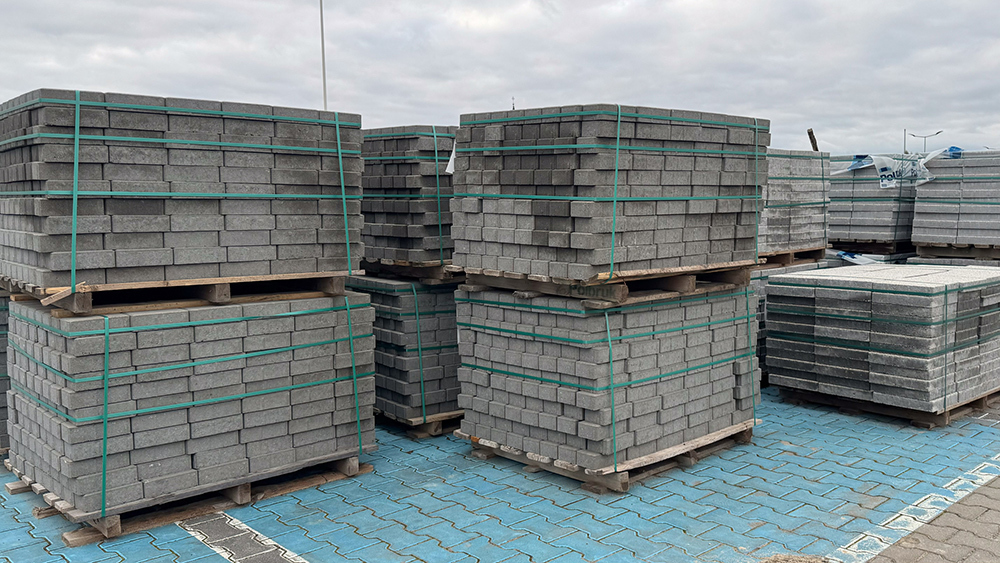
Before installation, slabs move through many stages in the shop. They are typically:
-
Unloaded from delivery trucks
-
Stored on racks or A-frames
-
Moved to cutting stations
-
Shifted to finishing areas
-
Staged for fabrication or installation
-
Loaded again for transport
In many fabrication environments, a slab may be moved dozens of times before it reaches the jobsite.
Poorly designed mobility systems can quickly create operational problems such as:
-
Workflow bottlenecks
-
Worker strain
-
Slab microfractures
-
Equipment failure
-
Production delays
In modern stone manufacturing and installation environments, material handling equipment is not just support gear. It is production infrastructure.
If your operation moves stone, mobility systems form the foundation of your workflow.
Core Categories of Stone Handling Equipment
Stone material handling equipment includes any system used to store, lift, move, stage, or position slabs throughout the fabrication and installation process.
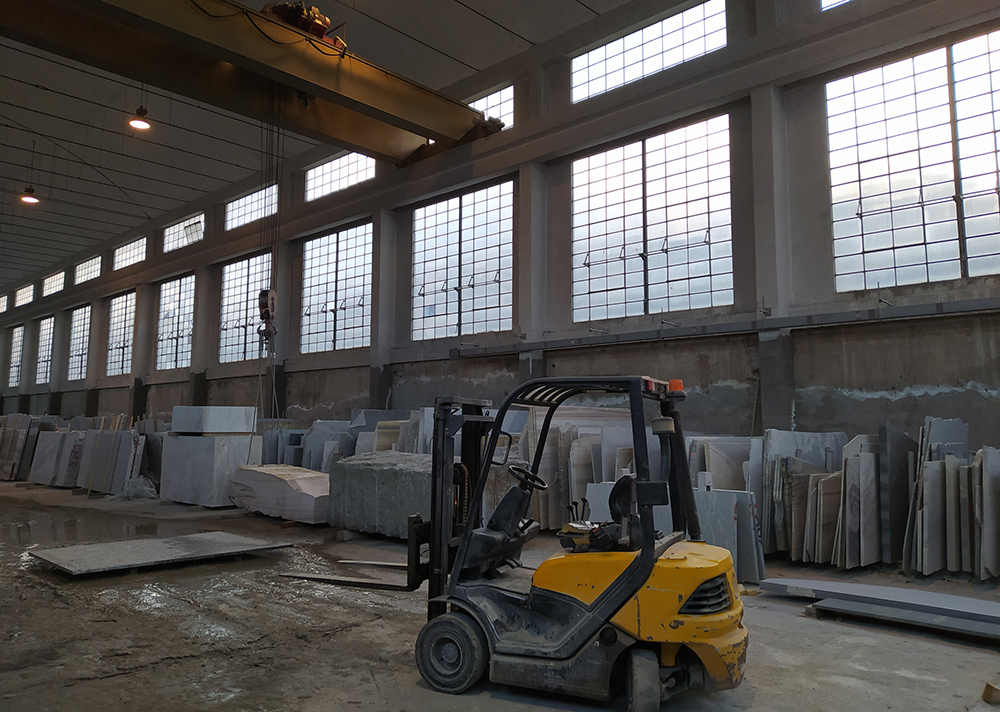
Most fabrication shops rely on a combination of equipment types to support these tasks.
Common stone handling equipment includes:
-
Slab racks and A-frames
-
Slab clamps
-
Vacuum lifters
-
Industrial slab dollies
-
Mobile fabrication tables
From granite slab transport equipment to quartz fabrication handling tools, each component must support heavy loads safely and predictably.
Because slabs are both heavy and fragile, every piece of equipment in the workflow must be designed to control movement and maintain stability.
Why Proper Equipment Reduces Breakage & Injury
Stone slabs rarely fail due to cutting errors. Most failures occur during handling.
Stone materials are particularly vulnerable to:
-
Torsion, or twisting forces
-
Shock loading from sudden impact
-
Uneven frame support
-
Vibration during movement
Improper support can create microfractures in slabs, especially in quartz and porcelain. These fractures may not appear immediately but can become visible later during installation.
Using under-rated slab carts increases the risk of tipping and structural instability. At the same time, poorly designed equipment often forces workers into awkward positions that increase the risk of musculoskeletal injury.
One of the most overlooked elements in stone transport systems is the mobility hardware beneath the equipment.
Why Casters Are the Foundation of Stone Mobility
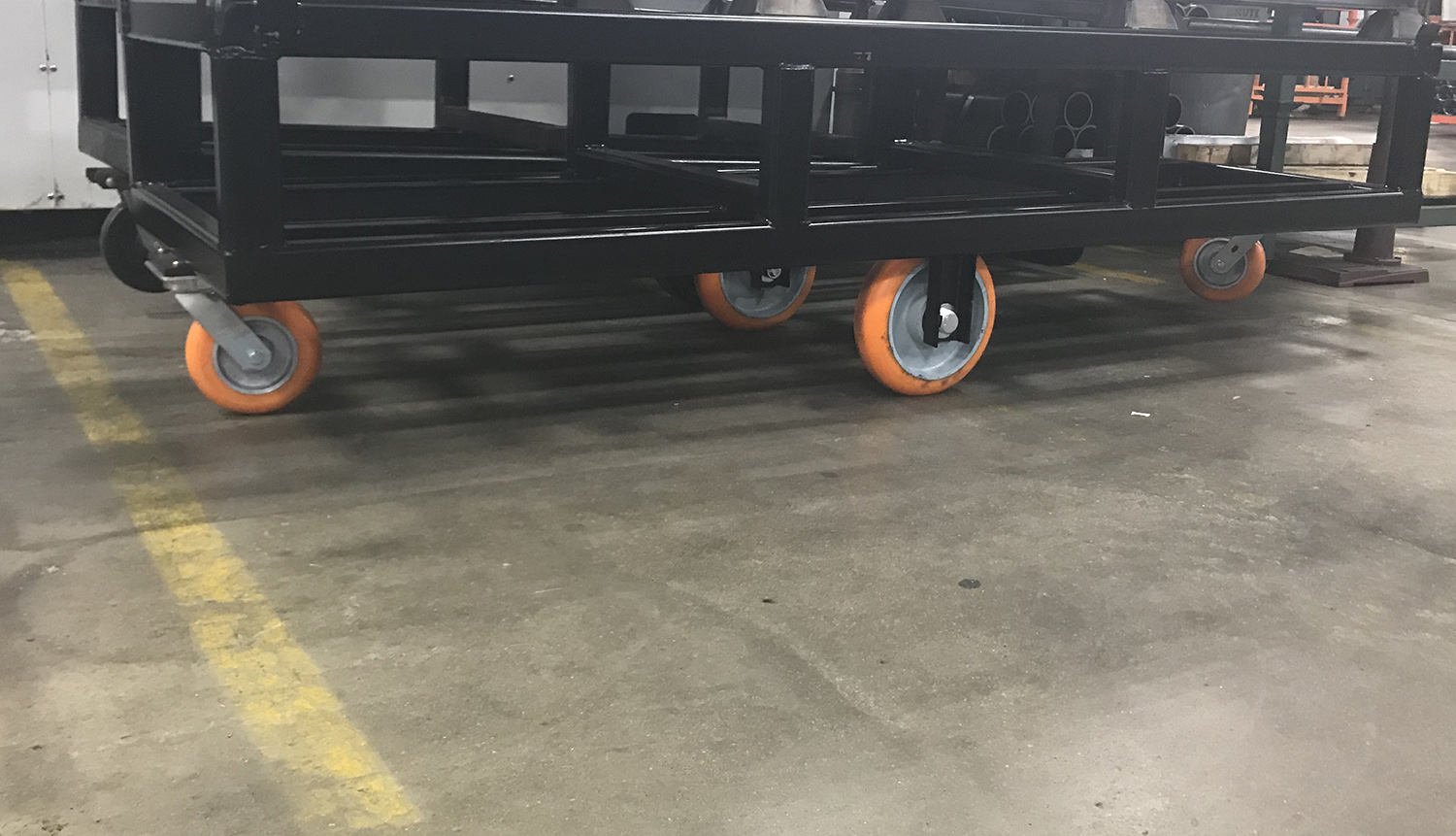
Casters and wheels support nearly every piece of mobile equipment used in a fabrication shop.
Slab carts, mobile workstations, staging platforms, and fabrication tables all rely on casters to move safely and efficiently.
When casters fail, the entire system fails. This can result in:
-
Frame instability
-
Slab tipping
-
Increased operator strain
-
Production stoppages
Because of their critical role, questions about casters are common in stone fabrication environments, including:
-
What casters are best for granite slabs?
-
How much weight can industrial casters support?
-
What size caster is needed for slab carts?
The correct answer depends on several factors, including load capacity, caster configuration, operating environment, and movement patterns within the shop.
Choosing the Right Caster Type for Stone Applications
Selecting the proper caster configuration directly impacts maneuverability, stability, and operator control.
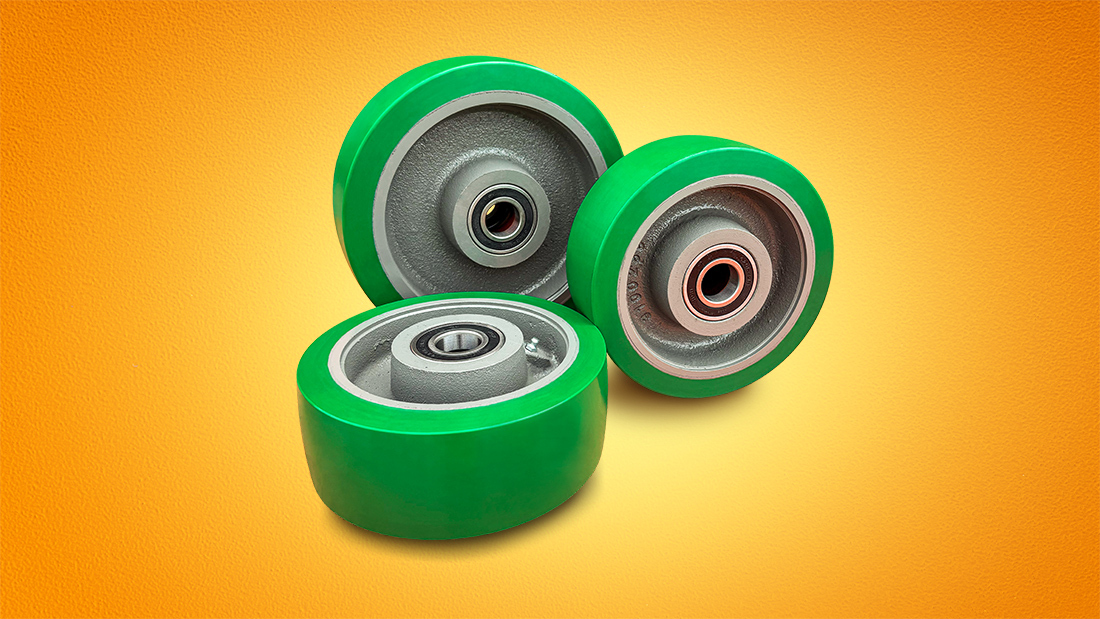
Swivel vs. Rigid Configurations
Different caster layouts serve different mobility needs.
Common configurations include:
-
Two swivel + two rigid casters – the most common configuration for slab carts
-
Four swivel casters – useful in tight fabrication layouts or staging areas
The configuration determines how easily carts can turn and how loads are distributed across the frame.
Brake Types
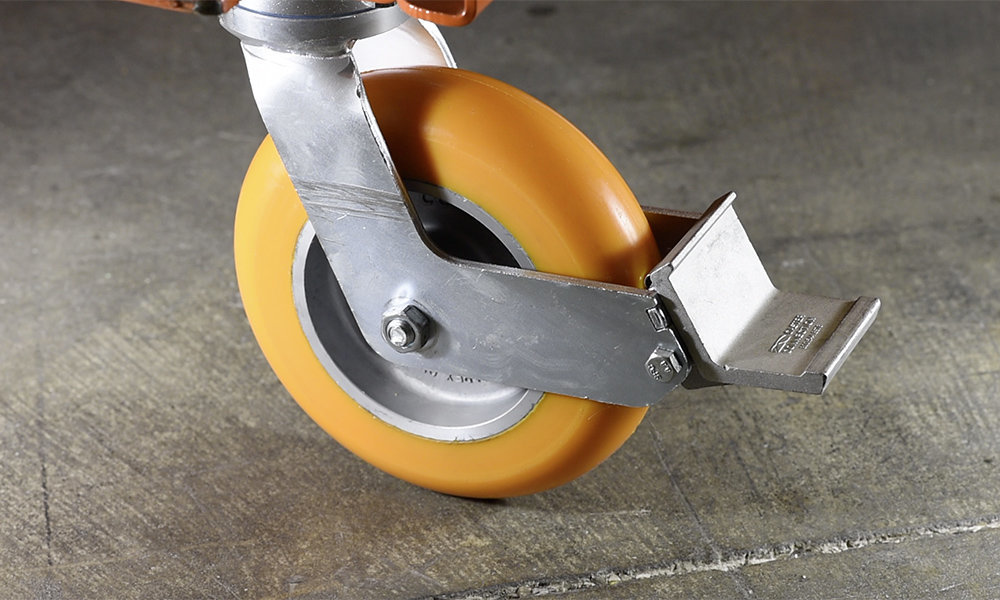
Brake systems are critical for maintaining stability when slabs are being transferred or positioned.
Common brake options include:
-
Total-lock brakes, which lock both the wheel and swivel for cutting stability
-
Floor locks, which stabilize carts during slab transfer
Reliable braking systems play a major role in stone installation safety.
Wheel Materials
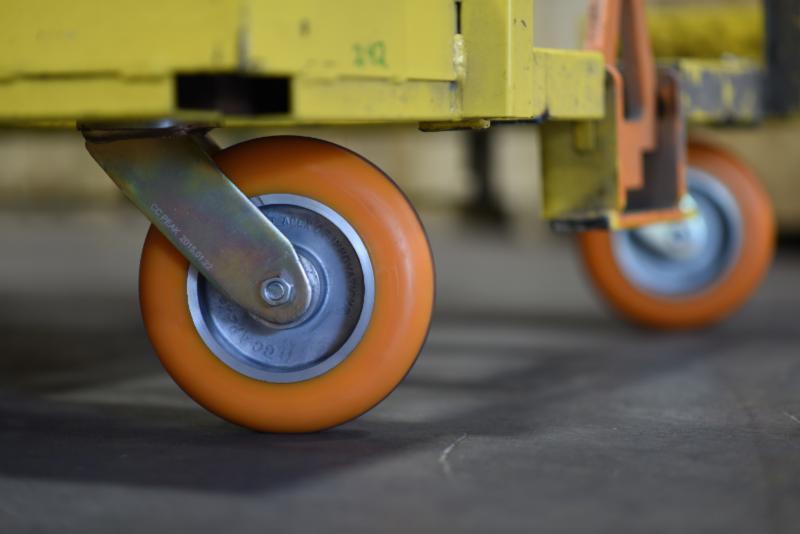
Wheel material influences several important performance factors, including vibration, push force, and floor protection.
Wheel material affects:
-
Vibration transfer
-
Shock absorption
-
Required push force
-
Protection of finished flooring
In most stone fabrication environments:
-
Polyurethane wheels reduce vibration and protect finished slabs
-
Larger diameter wheels roll more smoothly across concrete surfaces
Shock absorption becomes especially important for porcelain slab carts, where brittle materials are sensitive to vibration.
Load Rating Considerations (With Safety Formula)
Improper slab cart load ratings are one of the most common causes of mobility system failure.
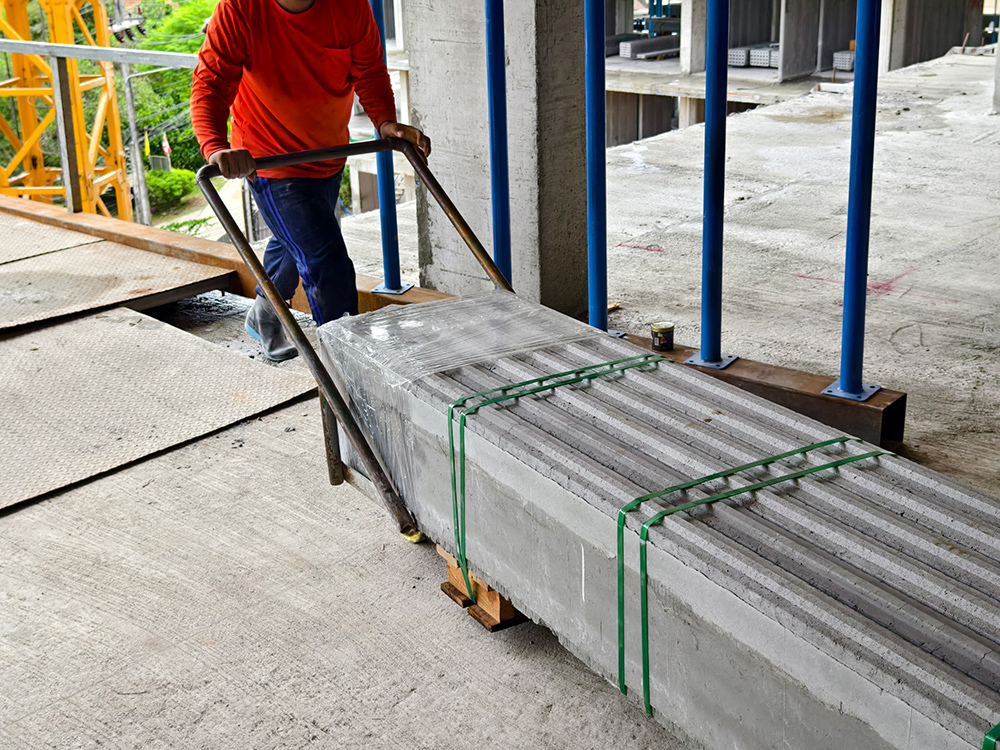
A simple formula helps determine appropriate caster capacity:
-
Calculate slab weight
-
Add a 25–30 percent safety factor
-
Apply the 3-caster rule
-
Account for dynamic load conditions
Example Calculation
If a slab weighs 1,000 pounds:
Add 30 percent safety factor
1,000 × 1.30 = 1,300 pounds total capacity
Apply the 3-caster rule
1,300 ÷ 3 = 433 pounds minimum per caster
Although this calculation provides a baseline, most professional fabrication shops choose casters rated between 600 and 800 pounds for similar applications.
The reason is that static load is not the same as dynamic load.
-
Static load is the weight when equipment is stationary.
-
Dynamic load occurs while the cart is rolling, turning, or stopping.
Dynamic forces can exceed the static weight of the slab, especially during abrupt movement or surface impact.
Under-rated casters can lead to:
-
Bearing collapse
-
Frame distortion
-
Sudden wheel failure
-
Increased push strain for workers
Heavy-duty casters for stone fabrication should be treated as structural components, not accessories.
Slab Lifters & Vacuum Suitcases – Getting Slabs Moving
Lifting equipment begins the movement process. Mobility systems allow that movement to continue safely throughout the shop.
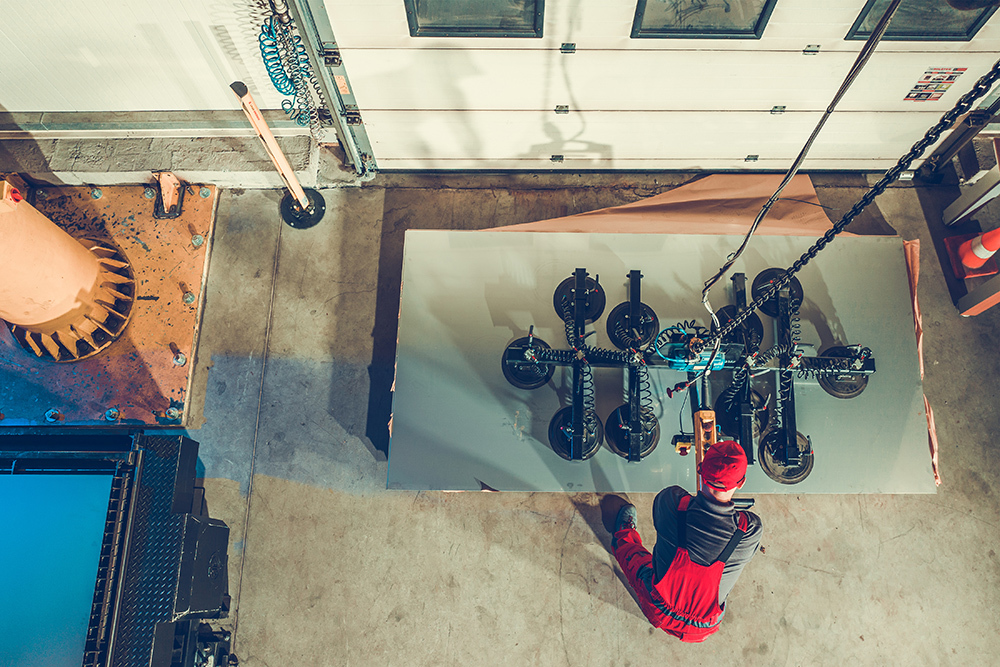
Suction Cup Lifters vs. Slab Clamps
Vacuum lifters are commonly used for granite and other polished stone materials.
They are most effective when:
-
Slab surfaces are smooth
-
Equipment is regularly inspected
-
Seals remain intact
Slab clamps may be a better option when:
-
Edge access is available
-
Slabs have textured surfaces
-
Vacuum lifting is impractical
Porcelain compatibility requires additional caution due to the material’s brittleness.
Understanding potential failure points is critical. A vacuum failure during lifting can create serious safety hazards.
Crane & Gantry Integration with Mobile Carts
The most dangerous moments in stone handling often occur during transfer points, when slabs move from lifting equipment onto carts or staging systems.
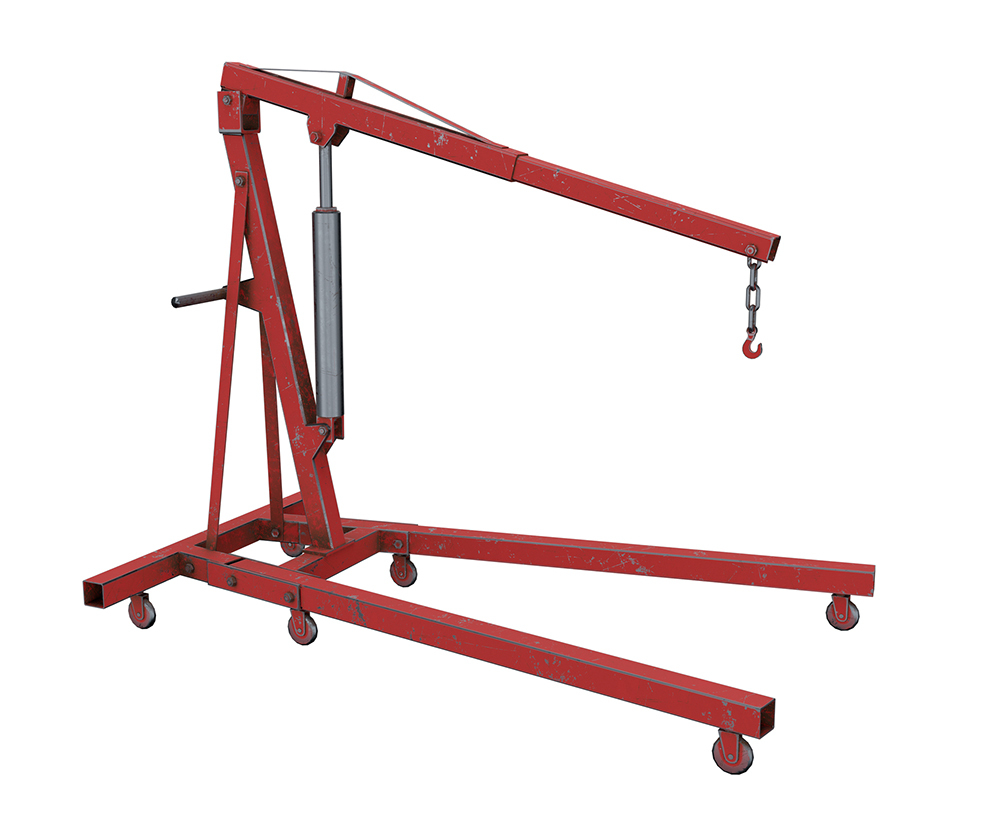
During these transitions:
-
Carts should be brake-locked
-
Frames must remain level
-
Casters must support the full load
Stable cart positioning significantly reduces transfer risk.
Lifting equipment removes slabs from racks. Mobile carts and casters allow those slabs to move safely through the rest of the workflow.
How the Right Mobility Protects Workers
Ergonomic stone handling improves both safety and operational efficiency.
Reducing manual strain begins with designing equipment that supports controlled movement.
Key ergonomic principles include:
-
Pushing loads rather than pulling them
-
Maintaining proper handle height
-
Aligning the load center over the frame
-
Reducing rolling resistance
Caster quality plays a major role in worker effort. High-quality bearings reduce friction, while precision wheels minimize vibration.
Properly rated casters also help distribute load more evenly, reducing the physical strain required to move heavy slabs.
Effective stone handling relies on properly engineered mobility, not brute force.
Maintenance & Inspection for Material Handling Systems
Preventative maintenance plays a critical role in preventing equipment failures.

Daily Visual Checks
A basic stone handling inspection checklist should include:
-
Inspecting wheels for cracks or damage
-
Checking brake engagement
-
Inspecting weld points on frames
-
Verifying smooth swivel rotation
-
Checking mounting hardware
Bearing Care & Load Testing
Bearings often fail first when equipment is overloaded.
Common warning signs include:
-
Grinding noises
-
Uneven rolling
-
Flat spots on wheels
-
Increased push resistance
Periodic load testing helps ensure slab cart capacity ratings remain accurate.
Worn components should always be replaced before failure occurs.
Integrating Maintenance into SOPs
Best practices include:
-
Assigning inspection responsibility to specific staff members
-
Logging inspections and maintenance activity
-
Aligning maintenance practices with OSHA material handling guidelines
-
Reviewing load calculations annually
Preventative maintenance helps reduce downtime, equipment failures, and insurance claims.
Investing in the Right Gear Pays Off
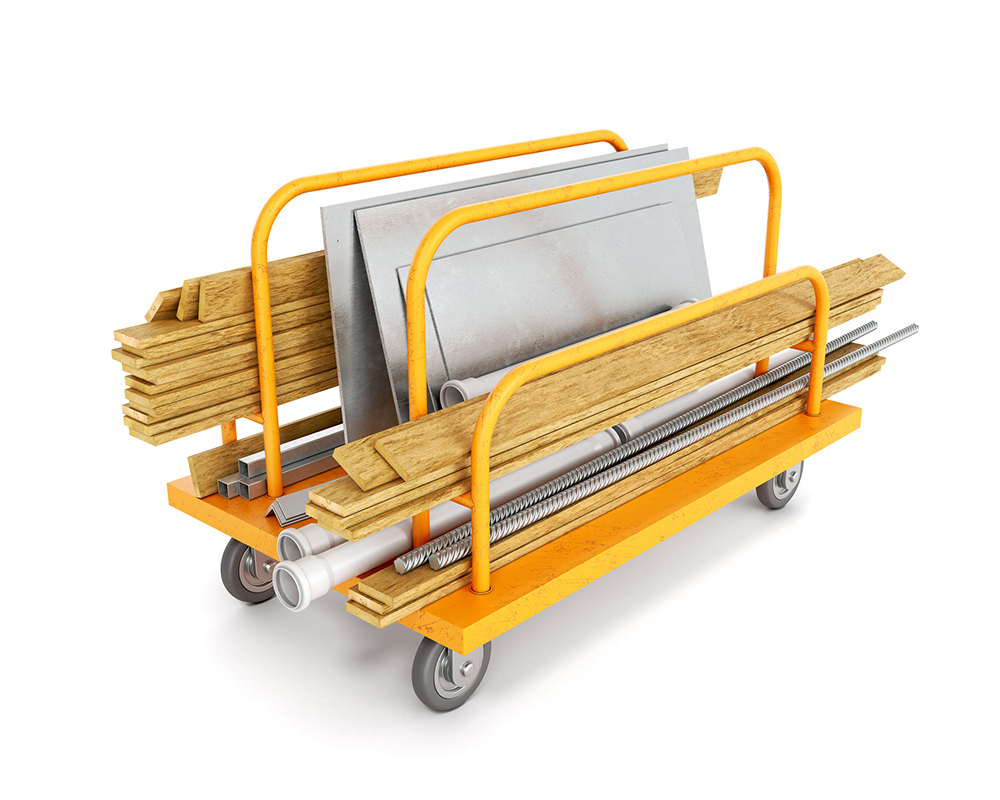
The right stone material handling equipment improves safety, efficiency, and long-term productivity.
Well-designed mobility solutions result in:
-
Less slab breakage
-
Lower insurance claims
-
Longer equipment lifespan
-
Faster installation timelines
-
Higher production throughput
In modern stone fabrication and installation shops, material handling equipment plays a central role in keeping production moving safely and efficiently.
At the center of that infrastructure are properly engineered, correctly rated, super heavy-duty casters.
Caster quality ultimately determines whether a workflow operates reliably or struggles under load.
Book A Caster Needs Eval Today
With a Caster Needs Eval, you can spot inefficiencies, test ergonomic performance, and confirm the right fit for your operation. Our team helps you choose the best caster for your carts and environment so you can protect your team, reduce maintenance costs, and keep production moving without interruption.
Take the guesswork out of caster selection and get a clear plan for safer, smarter mobility.

Frequently Asked Questions
What equipment is needed to move stone slabs safely?
Stone slab handling typically requires slab racks, forklifts or cranes, vacuum lifters or clamps, mobile slab carts, and heavy-duty industrial casters rated for the load.
What are the best casters for stone fabrication shops?
Heavy-duty polyurethane casters with high load ratings, precision bearings, and reliable braking systems are commonly recommended for granite, quartz, and porcelain fabrication environments.
How do you calculate slab cart load capacity?
Multiply slab weight by 1.25 to 1.30, then divide by three to ensure each caster can support the load if one temporarily lifts off the ground.
Why do slab carts fail?
Common causes include under-rated casters, bearing failure, poor weld integrity, lack of maintenance, and shock loading during movement.