Porcelain Slab Carts & Casters for Large-Format Tile Fabrication

Large-format porcelain slabs have transformed modern tile fabrication and installation, offering sleek aesthetics and incredible durability once installed. But during transport and staging, porcelain behaves very differently than traditional stone. Thinner and lighter than granite or quartz, porcelain slabs are also far more brittle—making them highly sensitive to torsion, vibration, and uneven support. That’s why porcelain slab carts and casters for large format tile must be engineered with stability as the top priority. The right porcelain fabrication mobility solutions help fabricators and installers move delicate slabs safely through shops, staging areas, and job sites while minimizing breakage risk.
In this guide, we’ll explore how properly designed porcelain slab carts, wheels, and load-rated casters protect fragile materials, improve workflow efficiency, and safeguard profit margins in large-format tile operations.
Porcelain Is Lighter — But Far More Brittle
Large-format porcelain slabs have significantly changed the fabrication and installation landscape.
Unlike granite or quartz, porcelain slabs are thinner and lighter, but they behave very differently during handling. They are extremely rigid and highly brittle under torsional stress, which means the material tolerates very little flex or uneven loading.
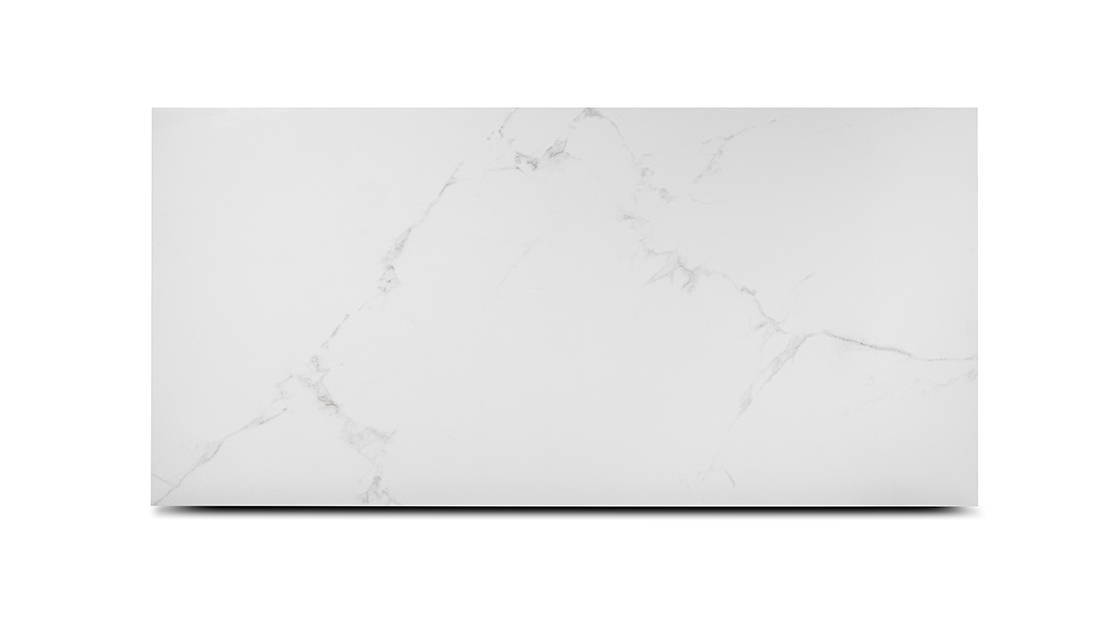
Typical porcelain slab characteristics include:
-
Thin profiles, often 6–12 mm
-
Lower weight per square foot
-
High rigidity
-
Brittleness under torsion
-
Sensitivity to point loading
At roughly 12 mm thickness, porcelain slabs usually weigh about 6–8 pounds per square foot.
For example, a standard 10 ft × 5 ft slab weighs approximately:
50 sq ft × 7 lbs ≈ 350 lbs
While this is significantly lighter than granite or quartz, porcelain introduces a different type of mobility challenge. Natural stone may tolerate slight flexing during movement, but porcelain does not.
It doesn’t bend. It breaks.
Because of this, porcelain fabrication mobility systems must prioritize stability over raw load capacity. Key design priorities include:
-
Even load distribution
-
Shock absorption
-
Frame rigidity
-
Minimal torsion
-
Controlled movement
Porcelain fabrication requires stability-first engineering.
Why Stability Matters in Porcelain Slab Handling
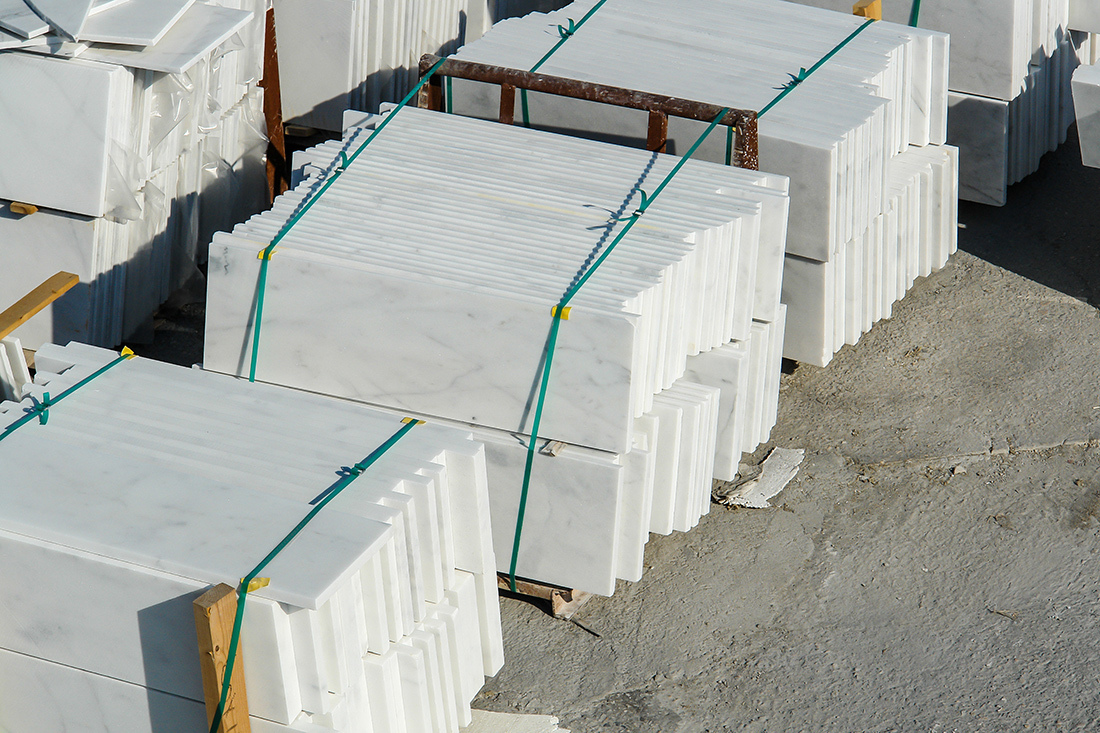
Porcelain slabs fail differently than natural or engineered stone. Rather than gradual damage or visible chipping, porcelain often fractures suddenly due to instability during movement.
Common causes of porcelain slab failure include:
-
Uneven frame support
-
Torsional stress while turning
-
Vibration from rough floor surfaces
-
Point loading caused by narrow wheel placement
-
Shock impact from floor expansion joints
To reduce these risks, porcelain slab carts must eliminate several types of instability.
Well-designed mobility should prevent:
-
Frame flex
-
Uneven caster distribution
-
Abrupt directional changes
-
Direct shock transfer to the slab
Even small amounts of instability can create hairline cracks that may not appear until the slab reaches the jobsite or installation stage.
Proper Load Calculation for Porcelain Slab Carts
Although porcelain slabs weigh less than many stone materials, proper load calculation is still critical. Underestimating load requirements can introduce instability and vibration during movement.
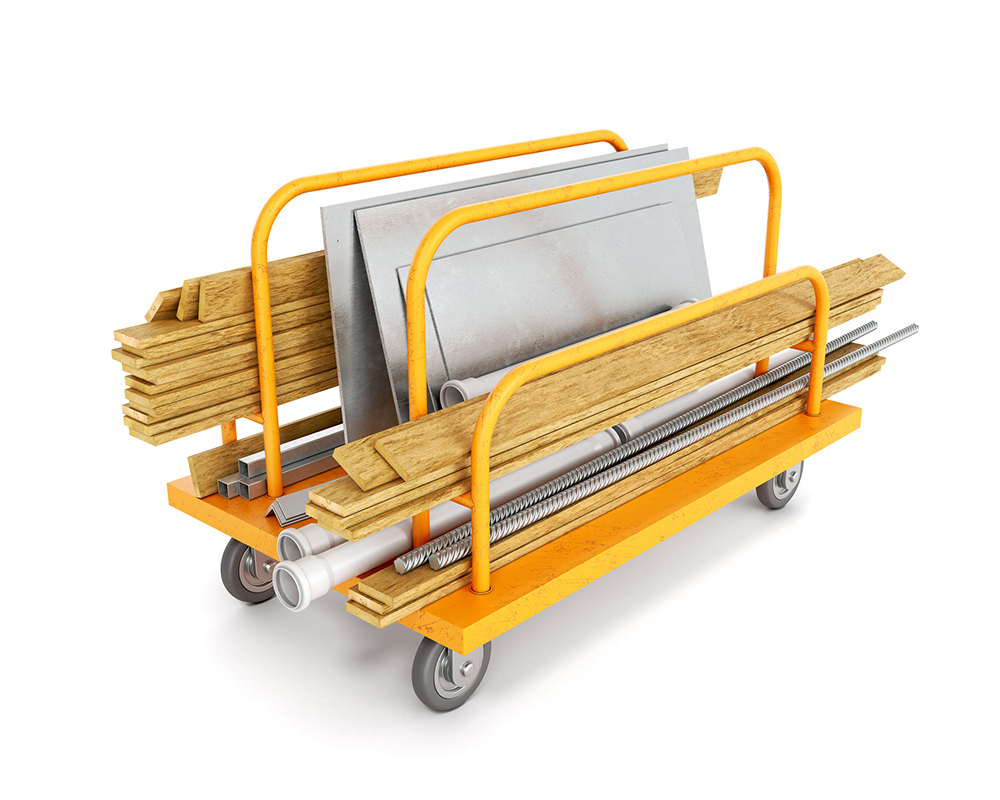
Step 1: Calculate Slab Weight
Example:
10 ft × 5 ft porcelain slab ≈ 350 lbs
Step 2: Add a Safety Factor
Industry best practice is to add a 25–30 percent safety factor.
350 lbs × 1.30 = 455 lbs required cart capacity
This safety factor accounts for several real-world conditions, including:
-
Movement stress
-
Handling variation
-
Minor dynamic impacts
Step 3: Apply the 3-Caster Rule
On uneven surfaces, one caster may temporarily lose contact with the floor. The remaining three casters must support the full load.
455 lbs ÷ 3 = 152 lbs minimum per caster
Although this calculation produces a relatively low minimum rating, professional porcelain fabrication carts typically use casters rated between 300 and 500 pounds per wheel.
Higher-rated casters provide several advantages:
-
Improved shock absorption
-
Greater stability margin
-
Reduced torsional stress
-
Longer service life
Under-spec’d casters rarely fail catastrophically. Instead, they introduce instability that increases the risk of slab damage.
Static vs Dynamic Load in Porcelain Applications
Understanding the difference between static and dynamic load is especially important for brittle materials like porcelain.
-
Static load refers to slab weight when the cart is stationary.
-
Dynamic load refers to the forces generated during rolling, turning, or impact with uneven surfaces.
Because porcelain is brittle, dynamic load conditions are the primary risk factor. For this reason, shock absorption often matters more than raw load capacity.
Recommended Caster Configuration for Porcelain Fabrication
Porcelain mobility systems should be designed to prioritize stability and vibration control.
Wide Caster Placement for Even Support
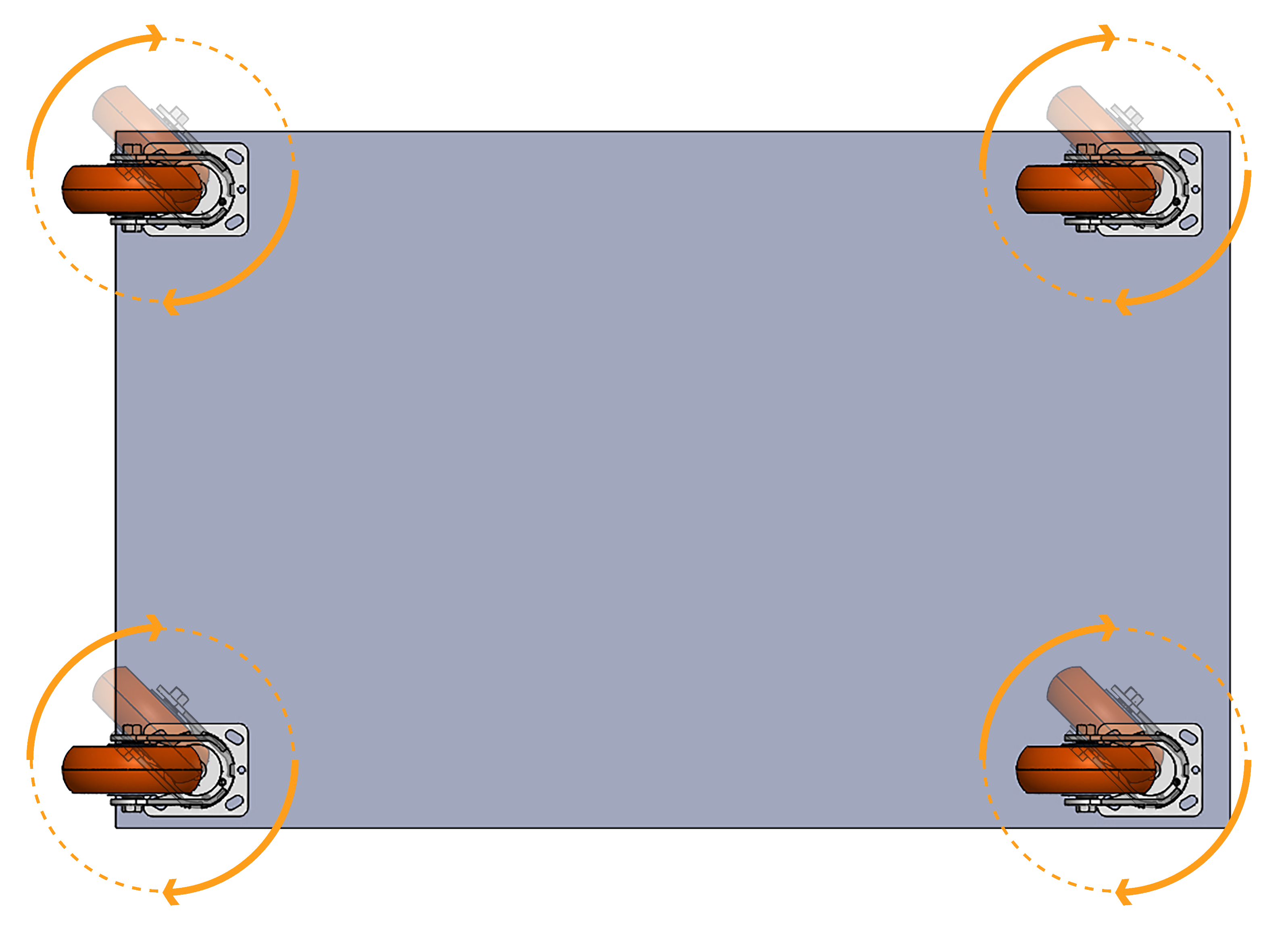
Caster placement is particularly important when handling porcelain slabs. Wider caster spacing improves structural stability and reduces stress on the slab.
Wide caster placement helps:
-
Reduce frame flex
-
Improve weight distribution
-
Minimize torsion
-
Prevent point stress
Providing even support across the frame helps prevent slab cracking.
Larger Diameter Polyurethane Wheels
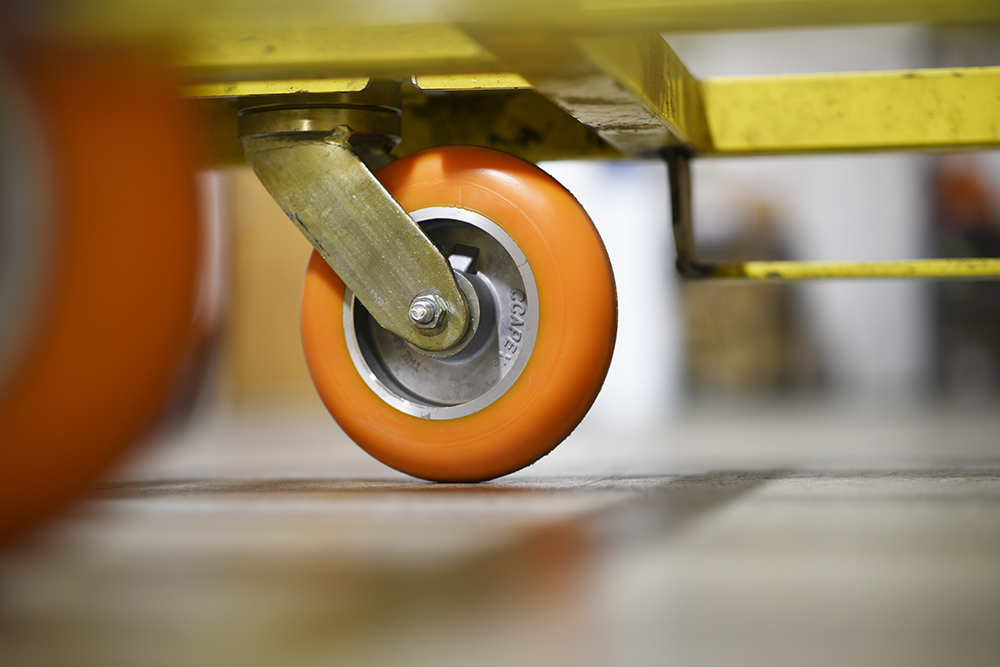
Wheel diameter also plays a major role in vibration control.
Larger wheels help:
-
Roll smoothly over expansion joints
-
Reduce shock transfer
-
Lower vibration
-
Minimize impact stress
High-quality polyurethane tread wheels are typically preferred because they absorb shock better than hard wheel materials.
Hard wheels increase the risk of fracture.
Sealed Precision Bearings
Although porcelain fabrication environments are often cleaner than granite shops, precision bearings are still important for maintaining smooth movement.
Sealed bearings help:
-
Reduce friction
-
Improve maneuverability
-
Prevent contamination
-
Maintain consistent performance
Lower rolling resistance also provides operators with better control when staging slabs.
4-Swivel Configuration (When Engineered Properly)
In tight fabrication layouts, carts equipped with four swivel casters may improve maneuverability.
However, these systems must be carefully engineered to ensure:
-
Even load distribution
-
Load ratings above calculated minimums
-
Stable turning without torsional stress
Improper swivel configurations can increase lateral torsion and create instability.
Stability must be engineered, not improvised.
Total-Lock Brake Systems

Porcelain slab staging requires equipment that remains completely stationary when needed.
Total-lock brakes provide several safety advantages:
-
Lock both the wheel and swivel
-
Prevent unintended drift
-
Stabilize carts during cutting or transfer
-
Improve installation safety
Mobility without controlled stability introduces unnecessary risk.
Porcelain Workflow Applications
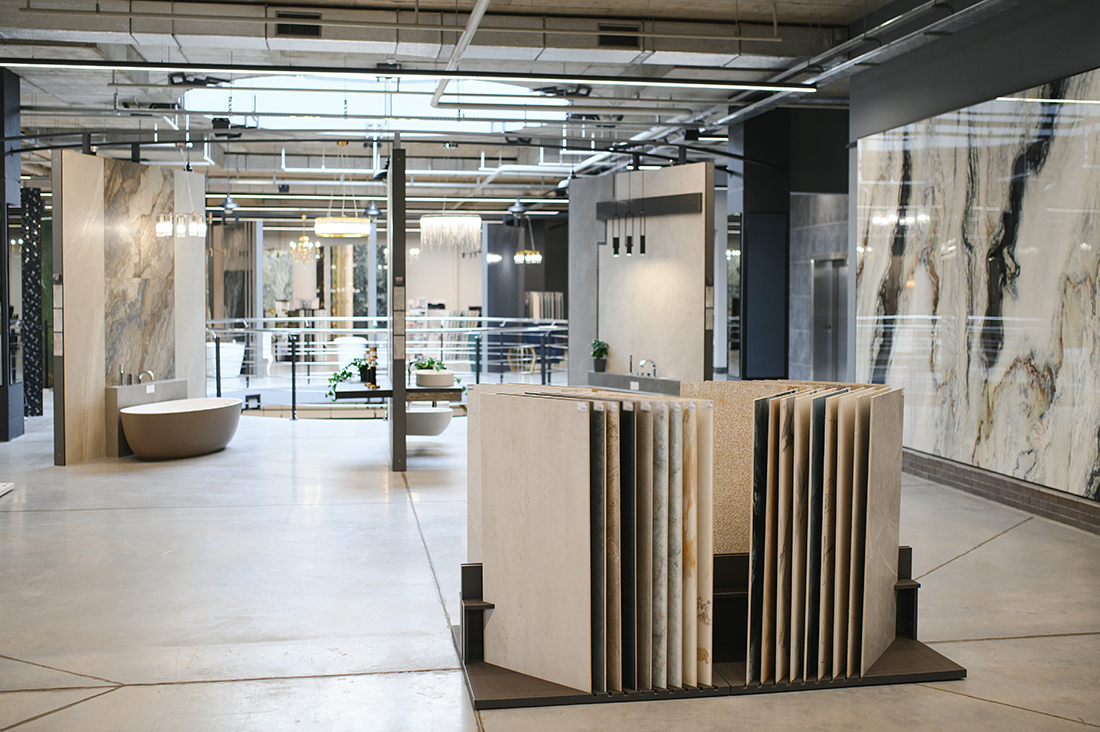
Caster Connection supports porcelain slab handling across a wide range of fabrication and installation environments.
Typical applications include:
- Large-Format Tile Fabrication: Smooth transport between cutting and finishing stations.
- Slab Storage and Staging: Stable support before installation preparation.
- On-Site Installation Carts: Controlled movement across finished flooring surfaces.
- Retail and Showroom Transport: Protection of slab integrity during display movement.
- Architectural Panel Handling: Safe staging of thin porcelain wall systems.
Large-format tile transport equipment must protect fragile materials during every stage of movement.
The ROI of Stability in Porcelain Fabrication
For fabrication shop owners and installation contractors, porcelain mobility decisions directly affect profitability.
Casters influence several operational outcomes:
-
Scrap rates
-
Rework frequency
-
Installation callbacks
-
Customer satisfaction
-
Insurance exposure
Unlike many natural stones, a cracked porcelain slab typically cannot be repaired.
Reducing shock and torsion reduces waste, and reducing waste protects profit margins.
Because porcelain slabs are often premium materials, a single break can eliminate the profit from an entire project.
Stability-first caster configurations help protect that margin.
Why Porcelain Fabricators Choose Caster Connection
Caster Connection supports porcelain fabrication operations with mobility solutions designed specifically for fragile materials.
Key advantages include:
-
Engineered load calculation guidance
-
Stability-focused configuration recommendations
-
Shock-absorbing polyurethane wheels
-
Wide-placement mobility engineering
-
Application-specific consultation
We do not treat porcelain like granite.
Porcelain requires stability-first mobility engineering, and our solutions are designed accordingly.
Book A Caster Needs Eval Today
With a Caster Needs Eval, you can spot inefficiencies, test ergonomic performance, and confirm the right fit for your operation. Our team helps you choose the best caster for your carts and environment so you can protect your team, reduce maintenance costs, and keep production moving without interruption.
Take the guesswork out of caster selection and get a clear plan for safer, smarter mobility.

Frequently Asked Questions
What casters are best for porcelain slab carts?
High-capacity polyurethane casters with larger wheel diameters and sealed precision bearings are ideal because they reduce shock, vibration, and torsional stress.
Are porcelain slabs lighter than granite?
Yes. Porcelain slabs are significantly lighter but much more brittle and sensitive to torsion and impact.
Do porcelain slab carts need high load ratings?
Yes. Safety factors and the 3-caster rule must still be applied to account for dynamic load and uneven surfaces.
Why is shock absorption important for porcelain fabrication?
Porcelain is rigid and brittle. Shock from uneven surfaces can create micro-fractures or immediate cracking.