Increasing Throughput and Ergonomic Performance in Automotive Parts Distribution

In high-volume automotive manufacturing and parts distribution environments, material handling performance is directly tied to throughput, ergonomics, and profitability. As product demand increases, carts and dealer cages are required to carry heavier loads through tight warehouse aisles—often pushing legacy caster systems beyond their intended capacity. When casters are undersized or improperly specified, operations experience higher push/pull forces, reduced maneuverability, accelerated caster wear, and increased risk of operator fatigue or injury. Over time, these issues can lead to slower picking rates, longer unloading times, infrastructure damage, and lost revenue. This case study highlights how Caster Connection partnered with a major automotive manufacturer to solve these challenges through a scalable, engineered caster solution. By replacing traditional 6” TPR casters with a modular CC Apex caster platform, the customer was able to support heavier loads, improve aisle control, reduce ergonomic strain, and increase parts-per-cage efficiency—without redesigning existing equipment. The result: lower push/pull forces, improved durability, faster workflows, and a caster strategy built to grow alongside the operation.
The Challenge: Mobility Limitations in High-Volume Automotive Operations
A large automotive manufacturer operating a centralized parts distribution and fulfillment system was experiencing increasing mobility and ergonomic challenges as product volume grew.
Dealer cages were carrying heavier loads than originally designed, creating strain on both equipment and operators. The carts needed to move efficiently through tight warehouse aisles while maintaining precise control near racking systems—an increasingly difficult task with the existing caster setup.
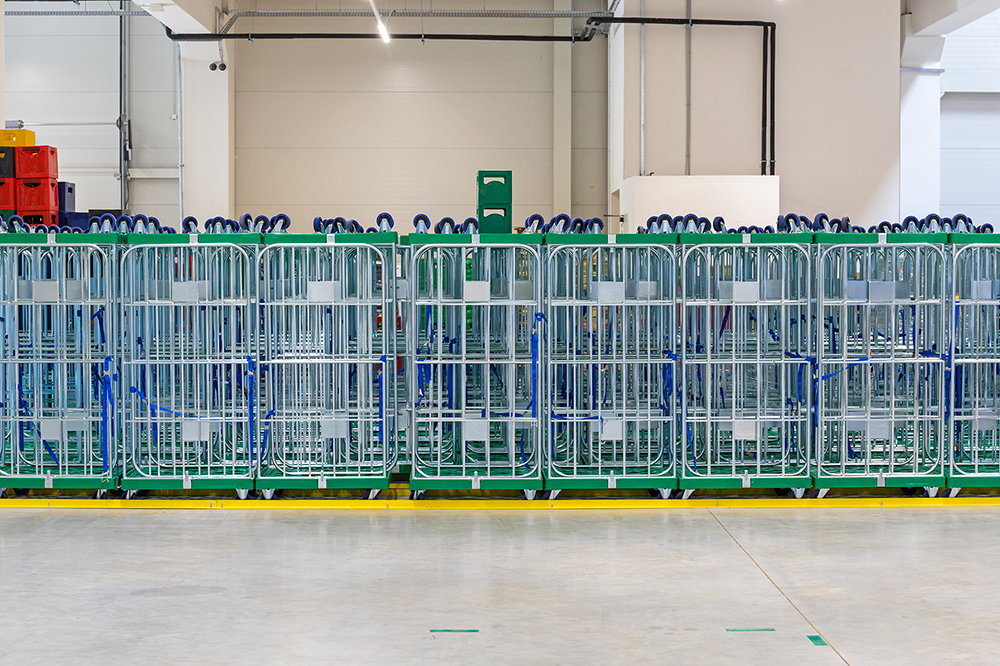
Key challenges included:
-
Poor maneuverability in narrow aisles, leading to frequent contact with racking
-
High push/pull forces, increasing operator fatigue and ergonomic risk
-
Caster degradation, as existing 6” TPR casters collected debris and lost tread under higher loads
-
Reduced operational efficiency, including slower unloading times and fewer parts picked per trip
As throughput demands increased, the customer needed a scalable caster solution that could support heavier loads, improve ergonomics, and enhance control without requiring a full cart redesign.
The Solution: A Scalable Caster Strategy Built for Growth
Caster Connection collaborated closely with the customer and their design house to evaluate load requirements, aisle constraints, and long-term operational goals.
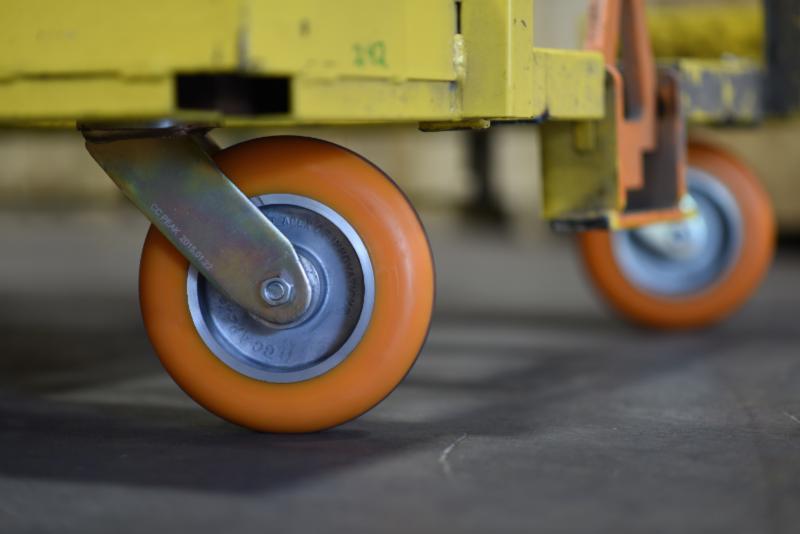
After analysis and testing, the team implemented a standardized 6" x 2" CC Apex caster configuration across all dealer cages, mounted on CC Alpha or CC Peak rig assemblies. This approach created a flexible foundation that allowed the customer to upgrade to an 8" x 3" CC Stout caster when increased load capacity was required—without changing the overall cage or rig design.
This modular caster strategy delivered several advantages:
-
A consistent caster platform across all dealer cages
-
The ability to support heavier loads as product volume increased
-
Easy caster upgrades without disrupting operations
-
Improved durability in debris-prone warehouse environments
By designing for adaptability, the customer gained a future-ready mobility solution aligned with evolving production and distribution demands.

The Results: Measurable Gains in Ergonomics, Efficiency, and Revenue
The caster upgrade produced immediate, quantifiable improvements across safety, efficiency, and throughput:
- Push/pull forces reduced from 50–55 lbs to under 40 lbs at a load of 1,100 lbs, significantly improving ergonomics
- Increased load capacity, allowing more parts per dealer cage
- Fewer trips and faster unloading, reducing labor time per order
- Improved maneuverability in tight aisles, minimizing racking contact and product damage
- Reduced caster maintenance, with improved resistance to debris buildup and tread loss
By enabling heavier loads without sacrificing control or ergonomics, the customer increased picking efficiency and unlocked higher revenue potential per cage movement.

Why It Matters: The Impact of the Right Caster Solution
This case highlights how engineered caster solutions play a critical role in material handling performance—especially in high-volume automotive environments.
The right caster selection doesn’t just improve mobility; it:
- Reduces operator strain and injury risk
- Protects infrastructure and inventory
- Improves workflow efficiency
- Supports scalable growth without costly redesigns
Through a consultative, application-driven approach, Caster Connection delivered a solution that addressed today’s challenges while preparing the operation for future demands.
Ready to Optimize Your Caster Performance?
If your carts, cages, or material handling equipment are experiencing increased loads, poor maneuverability, or ergonomic challenges, Caster Connection can help.
Start with a Caster Needs Evaluation.
Our experts will analyze your application, load requirements, and environment to recommend the right caster solution for safety, efficiency, and long-term performance.