Quiet Casters for Packaging and Fulfillment Workstations

When Workstation Noise Starts at Floor Level
In a busy packaging or fulfillment operation, the loudest equipment receives most of the attention.

Conveyors run. Carton sealers cycle. Printers operate. Boxes move through workstations. Somewhere in the middle of that activity, an employee repositions a mobile packing table—and four small caster wheels rumble across the floor.
A wheel clicks with every rotation. Swivel sections chatter as the workstation changes direction. The cart crosses a floor joint, causing shelves, bins, tools, and packaging supplies to rattle.
That noise may seem like an unavoidable part of the operation. It may actually be a sign that the workstation’s caster system is poorly matched, worn, loose, contaminated, or overdue for evaluation.
Quiet casters can help reduce rolling noise and vibration around packaging and fulfillment workstations. But the quietest solution is not necessarily the softest wheel. The correct caster must also support the total load, roll efficiently, turn predictably, protect the floor, hold the workstation securely, and withstand the operating environment.
What Makes a Caster Quiet?
A quiet caster typically combines:
- A resilient wheel tread
- Sufficient rebound under load
- An appropriate wheel diameter
- Smooth wheel bearings
- Controlled swivel action
- Tight caster construction
- Secure mounting
- Compatibility with the floor
- Proper load capacity
- Regular inspection and maintenance

Quiet operation is produced by the interaction between the caster, cart, load, floor, and route. No single wheel material or product is automatically quiet in every application.
A resilient polyurethane wheel that performs quietly on smooth concrete may behave differently on carpet, damaged flooring, metal thresholds, or a floor covered with labels, tape, stretch wrap, and packaging debris.
The workstation must be evaluated as a complete moving system.
Where Quiet Casters Are Used in Packaging and Fulfillment

Noise-reducing casters may be appropriate for:
- Mobile packing tables
- Picking and kitting carts
- Label-printer stands
- Scanner and computer workstations
- Mobile scales
- Inspection tables
- Dunnage carts
- Film, tape, and label carts
- Carton-handling carts
- Shipping workstations
- Tool and changeover carts
- Mobile shelving
- Parts and supply carts
- Quality-control stations
- Returns-processing carts
- Mobile conveyors
- Battery and equipment carts
Some of these workstations move continuously. Others remain stationary for most of the day but must be repositioned for changeovers, cleaning, maintenance, or layout changes.
That difference affects the caster specification.
A frequently moved fulfillment cart may prioritize low rolling resistance, tracking, and durability. A mobile packing station may place greater emphasis on quiet movement, stable braking, overall height, and precise positioning.
Why Workstation Noise Matters

Not every noisy caster creates a hazardous workplace-noise exposure. However, unnecessary rolling noise can still affect:
- Employee concentration
- Verbal communication
- Perceived workplace harshness
- Equipment vibration
- Product handling
- Operator experience
- Awareness of alarms or instructions
- The overall sound level around shared work areas
NIOSH notes that workplace noise can interfere with situational awareness and make signals, alarms, and verbal warnings more difficult to hear. When occupational noise exposure is a concern, the organization should conduct an appropriate noise assessment rather than relying only on subjective impressions. Review NIOSH workplace-noise guidance.
Quiet casters are one possible engineering improvement. They are not a substitute for a facility-wide noise-control or hearing-conservation program when one is required.
Where Does Caster Noise Come From?
Caster noise can originate in several parts of the mobility system.
Sound or behavior | Possible source |
Continuous rumbling | Hard wheel tread, rough floor, worn tread, undersized wheels |
Repeated thumping | Flat spot, embedded debris, damaged wheel |
Clicking | Tread damage, loose axle hardware, debris, bearing damage |
Squeaking | Wheel bearing, axle, swivel bearing, brake contact |
Grinding | Contaminated or failing bearing, corrosion, damaged swivel |
Swivel chatter | Loose raceway, worn rig, caster flutter, mounting movement |
Rattling workstation | Vibration transmitted into shelves, bins, doors, tools, or panels |
Loud impact at floor joints | Small wheel diameter, hard tread, excessive speed |
Scraping | Dragging brake, blocked swivel, loose component, insufficient clearance |
These symptoms help identify where to begin, but they do not provide a complete diagnosis.
For example, a rattling workstation may need quieter wheels, but it may also have loose shelves, fasteners, drawer slides, bins, or equipment mounts. Installing a quiet wheel will not correct every source of cart-body noise.
Seven Factors That Influence Quiet Caster Performance
1. Wheel Material
Wheel material has a major influence on noise and vibration.
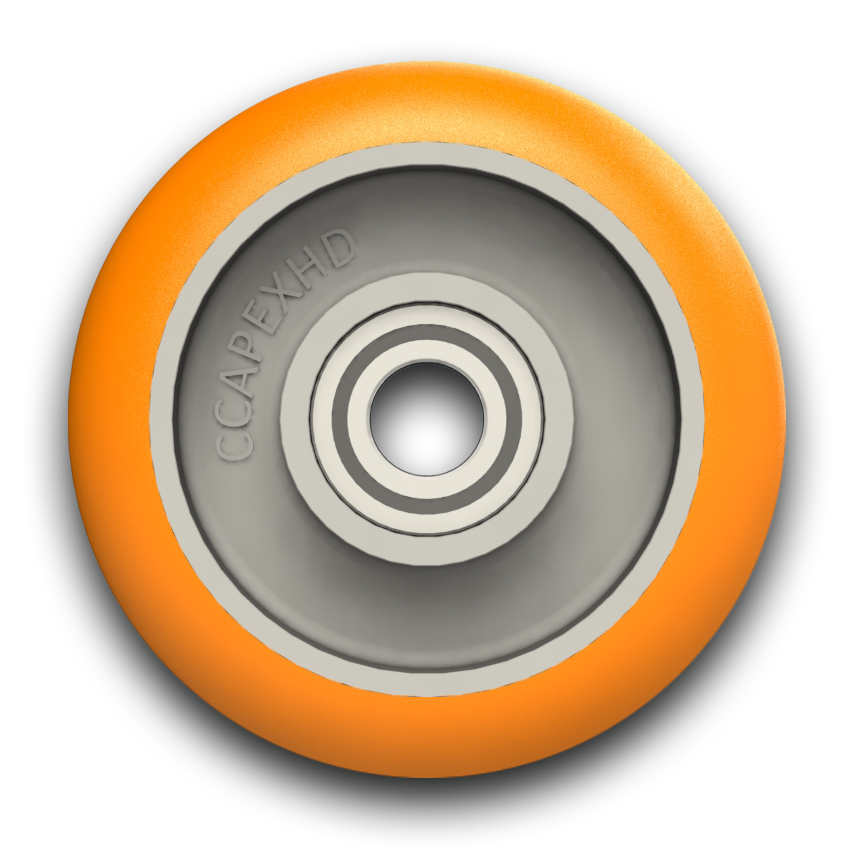
High-Rebound Polyurethane
A properly selected resilient polyurethane wheel can provide a strong balance of:
- Noise reduction
- Rolling performance
- Load capacity
- Floor protection
- Durability
- Vibration absorption
Polyurethane is available in many formulations and hardness levels. Two wheels described simply as “polyurethane” may perform very differently.
Thermoplastic Rubber and Other Resilient Elastomers
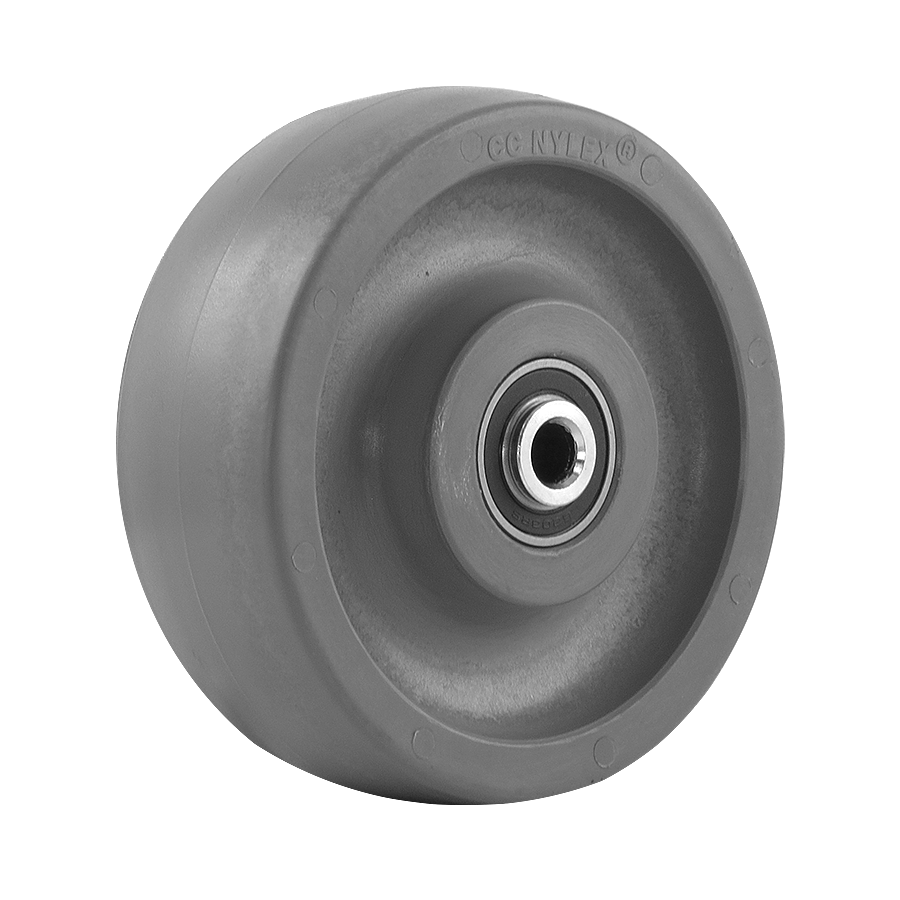
Thermoplastic-rubber and rubber-type wheels may provide cushioning and quiet movement on hard floors.
Before selecting one, evaluate:
- Load capacity
- Rolling resistance
- Flat spotting
- Tread wear
- Chemical exposure
- Floor marking
- Time spent stationary under load

Hard Polyurethane, Nylon, Phenolic, or Metal
Harder materials may provide advantages involving capacity, temperature, debris, or rolling efficiency on certain surfaces. They generally provide less cushioning, however, and may transmit more floor impact and vibration into the workstation.
The correct material depends on which performance requirements matter most.
2. Tread Resilience and Rebound
Softness and resilience are not the same thing.
A very soft wheel may compress substantially under load. That deformation can absorb some sound, but it can also increase starting and sustained rolling force.
A resilient wheel compresses as it encounters the floor and returns energy as it rolls. This rebound can help balance quiet operation with rollability.
When comparing wheel materials, consider:
- Tread hardness
- Rebound
- Wheel construction
- Core material
- Tread thickness
- Load
- Operating temperature
- Time spent stationary
The goal is controlled cushioning—not excessive deformation.
3. Wheel Diameter
Larger-diameter wheels generally cross floor joints, thresholds, debris, and surface imperfections with less abrupt impact than smaller wheels.
That can support:
- Smoother movement
- Lower threshold force
- Less vibration
- Reduced impact noise
- Improved cart control
OSHA recommends well-maintained carts with large, low-resistance wheels for applications involving mixed flooring and gaps. Review OSHA’s cart guidance.
A larger wheel can also change:
- Workstation height
- Employee working posture
- Center of gravity
- Equipment clearance
- Brake access
- Swivel radius
- Fit beneath conveyors
- Docking height
For a packing workstation, even a small change in overall caster height can affect how the table aligns with conveyors, scales, printers, shelves, or adjacent equipment.
4. Wheel and Swivel Bearings
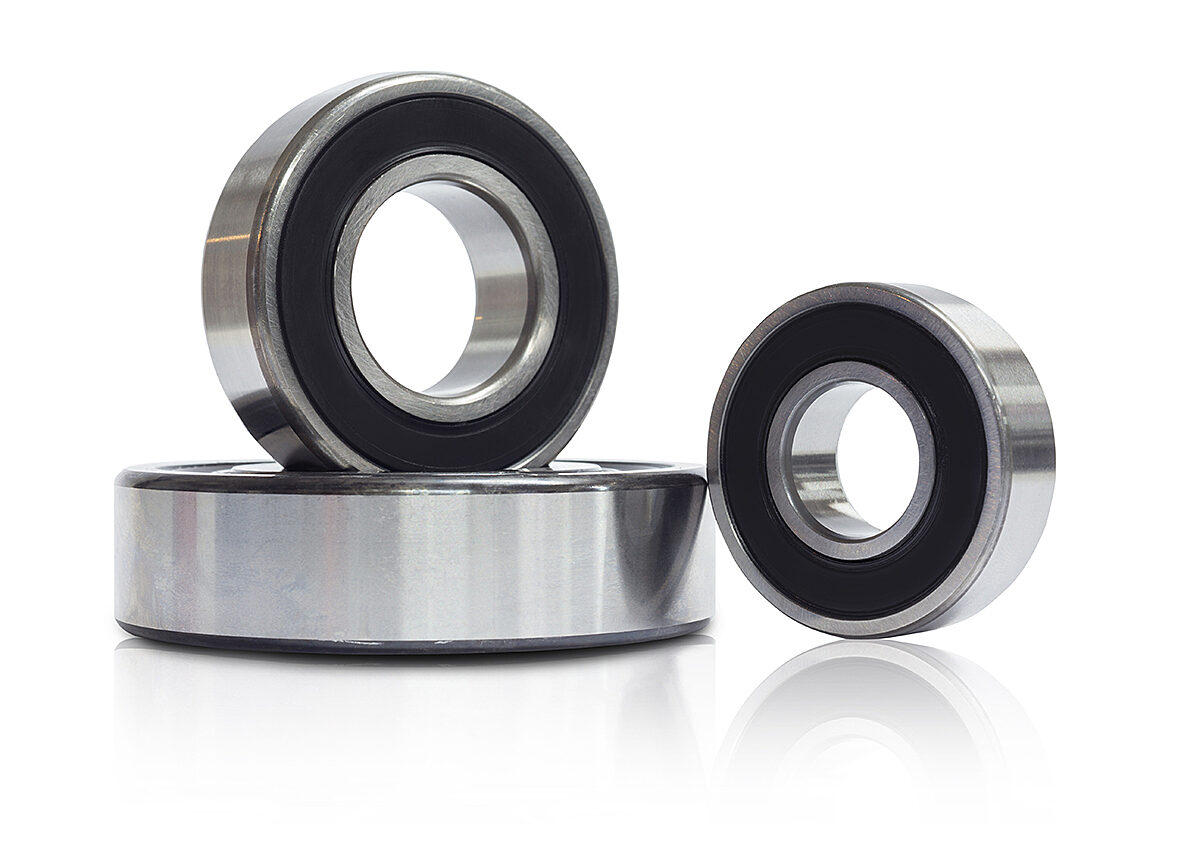
Bearings influence both noise and mobility.
Worn, contaminated, corroded, or poorly matched bearings may create:
- Squeaking
- Grinding
- Wheel wobble
- Increased rolling resistance
- Intermittent lockup
- Swivel chatter
- Irregular turning
Precision bearings can support smoother rolling. Sealed bearings may help protect internal components from packaging dust, fibers, tape fragments, moisture, and other contaminants.
The correct bearing depends on load, movement frequency, speed, environment, and maintenance practices.
5. Caster Rig Construction
Loose or worn caster components can amplify noise even when the wheel tread remains usable.
Inspect:
- Swivel raceways
- Kingpins, when present
- Fork legs
- Axles
- Fasteners
- Seals
- Brake components
- Mounting plates
- Stem sockets
A high-quality wheel installed in a loose or damaged caster rig may still rattle, bind, or track poorly.

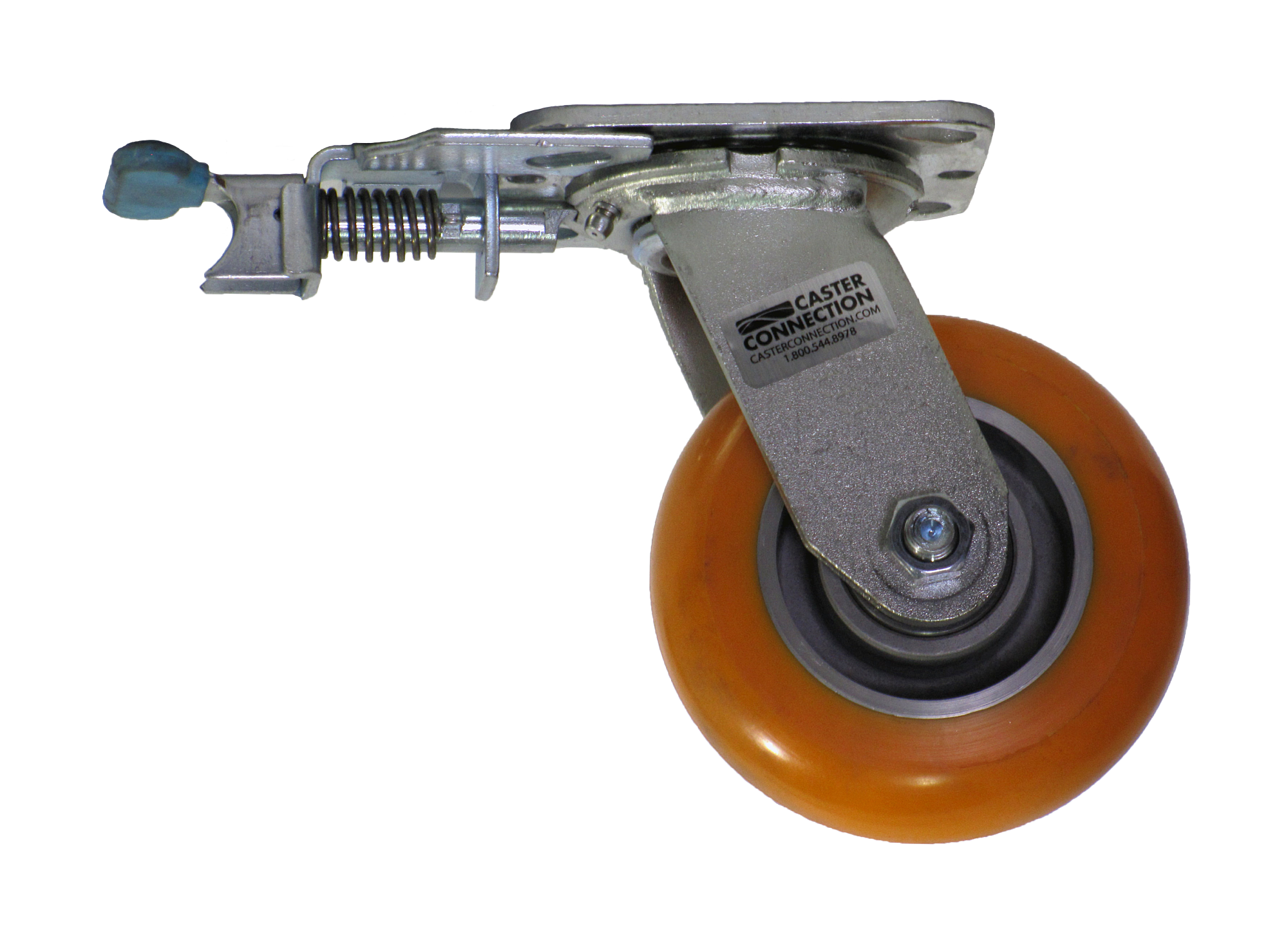
6. Caster Configuration
Caster placement affects how the workstation turns and travels.
Four Swivel Casters
Four swivel casters provide excellent lateral positioning in tight work cells. They may also cause the workstation to wander during longer moves.
Two Swivel and Two Rigid Casters
This configuration usually provides more predictable straight-line tracking. It may require additional space to turn or reposition.

Swivel Casters With Directional Locks
Directional locks can allow selected swivel casters to temporarily track like rigid casters. This can provide maneuverability near workstations and greater control during longer movement.
The best configuration depends on:
- Workstation length
- Aisle width
- Movement distance
- Frequency of repositioning
- Required turning radius
- Employee access
- Load distribution
- Brake location
Caster configuration should be evaluated under the actual load. Wheels can scrub, chatter, or resist turning when the layout is poorly matched to the cart geometry.
7. Floor Conditions
Even a well-designed quiet caster can become noisy on a damaged or contaminated floor.
Inspect the route for:
- Cracks
- Expansion joints
- Thresholds
- Grout lines
- Floor drains
- Uneven coatings
- Embedded debris
- Tape
- Labels
- Stretch wrap
- Plastic strapping
- Corrugated fibers
- Pallet debris
- Moisture
- Oil or residue

Packaging debris can wrap around axles, enter bearings, create tread damage, or prevent a swivel caster from rotating correctly.
A quieter caster does not eliminate the need for clean, well-maintained traffic paths.
Quiet Does Not Automatically Mean Easy to Push
Sound reduction and ergonomic performance are related, but they are not identical.
A softer wheel may reduce floor-impact noise while deforming enough to increase rolling resistance. A harder wheel may roll efficiently on a smooth surface while transmitting more sound and vibration.
The caster should be evaluated for:
- Starting force
- Sustained rolling force
- Turning force
- Positioning effort
- Directional control
- Stopping behavior
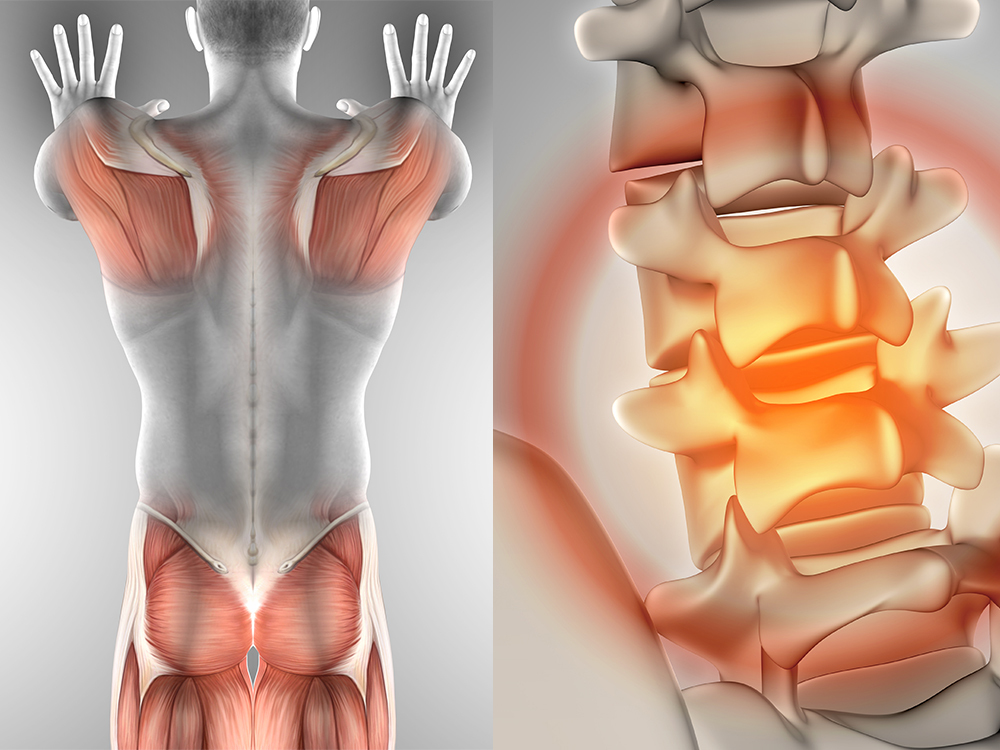
NIOSH identifies force, repetition, vibration, and awkward posture as workplace factors that can contribute to musculoskeletal risk. Review NIOSH ergonomics guidance.
A packaging employee may reposition the same workstation dozens of times during a shift. Small differences in starting and turning effort can become more important when the movement is repeated frequently.
The best quiet caster should help reduce noise without making the workstation harder to control.
Calculate the Complete Loaded Weight
The caster specification must include everything supported by the workstation:
- Workstation frame
- Shelves and drawers
- Boxes and packaging materials
- Computer and monitor
- Label printer
- Scanners
- Scales
- Tape dispensers
- Tools
- Dunnage
- Batteries
- Conveyors or rollers
- Products being packed
- Any equipment added after installation
Do not assume the load is distributed evenly across all four casters. Equipment placement, frame deflection, uneven floors, and concentrated supplies may place more weight on one end or corner.
For applicable four-caster arrangements, the rule of three may be used as a conservative starting point by dividing the total loaded weight by three rather than four. Speed, shock, movement frequency, floor conditions, and manufacturer requirements must still be considered.
Capacity determines whether a caster can support the load. It does not determine whether the workstation will be quiet, ergonomic, stable, or easy to maneuver.
Do Quiet Workstations Still Need Brakes?
Most mobile packaging workstations need a reliable way to remain stationary during operation.
Possible options include:
- Wheel brakes
- Total-lock brakes
- Directional locks
- Central braking systems
- Floor locks
- Leveling casters
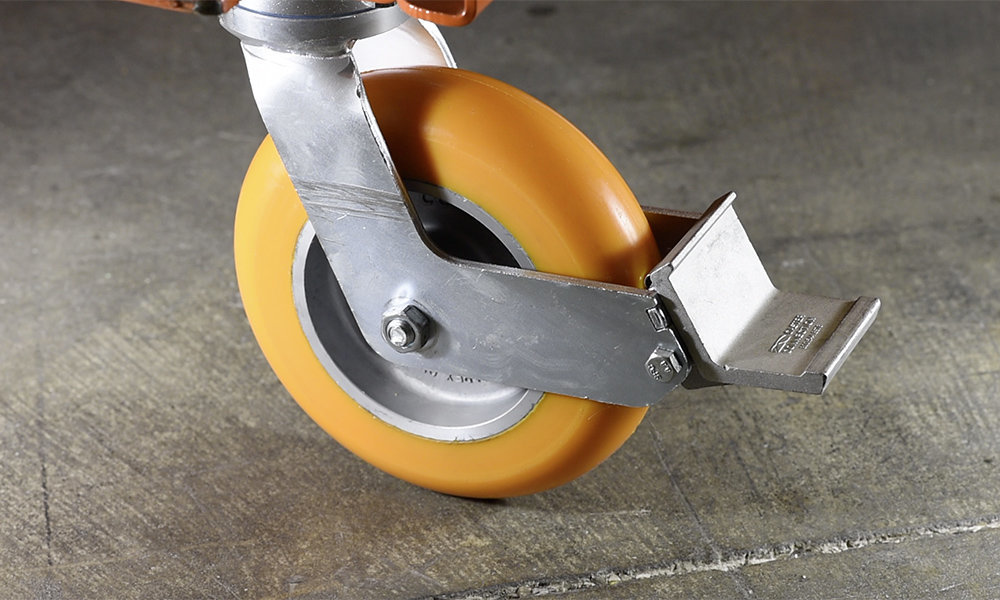
A wheel brake typically restricts wheel rotation. A total-lock brake generally restricts both the wheel and swivel action.
Brake selection should consider:
- Loaded workstation weight
- Floor slope
- Pedal location
- Employee reach
- Foot clearance
- Number of braked casters
- Swivel position
- Equipment vibration
- Desired positioning accuracy
A quieter, lower-resistance caster may allow the workstation to roll more easily. Braking and stopping behavior should therefore be reevaluated rather than assuming the existing brake design remains adequate.
Include the Caster in the Workstation Design
For new packing tables and fulfillment workstations, caster selection should happen before the design is finalized.
Control these dimensions in CAD:
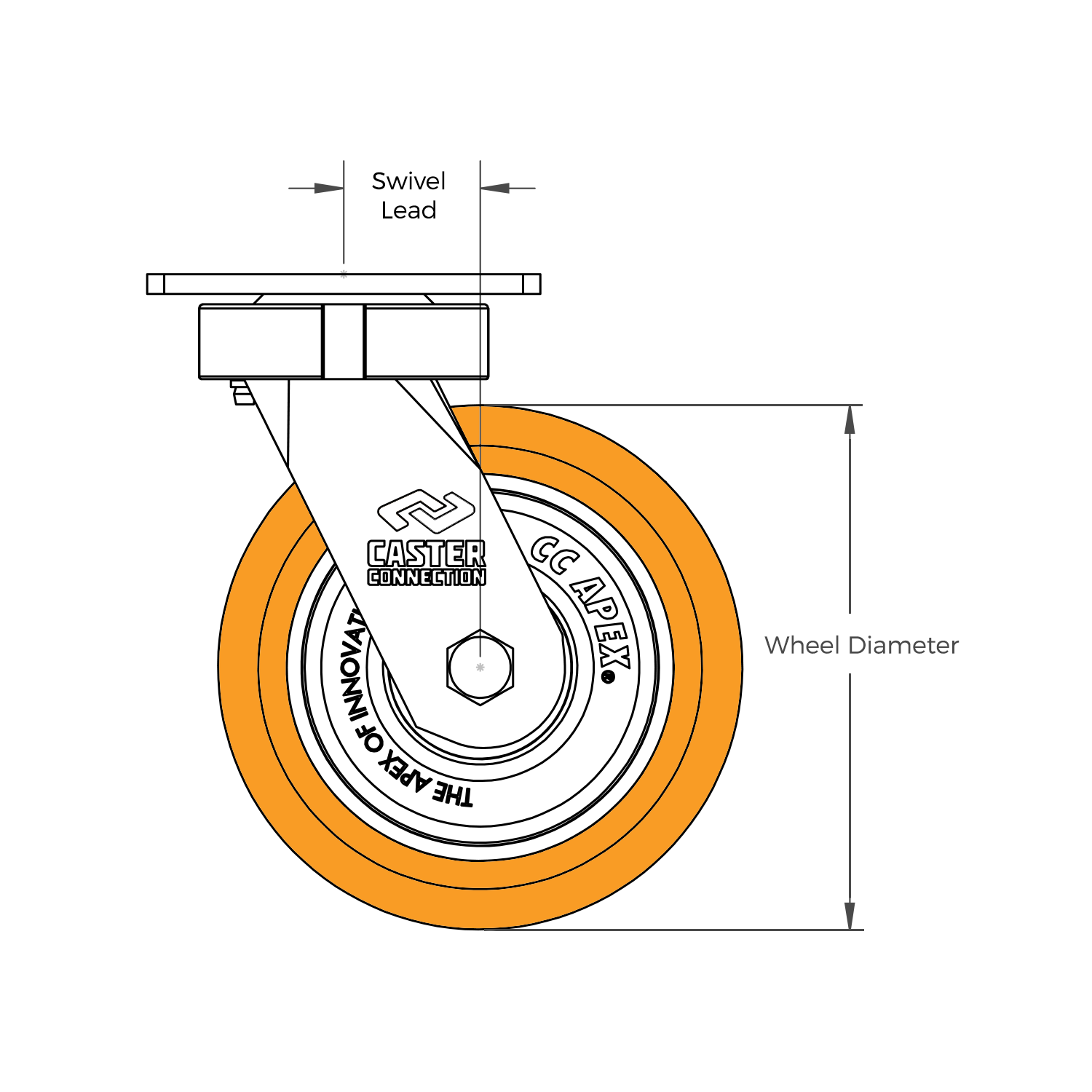
- Wheel diameter
- Wheel width
- Overall caster height
- Top-plate dimensions
- Bolt-hole pattern
- Stem dimensions
- Swivel lead
- Swivel radius
- Brake-pedal envelope
- Mounting-bolt size
- Frame clearance
Model the caster through its complete rotation. Confirm that the wheel, rig, and brake cannot contact the frame, shelves, cords, guards, equipment, or employee foot space.
Caster Connection provides downloadable 2D and 3D models in numerous common file formats. Explore Caster Connection’s CAD resources.
How to Test Quiet Casters Before a Facility-Wide Change
Sound is highly application-dependent. Test a candidate caster on the actual workstation before converting an entire fleet.
1. Establish the Baseline
Document:
- Current caster
- Wheel material
- Diameter
- Overall height
- Loaded weight
- Floor
- Route
- Existing noise
- Push/pull effort
- Turning behavior
- Brake performance
- Visible wear
2. Use a Representative Load
An empty workstation may not reproduce wheel deformation, cart vibration, bearing load, or turning resistance.
Load the workstation as it would be during normal or demanding use.
3. Follow the Actual Route
Include:
- Straight travel
- Tight turns
- Floor joints
- Thresholds
- Work-cell positioning
- Stops
- Braking
- Movement near conveyors or other equipment
4. Control the Comparison
Compare the existing and candidate caster using the same:
- Workstation
- Load
- Route
- Approximate speed
- Operator or operator group
- Floor conditions
- Measurement location
5. Measure More Than Sound
Capture:
- Starting force
- Sustained rolling effort
- Turning effort
- Noise
- Vibration
- Tracking
- Threshold impact
- Brake operation
- Stability
- Employee feedback
If using sound-level measurements, keep the instrument, distance, workstation position, route, and operating conditions consistent. A mobile-phone application may help document an obvious subjective change, but it should not be treated as a calibrated occupational-noise assessment.
6. Continue the Trial
A brief demonstration may not reveal:
- Flat spotting
- Bearing contamination
- Tread wear
- Debris accumulation
- Brake deterioration
- Mounting loosening
- Long-term swivel performance
Inspect the caster after a representative trial period before standardizing it across additional workstations.
Fulfillment Lesson: Solve the Complete Mobility Problem
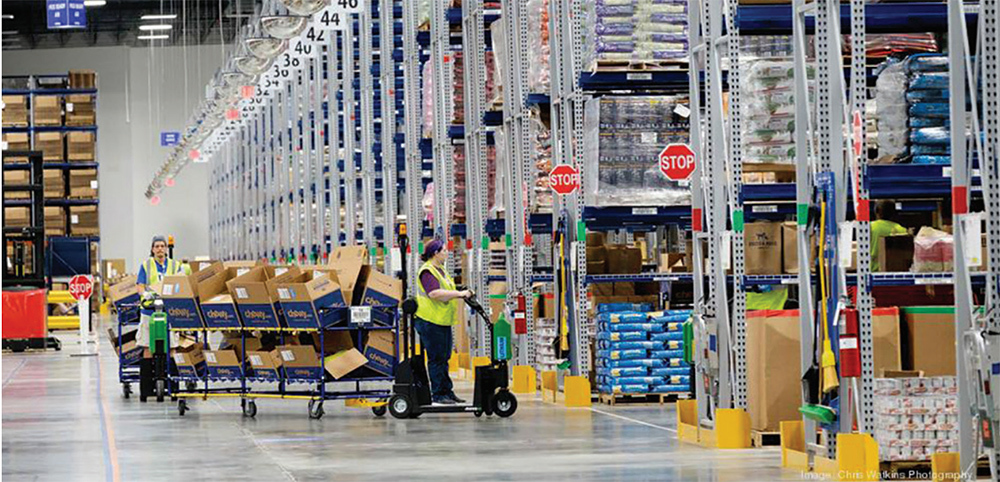
At a Chewy fulfillment facility, caster failures regularly left at least 10 picker carts out of service. After Caster Connection evaluated the application and recommended a different CC Apex configuration, the facility eliminated the reported caster-related slowdowns, and employees found the carts easier to push, pull, and maneuver.
Although noise was not the primary documented problem in that application, the case illustrates an important lesson for fulfillment operations: the right caster should address the complete workflow, including durability, maneuverability, maintenance, and employee effort.
Read the Chewy fulfillment case study.
Results from any caster trial are specific to the cart, load, floor, route, and operating environment and should not be treated as a guarantee for other applications.
Maintaining Quiet Packaging Workstations
Caster noise often increases gradually as components wear or collect debris.
Inspect workstations for:
- Tape or stretch wrap around axles
- Labels embedded in treads
- String and plastic strapping
- Corrugated fibers
- Flat spots
- Cracked or separated tread
- Wheel wobble
- Bearing noise
- Swivel binding
- Loose fasteners
- Corrosion
- Dragging brakes
- Mismatched replacement wheels
- Uneven caster heights
- Loose shelves, drawers, bins, or panels
Employees should be encouraged to report changes in sound or movement.
A new thump, squeak, grind, or rattle may provide an early indication of wheel damage, bearing wear, brake contact, or loose mounting.
Inspection frequency should reflect how often the workstation moves, its load, the floor, debris exposure, and manufacturer requirements.
Quiet Caster Selection Checklist
Before requesting a recommendation, document:
- Workstation type
- Empty weight
- Maximum loaded weight
- Load distribution
- Number of casters
- Swivel and rigid configuration
- Existing wheel diameter and width
- Overall caster height
- Mounting type and dimensions
- Wheel material
- Bearing type
- Brake or lock requirements
- Floor surfaces
- Thresholds and floor joints
- Movement distance
- Movement frequency
- Tightest turn
- Current noise source
- Push/pull concerns
- Vibration concerns
- Debris exposure
- Water or cleaning exposure
- ESD requirements
- Desired maintenance interval
- Photos or CAD drawings
Frequently Asked Questions About Quiet Workstation Casters
What caster-wheel material is quietest?
Resilient polyurethane, thermoplastic rubber, and other elastomeric treads are commonly considered for quiet movement on hard floors. Actual performance depends on load, tread formulation, diameter, bearings, floor, and workstation construction.
Is the softest caster wheel always the quietest?
A softer wheel may absorb more impact, but excessive deformation can increase rolling resistance and flat spotting. The goal is to balance cushioning with rebound, capacity, and durability.
Can quiet casters also reduce push/pull force?
Yes, when the wheel material, diameter, bearings, swivel design, and caster configuration are properly matched. A quiet wheel that deforms excessively may have the opposite effect, so testing is important.
What wheel diameter is best for a packaging workstation?
There is no universal size. Larger wheels generally cross joints and debris more easily, but they increase workstation height and may affect stability, clearance, and brake access.
Should a packaging workstation use four swivel casters?
Four swivels provide excellent maneuverability in confined areas but may make longer-distance tracking more difficult. Two rigid and two swivel casters—or directional locks—may provide better control for some applications.
Why is my workstation noisy after installing new wheels?
Noise may come from worn swivel sections, loose mounting, brakes, shelving, drawers, bins, panels, tools, or frame vibration. Replacing the wheel alone will not correct every source.
Should I replace the wheel or the entire caster?
A wheel-only replacement may be appropriate if the rig, swivel section, axle, mounting, and brake remain serviceable. Replace the complete caster when several components are worn, damaged, contaminated, or incompatible with the application.
Do packaging workstations require ESD casters?
Only when the application has defined electrostatic-discharge requirements. Computers, printers, or electronic equipment do not automatically mean an ESD caster is necessary. The complete grounding and flooring system should be evaluated.
How do I measure caster noise?
Compare the same workstation, load, route, speed, and measurement location before and after a change. Use appropriate calibrated equipment and qualified guidance when evaluating occupational-noise exposure.
Create Quieter Packaging and Fulfillment Workstations
A quiet caster should do more than reduce sound.
It should help the workstation:
- Start smoothly
- Roll efficiently
- Turn predictably
- Cross floor joints with control
- Protect the floor
- Limit vibration
- Stop securely
- Remain stable
- Resist premature wear
- Support the actual load
Explore Caster Connection’s noise-reducing casters.
Is a Noisy Workstation Affecting Your Packaging Operation?
Consult a Caster Nerd
Complete a complimentary Caster Needs Evaluation.
Caster Connection can review your workstation, load, existing casters, floor conditions, route, maneuverability, braking, noise, vibration, maintenance, and push/pull requirements. Depending on the application, the process may include product comparison and controlled field testing.
To begin, provide:
- Photos or drawings of the workstation
- Maximum loaded weight
- Existing caster dimensions
- Floor surfaces and transitions
- Movement frequency
- Brake requirements
- Current noise or mobility concerns
- Number of workstations involved
Do not include employees, customer information, shipping labels, proprietary product details, access credentials, or confidential facility information in application photos.
Quiet the workstation without compromising the way it moves. Connect with a Caster Nerd to identify a solution designed around your packaging environment.