Comparing Caster Durability: How Caster Connection Outperforms Competitor Products
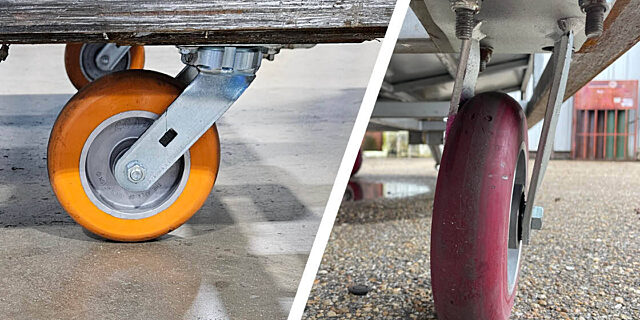
When casters operate in demanding production environments, purchase price is only one part of the equation. Service life, replacement frequency, maintenance requirements, and product availability can all have a significant impact on long-term operating costs. To evaluate these factors in a client application, Caster Connection conducted a side-by-side comparison of its casters and comparable competitor products. Small-plate and large-plate casters were installed on active production carts and exposed to the same demanding operating conditions. The results showed a clear difference in durability. While the competitor casters required replacement during the testing period, the original Caster Connection casters remained in operation.
The Challenge
The production carts in this application operate in an environment where casters are exposed to frequent impact and shock loading.
Carts regularly travel across loading dock areas and uneven transitions, where wheels may encounter gaps between dock plates and trailer floors. Sudden directional changes, obstacle impacts, tugger movement, and damaged cart mounting surfaces can place additional stress on caster components.
Over time, these conditions can cause caster fork legs to bend, spread, or twist, leading to premature failure and frequent replacement.
The goal of the evaluation was to determine how Caster Connection casters compared with the customer's existing products under these actual operating conditions.
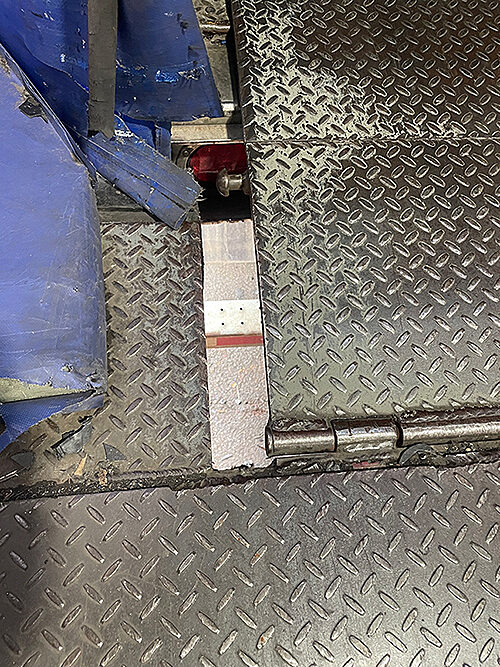
The Caster Comparison Test
Caster Connection evaluated both small-plate and large-plate caster configurations.
The small-plate casters were installed on April 29, 2026, with Caster Connection products and comparable competitor products operating in the same production environment.
A second test involving large-plate casters began on April 1, 2026.
Rather than relying solely on laboratory testing, the casters remained on active production carts where they were exposed to the impact, shock loading, transitions, and everyday conditions responsible for caster wear.
This provided a direct comparison of product durability and service life in the application where performance mattered most.
Small-Plate Caster Results
The difference in service life became apparent within the first few months.
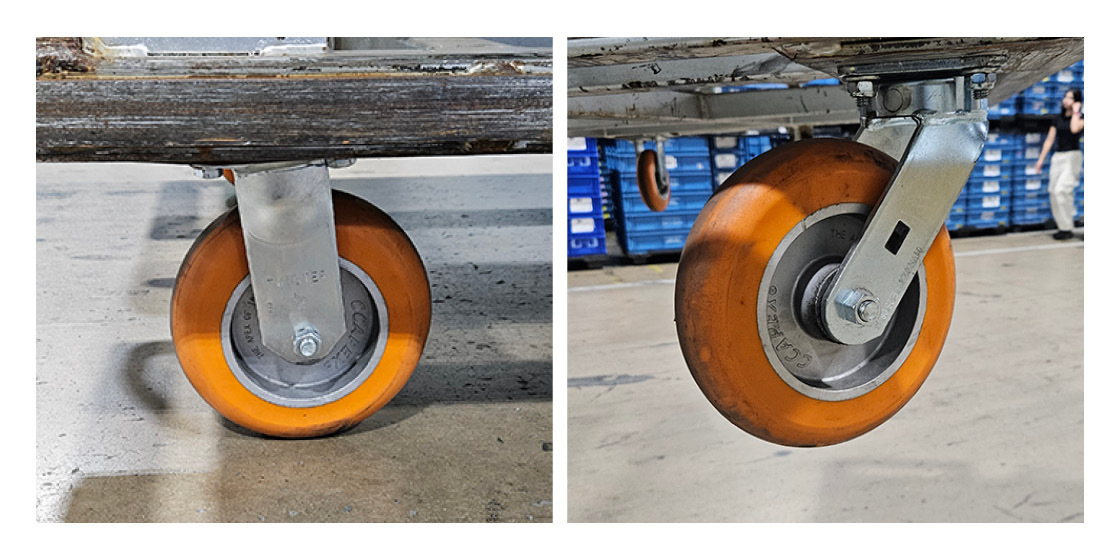
As of July 23, approximately 12 weeks after installation, the original Caster Connection small-plate casters remained in service and appeared to be in good operating condition. None of the Caster Connection test casters had required replacement.
The competitor test set had already been replaced.
Those casters lasted less than one month before replacement was required.
That meant the customer had already incurred additional caster costs and maintenance activity on the competing products while the original Caster Connection casters continued operating.
Large-Plate Caster Results
The large-plate evaluation produced a similar result.
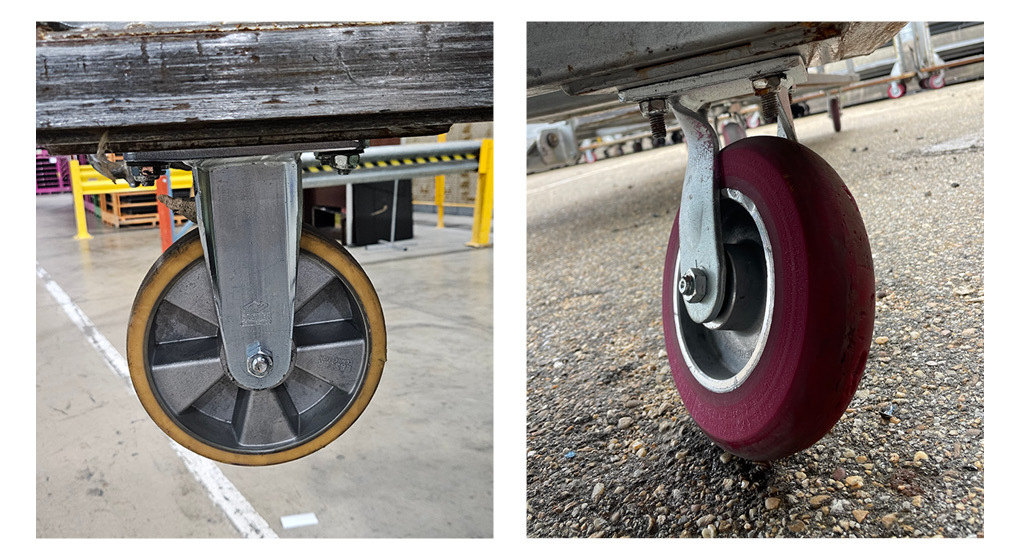
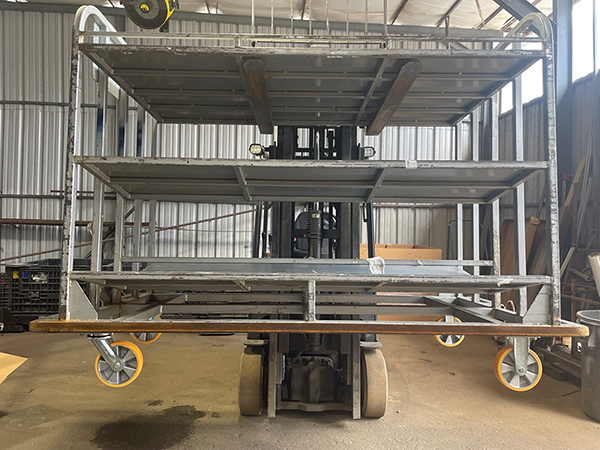
More than three months after installation, the original Caster Connection casters remained in operation and appeared structurally sound.
The competitor casters were replaced in July because of damage and wear.
Once again, the original Caster Connection products remained in service when the competing products required replacement.
Why Did the Casters Perform Differently?
The comparison also identified notable differences in caster construction.
On the small-plate rigid casters, Caster Connection used fork legs measuring approximately 2 1/2 inches wide with material approximately 1/4 inch thick. The competitor rigid caster measured approximately 1 7/8 inches wide.
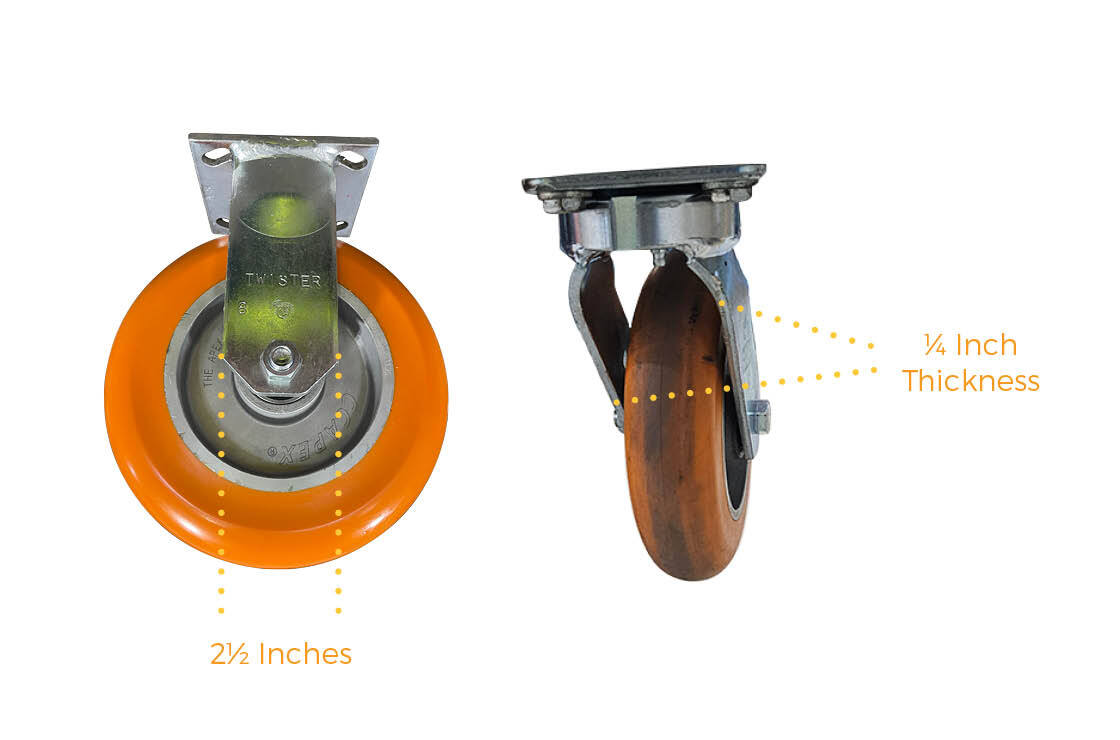
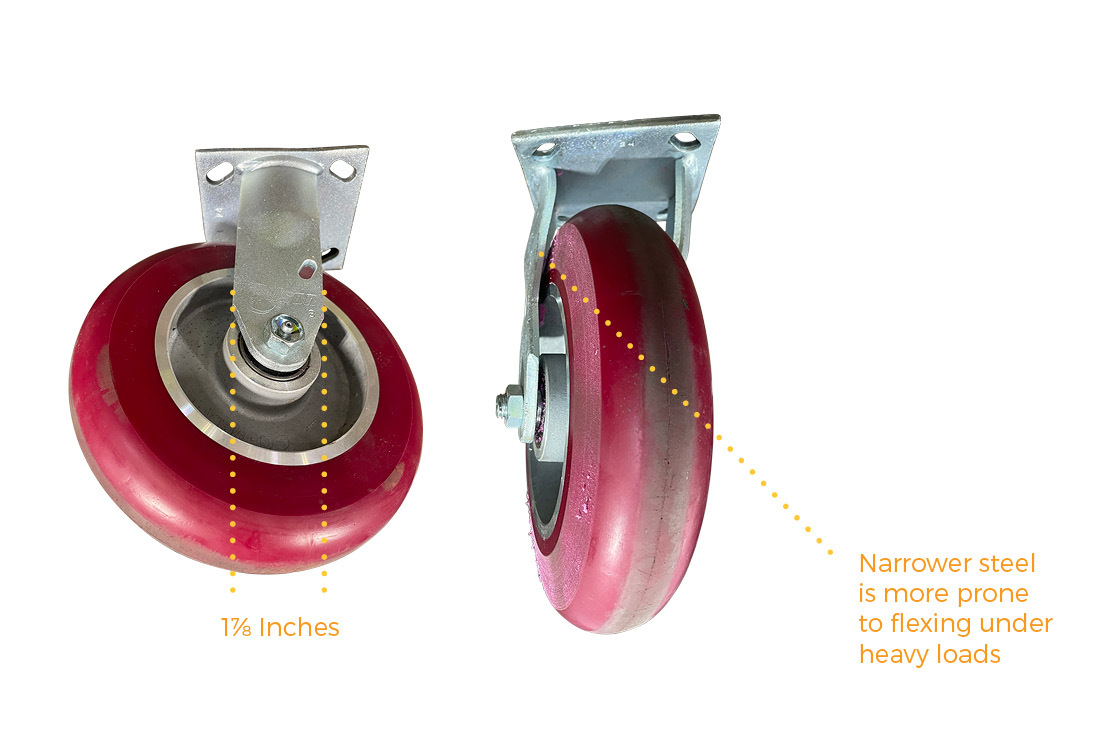
The wider and heavier construction provides additional structural support around the wheel and greater resistance to bending and twisting under impact.
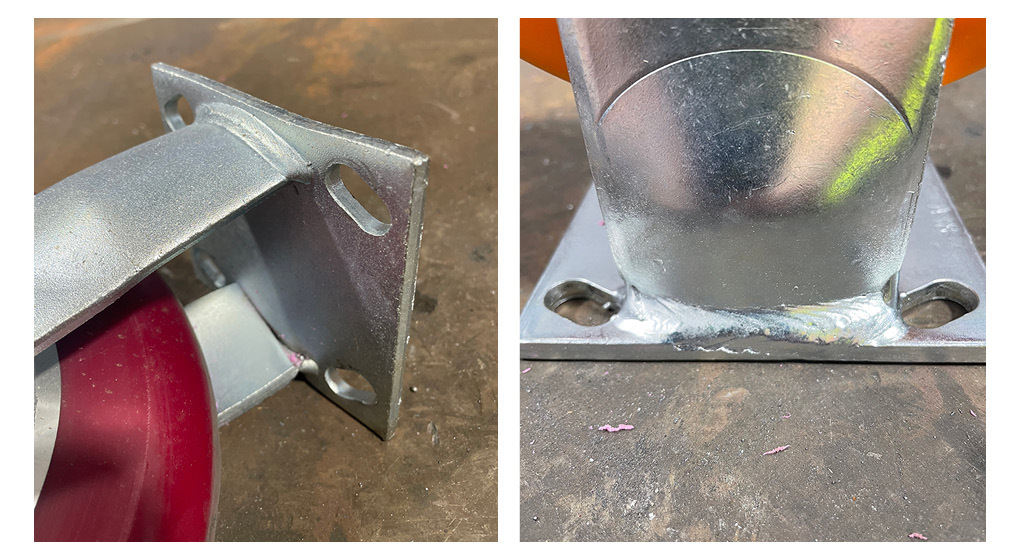
Differences were also visible in the large-plate casters. The Caster Connection design featured approximately 2 3/4-inch-wide rigid fork legs, double-embossed construction, and double welding.
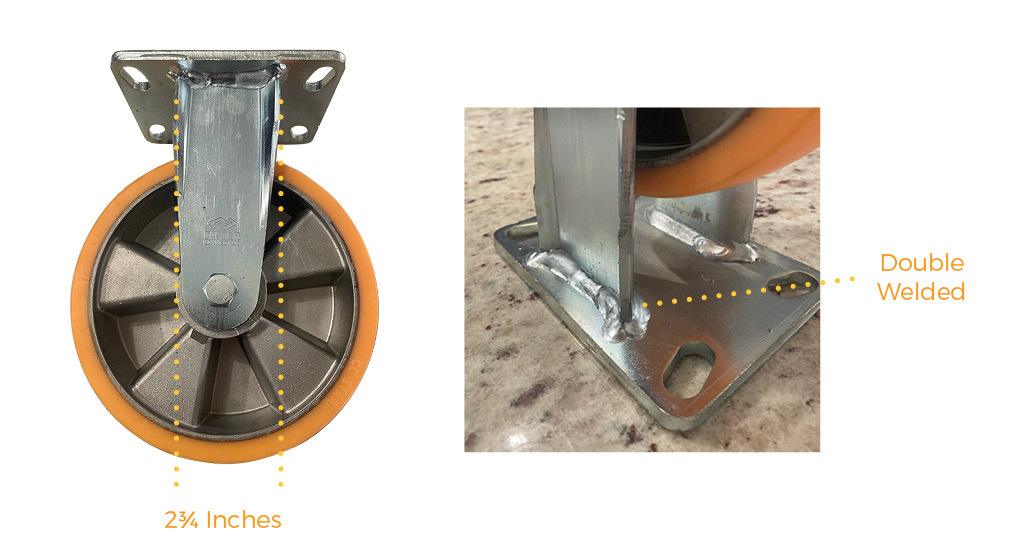
The competitor caster used an approximately 2-inch-wide fork-leg design with single embossing and less reinforcement in critical load-bearing areas.
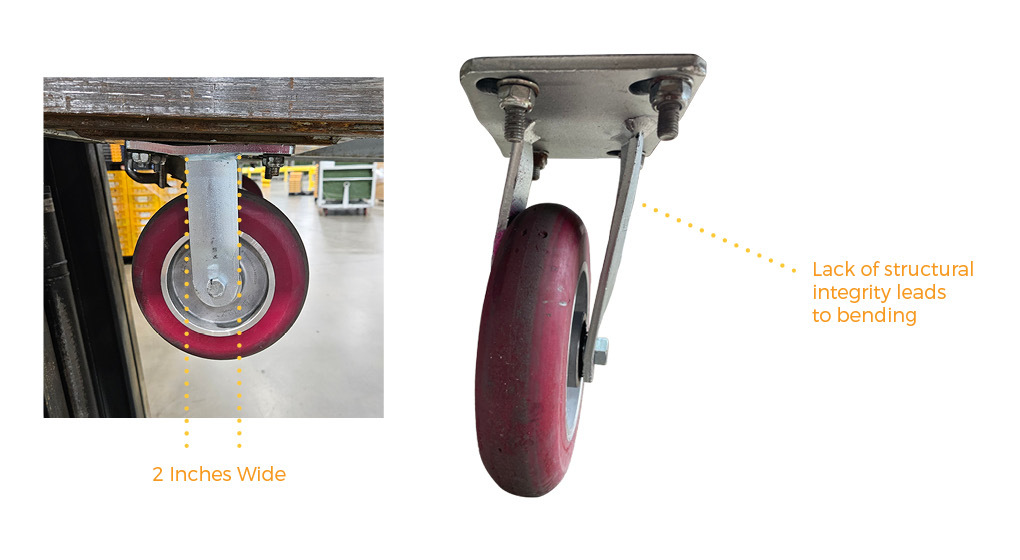
In an application involving repeated impacts, tugger movement, loading dock transitions, and shock loads, these construction differences can have a meaningful effect on caster durability.
The Cost of Caster Failure
Purchase price alone does not represent the full cost of a caster. Every premature caster failure creates additional direct and indirect expenses.
A more accurate comparison should include:
Direct Costs
• Initial caster purchase
• Replacement caster purchase
• Freight and expedited shipping
• Maintenance technician labor
• Replacement hardware
• Inspection and repair materials
Indirect Costs
• Time spent identifying and reporting the failure
• Time spent moving the cart to the repair area
• Time spent removing the damaged caster
• Time spent installing and testing the replacement
• Lost cart availability
• Production delays
• Congestion in the maintenance area
• Purchasing and administrative time
• Emergency ordering activity
• Risk of running short on usable carts
Total Cost of Ownership
Replacement-product availability can become a significant issue when damaged casters need to be replaced quickly. Long or unpredictable lead times can leave carts waiting for repair and reduce the number of usable carts available to production.
Even a relatively short repair can become costly when multiplied across numerous carts and repeated caster failures.
A practical total-cost calculation is:

For a more precise comparison, the customer can calculate replacement labor using:

That amount should then be multiplied by the number of caster-related repairs completed annually.
Because the competitor test casters were replaced at least once while the original Caster Connection products remained in service, the customer had already incurred additional product and labor costs on the competing casters during the pilot period.
Return On Investment
Caster Connection products may have a higher initial purchase price. However, the test indicates that the price difference can be recovered quickly through fewer replacements and lower maintenance requirements.

The Critical Question Is Not:
“Which caster has the lowest initial price?”

The More Meaningful Question Is:
“How many times will the lower-priced caster need to be purchased, installed, and replaced before one Caster Connection caster reaches the end of its service life?”
If a competing caster must be replaced multiple times during the operating life of one Caster Connection caster, the customer pays for:
Multiple products
Multiple shipments
Multiple repair events
Multiple rounds of maintenance labor
Repeated periods of cart downtime
Increased operational risk
Lead Time & Inventory Management Matter, Too
It was reported that competitor products have sometimes taken three to four months to arrive, despite initial lead-time estimates of three to four weeks.
Caster Connection maintains inventory of the large-plate casters and wheels evaluated in this application, with typical shipping times of three to five days after an order is placed. Small-plate swivel casters are also stocked, while inventory levels for small-plate rigid casters can be coordinated around expected customer demand.
Combining longer caster life with more reliable product availability can help reduce both maintenance demands and the risks associated with unexpected caster failures.
The Results
The side-by-side production evaluation demonstrated a clear performance advantage for the Caster Connection products tested.
In both caster categories, the competitor products required replacement during the evaluation period. The original Caster Connection casters remained in operation as of July 23, 2026.
The results also showed more durable construction, including wider fork legs, heavier material, additional reinforcement, and stronger welded construction.
For operations that depend on reliable cart mobility, those differences can translate into longer service life, fewer replacements, less maintenance labor, reduced downtime, and a lower expected total cost of ownership.
Are Your Casters Holding Up?
Frequent caster replacements can increase maintenance costs, equipment downtime, and operational headaches. If your current casters are wearing out too quickly, Caster Connection can help identify a solution built for the demands of your application.
Schedule a Caster Needs Eval to work with our Caster Nerds and find the right caster solution for your equipment, environment, and performance requirements.
