Warehouse Automation Caster Specification Guide: AGV, AMR, AS/RS, Robotic Shuttles, and Sensor-Zone Requirements

Warehouse Automation Systems Depend on More Than Robotics
Warehouse automation systems are moving faster, carrying heavier loads, and operating with tighter tolerances than ever before. From AGVs and AMRs to AS/RS systems and robotic shuttle carts, mobility performance now directly impacts uptime, throughput, operator safety, and automation reliability.
Yet many automation projects overlook one critical component: the caster system.
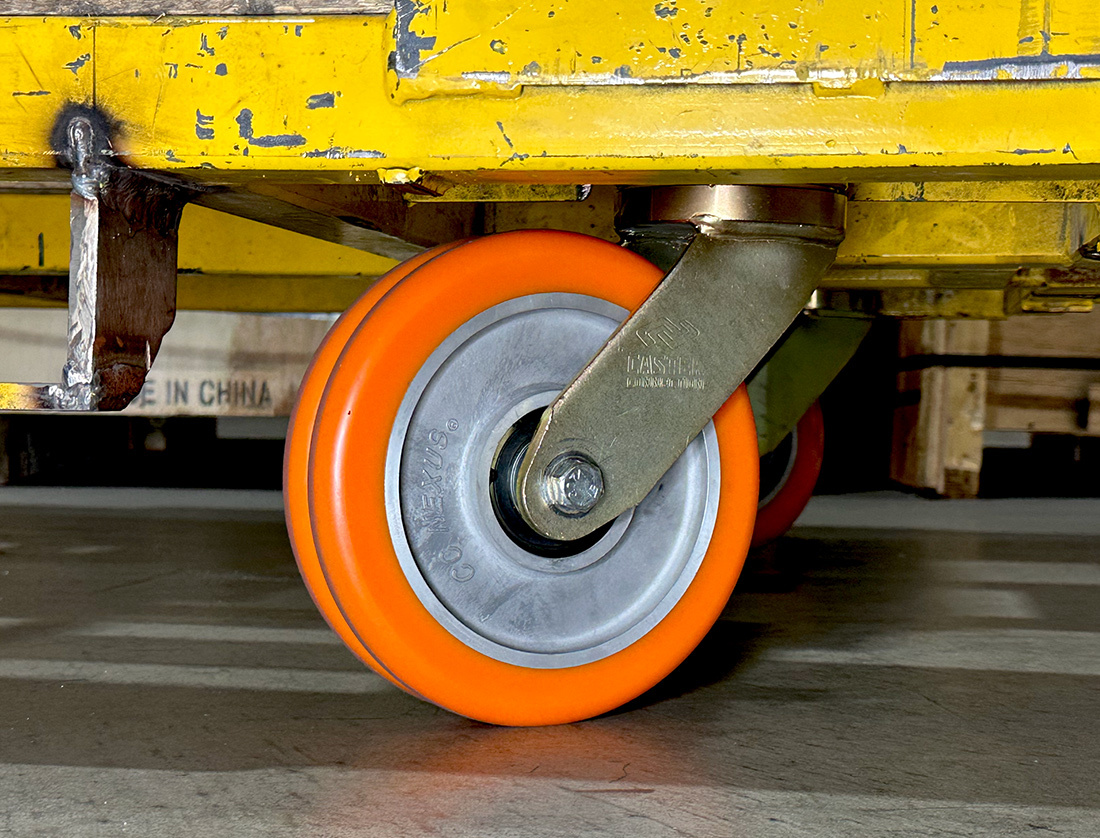
The wrong caster specification can create:
- Tracking issues
- Excessive rolling resistance
- Sensor interference
- Vibration problems
- Premature wheel failure
- Navigation inconsistencies
- Increased energy consumption
- Unexpected downtime
In highly automated environments, even small mobility inconsistencies can ripple throughout the entire system.
This guide explains how to properly specify casters for modern warehouse automation systems and what engineers, integrators, OEMs, and facility managers should evaluate before deployment.
Why Casters Matter in Warehouse Automation
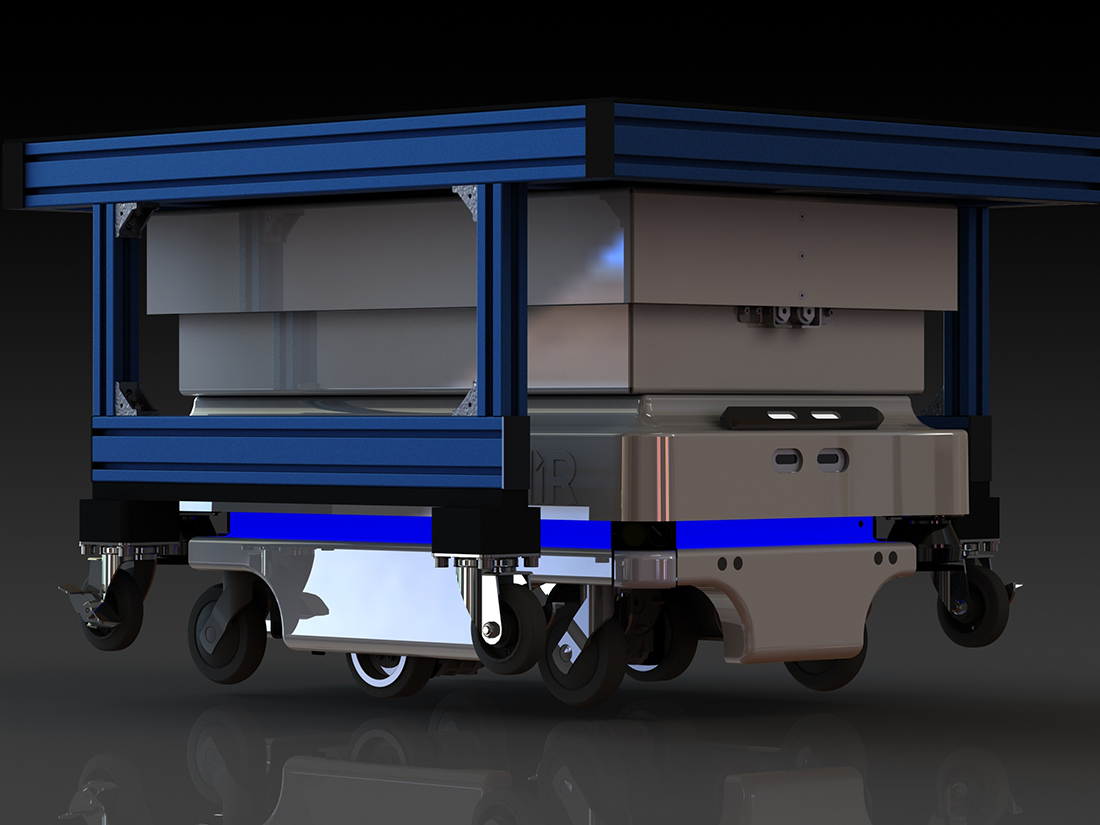
Automation Performance Depends on Mobility Performance
Warehouse automation systems rely on predictable, repeatable movement. Whether the application involves AGVs, AMRs, robotic shuttles, AS/RS systems, autonomous carts, or towline systems, the mobility solution directly impacts how efficiently the automation system performs.
A poorly specified caster can affect:
- Navigation accuracy
- Battery life
- Throughput
- Tracking consistency
- Docking precision
- Maintenance frequency
- Sensor reliability
- Overall uptime
Automation systems amplify small mobility issues because they repeat the same movement cycles continuously. Minor caster problems that may go unnoticed in manual operations can quickly become major operational issues in automated environments.
For example:
- Excessive wheel deflection can affect navigation consistency.
- Poor rolling efficiency can reduce AMR battery life.
- Caster flutter can interfere with sensor accuracy.
- Vibration can impact sensitive automated systems.
- Incorrect wheel materials can accelerate wear or damage floors.
In automated warehouses, mobility performance becomes part of system performance.
The Most Common Automation Caster Specification Mistakes
Many warehouse automation projects focus heavily on robotics, software, conveyors, and navigation systems while underestimating the importance of the caster setup.
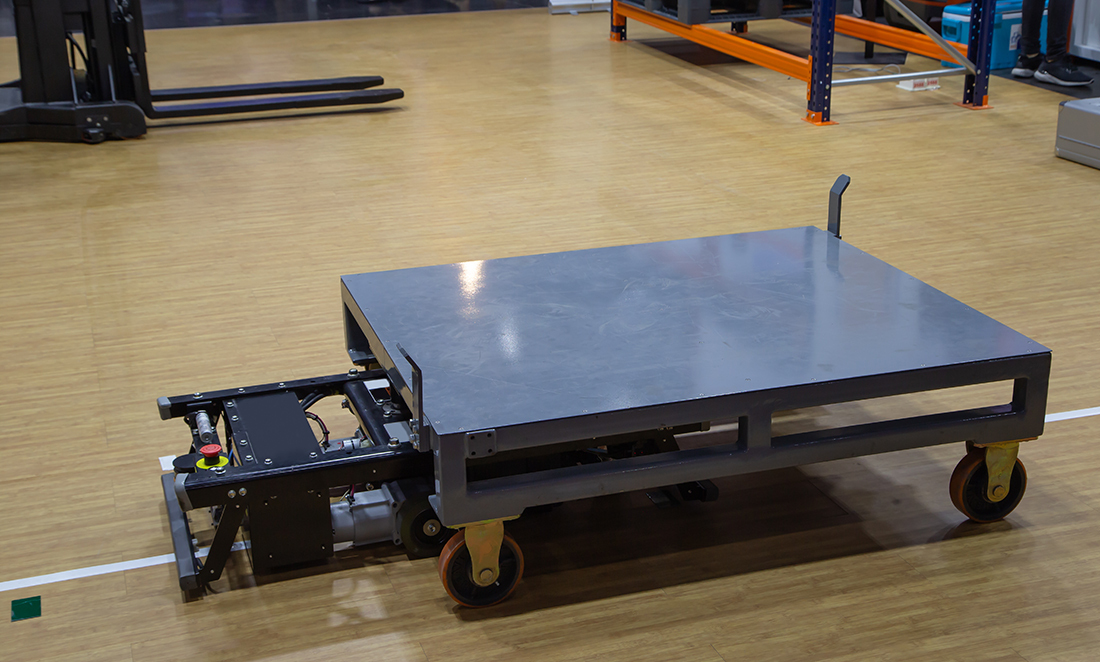
Common Mistakes Include:
- Selecting casters based only on static load ratings
- Ignoring dynamic loading conditions
- Using the wrong wheel hardness
- Overlooking floor conditions
- Ignoring sensor-zone compatibility
- Underestimating towing stress
- Using standard industrial casters in automation environments
- Overlooking rolling resistance and energy efficiency
The Hidden Cost of the Wrong Caster
The wrong caster specification can create expensive operational problems over time, including:
- Increased downtime
- Navigation drift
- Wheel wear
- Battery drain
- Maintenance calls
- Floor damage
- Sensor inconsistencies
- Safety risks
- Reduced throughput
In many automated facilities, mobility issues are not isolated problems. They become system-wide performance problems.
Key Factors When Specifying Casters for Automated Systems
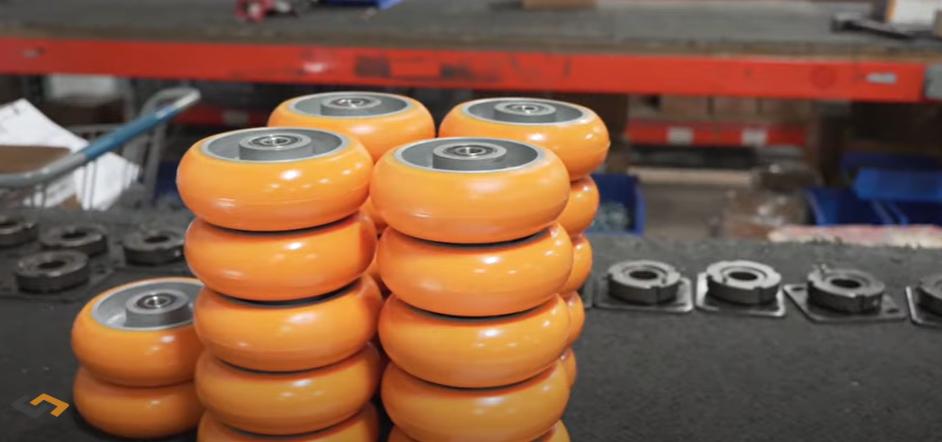
1. Load Capacity vs Dynamic Load Conditions
Many engineers select casters based only on static load capacity. However, automated systems rarely operate under static conditions.
AGVs, robotic shuttles, and automated carts create dynamic stress through:
- Starts and stops
- Turning forces
- Side loading
- Threshold impacts
- Continuous movement cycles
- Repetitive towing stress
That means a caster capable of holding a stationary load may still fail prematurely under real automation conditions.
Automation systems often require higher safety factors because they operate continuously and repeatedly. Wheel compression, bearing stress, and vibration become more significant over time.
For high-capacity automated systems, products like CC Dynamo™ 70D and CC Stark™ are designed to support demanding dynamic load environments while maintaining long-term durability and stability.
CC Dynamo™ 70D is especially effective in automated systems where compression resistance and load stability are critical. CC Stark™ excels in high-cycle towing and continuous industrial movement environments.
2. Rolling Resistance and Energy Efficiency
Rolling resistance directly impacts the efficiency of AGVs and AMRs.
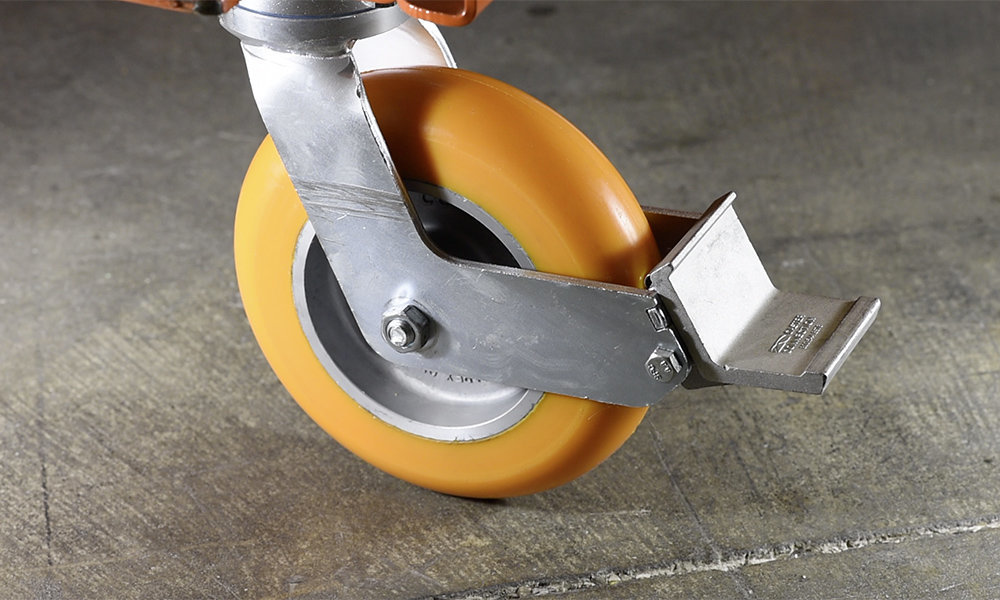
Higher rolling resistance forces drive systems to work harder, which can:
- Reduce battery life
- Increase motor strain
- Increase energy consumption
- Reduce throughput efficiency
- Increase maintenance frequency
- Wheel material plays a major role in automation efficiency.
High-performance polyurethane wheels often provide an excellent balance between:
- Energy efficiency
- Floor protection
- Durability
- Traction
- Noise reduction
Solutions like CC Nexus™ and CC Apex® are designed to reduce push/pull force and rolling resistance while supporting smoother movement and improved maneuverability.
In automation environments, lower rolling resistance can contribute directly to longer run times and improved operational efficiency.
3. Wheel Material Selection for Automated Warehouses
Wheel material selection has a major impact on automation performance.
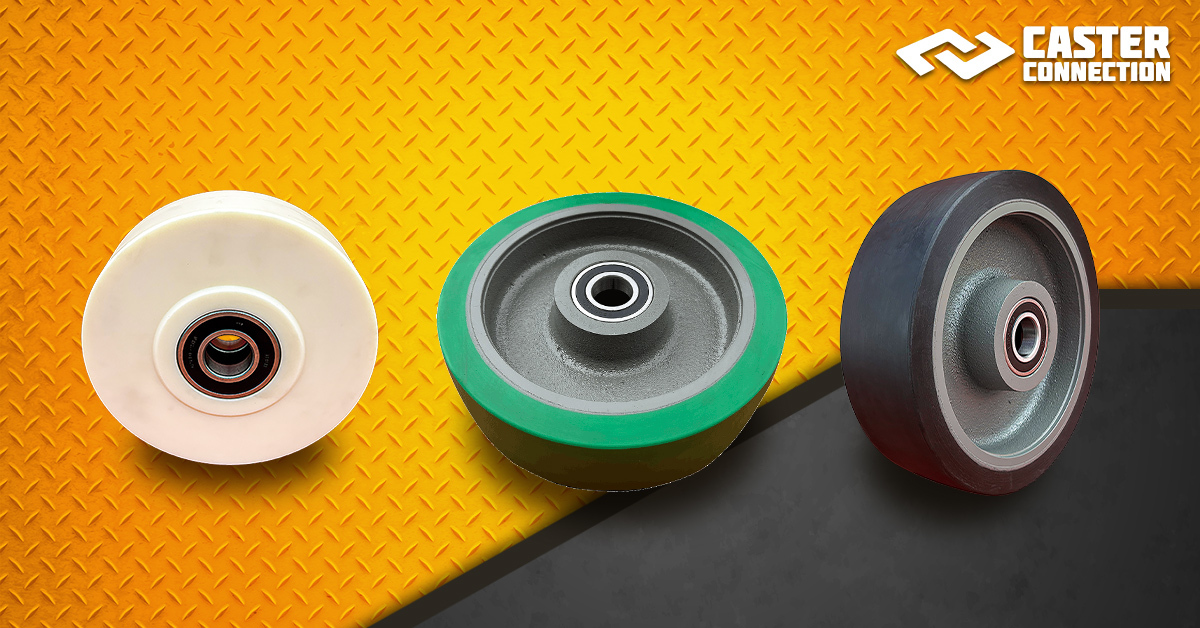
Different wheel materials affect:
- Floor protection
- Noise
- Debris rejection
- Compression resistance
- Vibration
- Tracking stability
- Energy efficiency
Polyurethane Wheels
Polyurethane wheels are commonly used in automated warehouses because they provide:
- Good floor protection
- Reduced noise
- Strong traction
- Improved rolling performance
- Better vibration control
Nylon Wheels
Nylon wheels provide:
- High load capacity
- Strong compression resistance
- Low rolling resistance
However, they may transfer more vibration and increase floor wear in some environments. Also, because Nylon wheels tend to have a lower rolling resistance, they can cause carts on towlines and tug trains to slide during tight turns especially at higher rates of speed. Always consult a Caster Nerd before considering this wheel material for your application.
Cast Iron Core Polyurethane
These wheels combine:
- High-capacity support
- Compression resistance
- Durability
- Improved load stability
CC Dynamo™ 70D is a strong example of this design approach for high-capacity automation systems.
Conductive and ESD Wheels
ESD and conductive wheels help protect sensitive electronics in environments where static control matters.
These are often used in:
- Electronics manufacturing
- Semiconductor environments
- Data center infrastructure
- Sensitive automation systems
4. Sensor-Zone and Navigation Compatibility
Why Caster Selection Impacts Navigation Accuracy
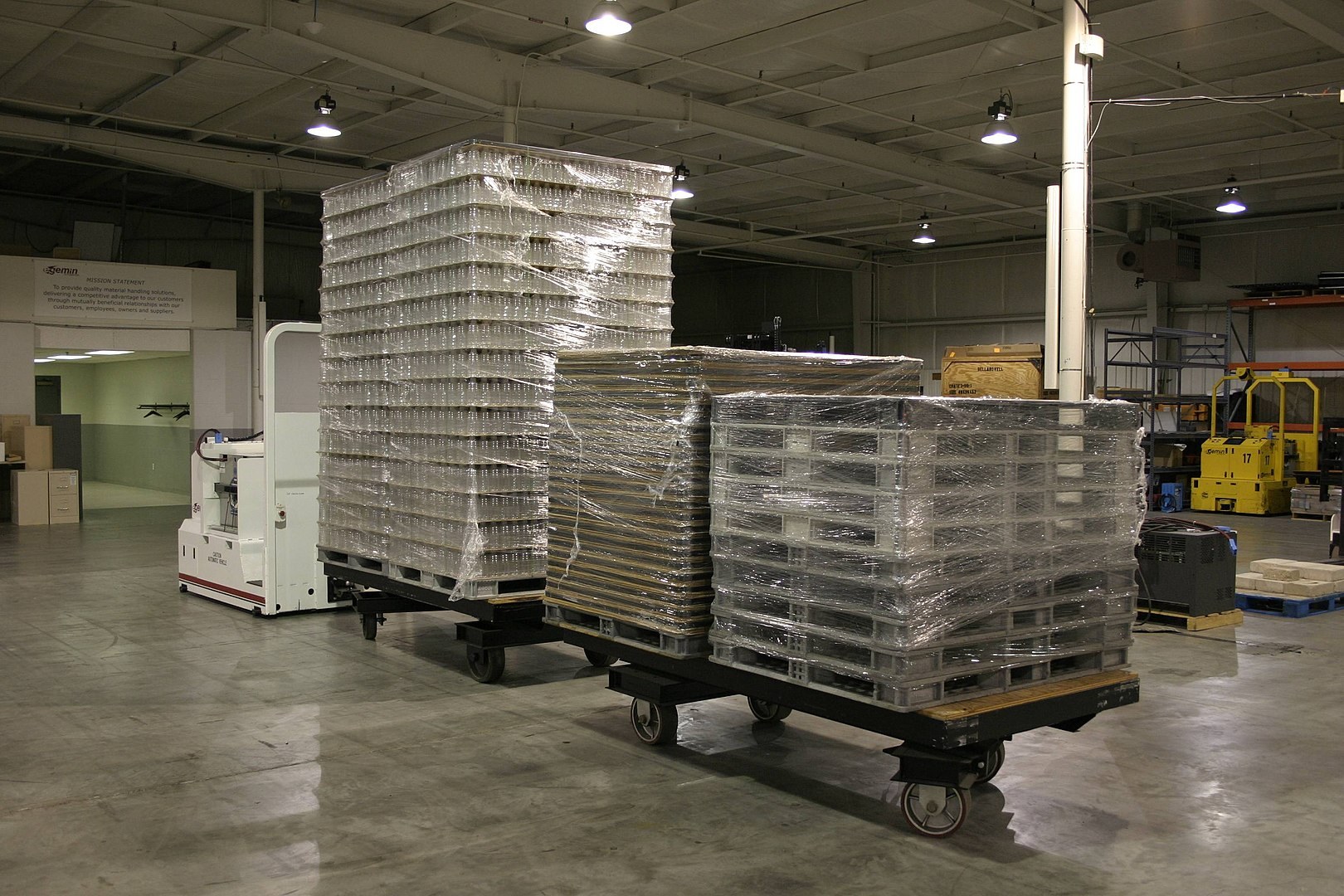
Modern automation systems rely heavily on:
- Reflective sensors
- Magnetic guidance
- QR code navigation
- LIDAR systems
- Precision docking systems
Small mobility inconsistencies can interfere with navigation reliability.
Problems like:
- Wheel deflection
- Caster flutter
- Drift
- Shimmy
- Inconsistent tracking
These challenges can reduce automation accuracy and consistency.
Rigid tracking becomes increasingly important in automated environments where systems repeatedly follow identical routes.
Kingpinless caster rigs, extended-lead casters, and high-performance polyurethane wheels can help improve:
- Tracking stability
- Navigation consistency
- Sensor reliability
- Movement precision
Solutions like CC Nexus™, CC Apex®, and kingpinless rig configurations are often used in environments requiring smoother tracking and improved maneuverability.
5. Floor Conditions and Surface Compatibility
Warehouse floor conditions play a major role in automation performance.

Different surfaces create different mobility challenges, including:
- Concrete
- Epoxy coatings
- Polished floors
- Expansion joints
- Dock plates
- High-friction surfaces
Poor wheel selection can increase:
- Vibration transfer
- Wheel wear
- Floor damage
- Rolling resistance
- Sensor inconsistency
Wheel hardness must match the operating environment.
Harder wheels may reduce rolling resistance but increase vibration. Softer wheels may improve floor protection and vibration dampening but create additional drag.
Finding the right balance is critical for automation efficiency.
AGV and AMR Caster Requirements

Casters for Automated Guided Vehicles (AGVs)
AGVs require:
- Predictable tracking
- Low rolling resistance
- High-capacity durability
- Continuous-duty performance
- Stability during towing-style movement
Many AGV systems create stresses similar to towline applications because of continuous movement and repetitive cycles.
For heavy-duty AGV applications, CC Dynamo™ 70D and CC Stark™ are strong solutions because they support:
- Dynamic load stability
- Compression resistance
- Long-duty cycles
- Towline-style durability
Casters for Autonomous Mobile Robots (AMRs)
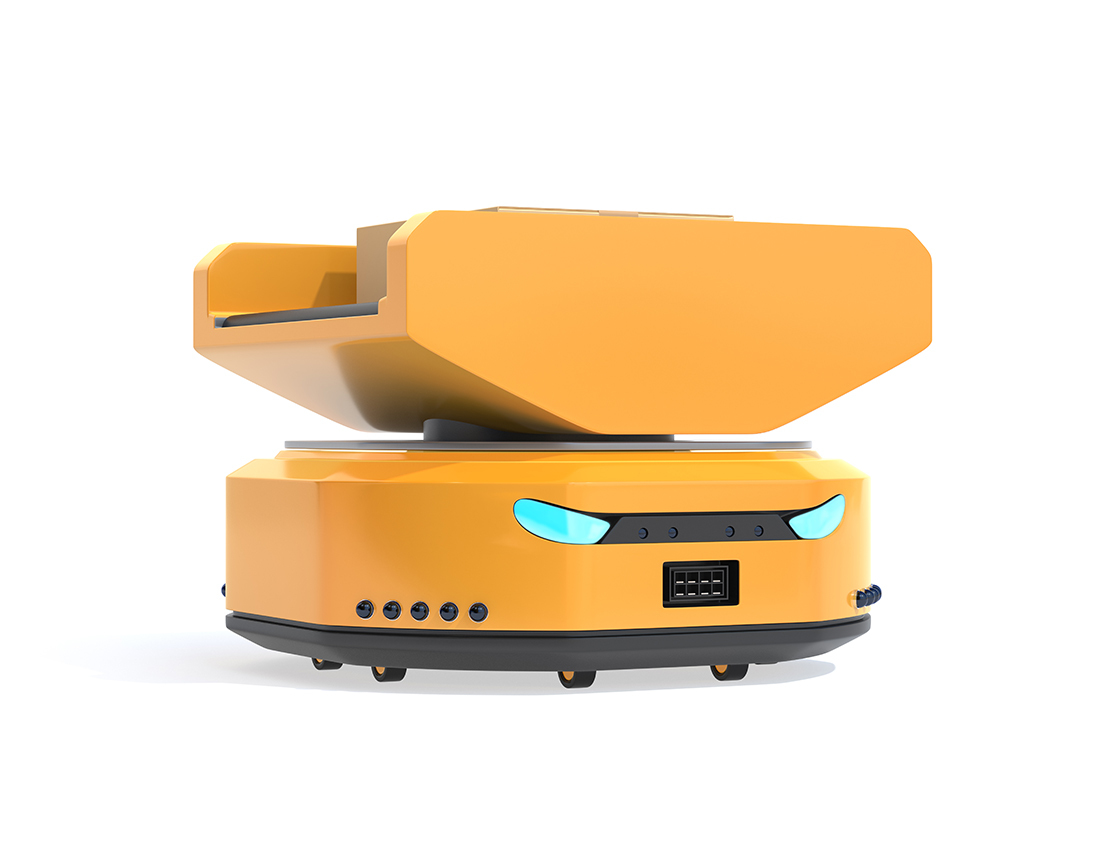
AMRs often prioritize:
- Maneuverability
- Precision turning
- Battery efficiency
- Quiet operation
- Reduced vibration
- Sensor compatibility
Unlike traditional AGVs, AMRs frequently operate in more dynamic, collaborative environments where smooth movement and navigation precision are critical.
CC Nexus™ and CC Apex® are excellent options for AMR environments because they help improve:
- Rolling efficiency
- Ergonomic movement
- Tracking consistency
- Reduced vibration
- Smooth maneuverability
Casters for AS/RS and Robotic Shuttle Systems
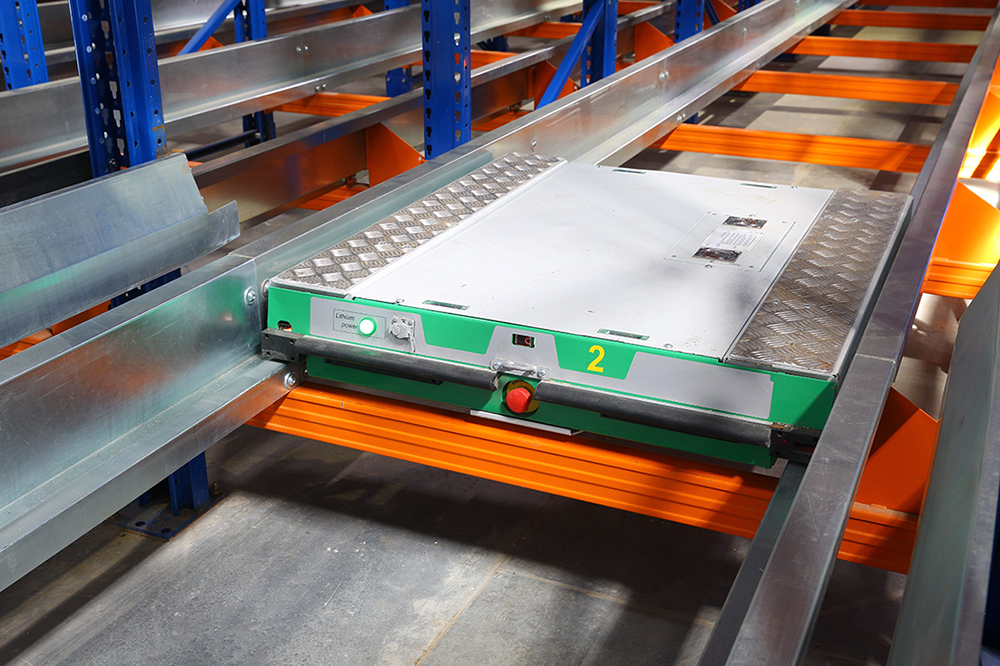
Why High-Bay Systems Require Different Mobility Considerations
AS/RS systems and robotic shuttle systems operate under extremely repetitive, high-speed conditions.
These systems often require:
- Tight tolerances
- Consistent tracking
- Precision docking
- Minimal vibration
- Dynamic stability
Even small wheel inconsistencies can create operational problems in high-bay automated environments.
Wheel compression, vibration, and inconsistent tracking can affect:
- Positioning accuracy
- Throughput
- Maintenance frequency
- Long-term reliability
That’s why caster consistency and wheel stability become critical in robotic shuttle applications.
Towline and Tugger Considerations in Automated Warehouses
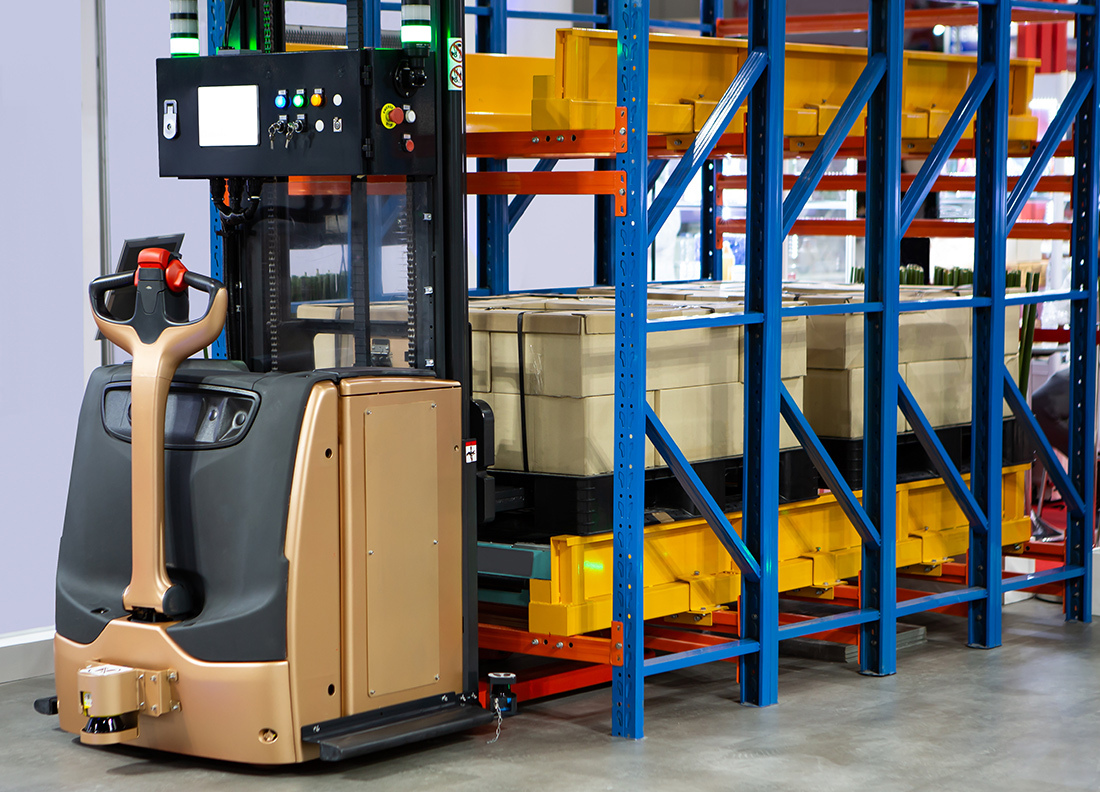
Many Automated Warehouses Still Use Hybrid Movement Systems
Even highly automated warehouses often rely on:
- Tugger trains
- Towline carts
- Hybrid manual/automated systems
- Mother-daughter cart systems
These environments create unique mobility demands because casters must survive both:
- Manual movement
- Powered towing
Kingpinless rigs, reinforced swivel sections, and extended-lead caster designs can help improve:
- Tracking stability
- Towline durability
- Reduced flutter
- Long-term performance
CC Apex®, CC Stark™, and CC Dynamo™ 70D are commonly used in hybrid warehouse movement systems because they combine durability with predictable rolling performance.
Why Ergonomics Still Matter in Automated Facilities

Automation Does Not Eliminate Manual Movement
Even advanced automated facilities still rely on manual movement for:
- Maintenance carts
- Technician tools
- Exception handling
- Human interaction zones
- Repair operations
Reducing push/pull force still matters in modern automation environments.
Caster design directly impacts:
- Operator strain
- Fatigue
- Productivity
- Injury risk
- Maneuverability
CC Nexus™ and CC Apex® are specifically designed to improve ergonomic movement while still supporting industrial durability requirements.
When to Consider a Custom-Engineered Automation Mobility Solution

Signs Standard Casters May Not Be Enough
Some automation systems require specialized mobility solutions.
Examples include:
- Unique floor conditions
- Sensor interference issues
- Extreme dynamic loads
- High-speed towing
- Custom docking systems
- Precision tracking requirements
- High-cycle duty environments
In these situations, working with a mobility engineering partner can help optimize long-term performance and reduce operational risk.
Caster Connection offers:
- Engineering consultation
- CAD models
- Custom mobility solution
- Dynamic testing
- Caster Needs Evaluations
- Application-specific recommendations
Conclusion
Warehouse automation performance depends on more than robotics and software.
Mobility systems directly affect:
- Navigation accuracy
- Energy efficiency
- Uptime
- Ergonomics
- Maintenance costs
- Throughput
- Long-term operational reliability
The right caster specification helps AGVs, AMRs, AS/RS systems, robotic shuttles, and automated carts operate more efficiently, more safely, and more reliably — while reducing downtime and protecting valuable automation investments.
Whether your facility is deploying autonomous mobile robots, robotic shuttle systems, tugger carts, or high-density automation infrastructure, selecting the right caster system is a critical part of long-term automation success.
FAQ: Casters for Warehouse Automation, AGVs, and AMRs
How do I optimize caster selection to support warehouse automation initiatives?
Warehouse automation systems depend on smooth, predictable movement. The right caster setup helps improve navigation consistency, reduce vibration, minimize maintenance, and improve overall system efficiency. Factors like wheel material, rolling resistance, floor conditions, dynamic loads, and tracking stability all play a role in automation performance.
What options are available for casters that integrate with AGV guidance systems?
AGV systems often require casters that maintain consistent tracking and minimize wheel deflection during movement. Kingpinless rigs, precision polyurethane wheels, and low-vibration caster designs can help improve navigation reliability in guided automation environments.
How do I choose casters for high-density pallet shuttle and racking systems?
High-density automation systems require casters that maintain stability under continuous movement and repetitive loading cycles. Compression resistance, tracking consistency, vibration control, and dynamic load capacity all become critical in these environments.
How do I choose casters for mobile robotics in manufacturing facilities?
Mobile robotics applications often prioritize maneuverability, energy efficiency, low rolling resistance, and smooth tracking. The best caster solution depends on the robot’s payload, speed, floor conditions, navigation system, and duty cycle.
How do I choose casters for use with cobots and collaborative robots?
Cobots and collaborative robotic systems often operate in environments where humans and automation interact closely. Casters used in these applications should support smooth movement, ergonomic operation, low vibration, and precise maneuverability.
How do I choose casters that minimize energy consumption in automated systems?
Rolling resistance directly impacts battery life and energy efficiency in AGVs and AMRs. High-performance polyurethane wheels with low rolling resistance can help reduce motor strain and improve operational efficiency.
How do I handle caster selection for mixed manual and AGV interactions?
Facilities using both manual carts and AGVs need casters that balance ergonomic push/pull performance with durability in powered movement applications. Wheel material, rig design, and caster lead all play important roles in mixed-use environments.
How do I pick casters for carts that must pass through sensitive sensor zones?
Sensor-zone environments require stable tracking and minimal vibration. Excessive caster flutter, wheel deflection, or inconsistent tracking can interfere with navigation accuracy and sensor performance.
How do I select casters for automated guided vehicles in a warehouse?
AGV casters should support continuous movement, dynamic loading, predictable tracking, and low rolling resistance. The ideal caster setup depends on payload, travel speed, floor conditions, and navigation requirements.
How do I select casters for robotic shuttles in automated warehouses?
Robotic shuttle systems require casters capable of maintaining stability and tracking consistency during repetitive movement cycles. Compression resistance, wheel durability, and vibration reduction are especially important.
How do I handle caster selection for facilities transitioning to more automation?
Facilities transitioning toward automation often need caster systems capable of supporting both manual and automated movement. Standardizing wheel materials, improving rolling performance, and selecting automation-ready caster rigs can help support future scalability.
What caster specs matter for high-bay automated storage systems?
High-bay systems require precise tracking, consistent wheel performance, dynamic load stability, and vibration control. Small mobility inconsistencies can become major operational problems in high-speed automated storage environments.
What should I look for in casters for autonomous mobile robots?
AMR casters should support smooth movement, energy efficiency, precise maneuverability, low vibration, and reliable long-term performance under continuous operation. Wheel material, rolling resistance, and tracking stability are especially important in AMR environments.
Make the Right Call On Casters
Getting caster selection right starts with understanding the full scope of the application.
At Caster Connection, our Caster Nerds work directly with facilities through our free Caster Needs Eval service to review equipment weight and load requirements, how it is moved, how often it is repositioned, and the floor surface.
That process helps ensure the right caster solutions are selected upfront, so equipment moves as expected and avoids unnecessary issues later.
For help with caster selection, you can request a quote or schedule a free Caster Needs Eval below to get started.

Start Your Mobility Evaluation
Read More →