Why Packaging Debris Destroys Casters—and How to Prevent It

Why Packaging Debris Destroys Casters—and How to Prevent It
A fulfillment center can look clean at eye level while being surprisingly hostile six inches above the floor.
Labels peel from cartons. Tape gets trimmed from packages. Stretch wrap tears during pallet breakdown. Plastic strapping gets clipped and dropped. Corrugated boxes shed fibers. Pallets leave behind wood fragments. Small pieces of packaging material accumulate around workstations, conveyors, staging areas, docks, and traffic lanes.
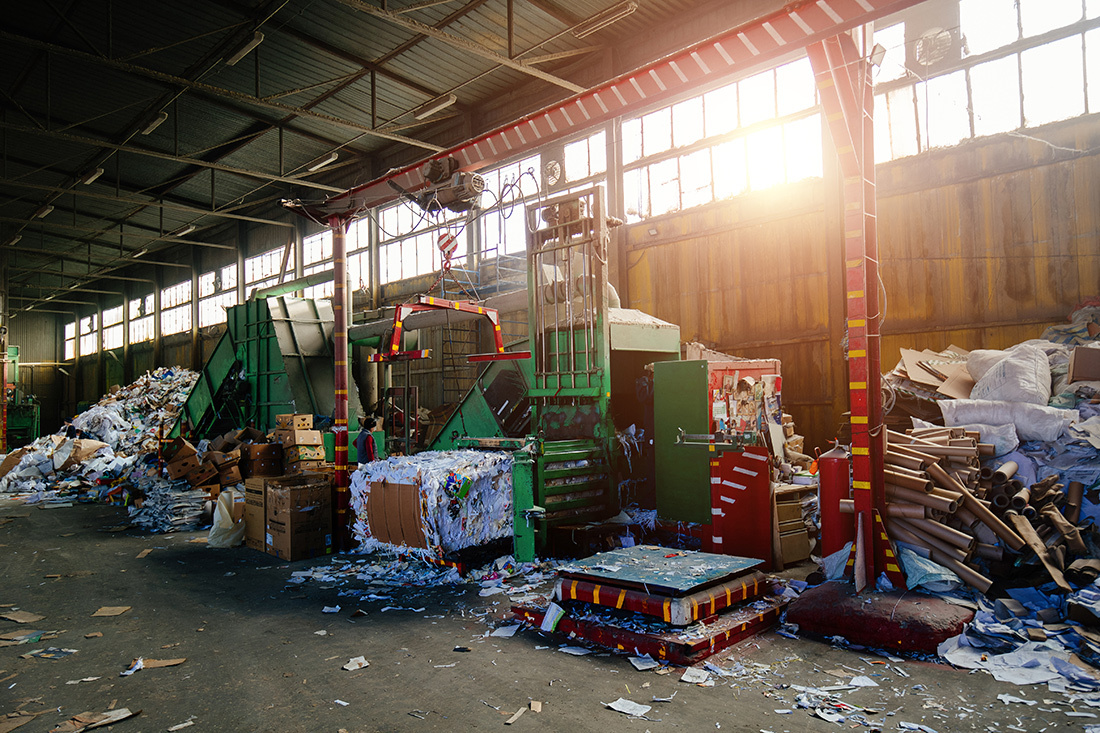
Most of that debris looks harmless.
To a caster, it may not be.
Packaging debris can wrap around axles, contaminate bearings, interfere with swivel movement, damage wheel treads, obstruct brakes, increase rolling resistance, and eventually turn an otherwise functional cart into equipment employees have to fight to move.
The problem is rarely dramatic at first.
A cart does not necessarily stop moving because a label gets caught around a wheel. Instead, it may become slightly harder to start. Then slightly harder to turn. One wheel begins dragging. An employee compensates by pushing harder. The cart starts pulling to one side. Another employee assumes the casters are simply getting old.
By the time maintenance is called, the visible caster problem may be the end of a much longer chain of events.
Understanding that chain is important because packaging and fulfillment operations create a unique debris environment. Preventing caster problems requires more than occasionally cleaning the wheels. It requires looking at the caster, the cart, the floor, and the workflow as one system.
Packaging Debris Is a Mobility Problem
Casters operate at the exact point where nearly every loose object in a facility eventually ends up: the floor.
That puts them in constant contact with debris generated by packing, unpacking, palletizing, shipping, receiving, returns processing, and replenishment.
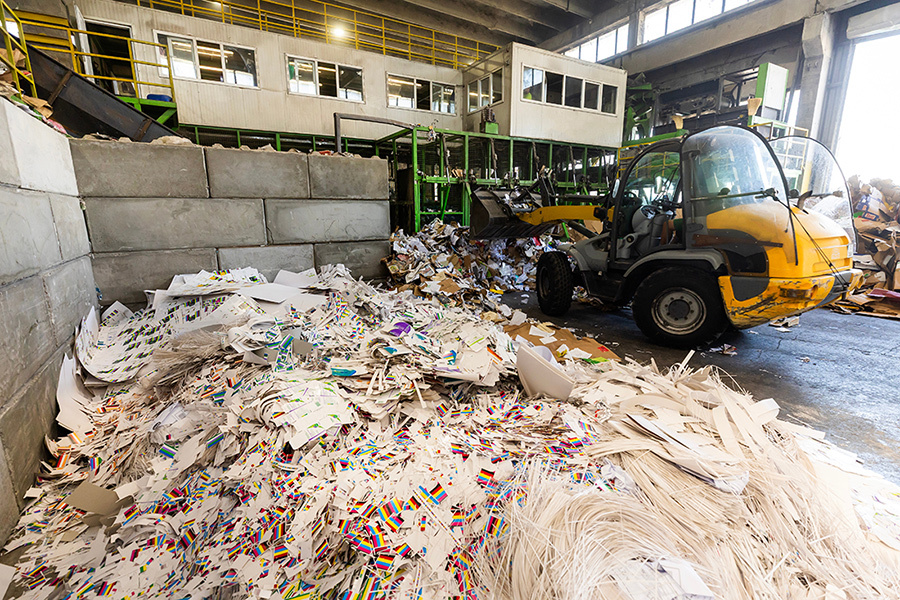
Common examples include:
- Adhesive labels
- Packing tape
- Stretch film
- Shrink wrap
- Plastic strapping
- Corrugated fibers
- Torn cardboard
- Pallet fragments
- Plastic fragments
- Dust
- Dirt
- Staples and other small hardware
Different materials create different problems.
Loose cardboard dust may gradually work its way toward bearings and moving components. A piece of stretch film can wrap tightly around an axle within a few wheel rotations. A pressure-sensitive label can adhere to a wheel tread, pick up additional dirt, and create an increasingly uneven rolling surface.
The result is not simply a dirty caster.
It is a change in how the caster performs.
The Four Types of Packaging Debris That Cause the Most Trouble
1. Wrapping Debris: Stretch Film, Strapping and Fibrous Material
Long, flexible materials are especially problematic because rotation can pull them into the caster.
Stretch wrap is the obvious example.
Once a loose piece contacts a rotating wheel or axle, continued movement can wind the material tighter. What begins as a small strip can become a compact band around the axle.
Plastic strapping, string, fibers, and similar materials can behave the same way.
As material accumulates, it may:
- Increase friction
- Reduce wheel rotation
- Restrict lateral wheel movement
- Create uneven rolling
- Interfere with bearings or seals
- Increase the force employees need to move the cart
A severely wrapped axle can eventually behave almost like a partially applied brake.
The important point is that the employee often notices the ergonomic symptom before anyone sees the mechanical cause.
The complaint may be:
“This cart is getting harder to push.”
The root cause may be a few cents worth of stretch film wrapped around an axle.

2. Adhesive Debris: Labels and Tape
Labels and tape create a different problem.
They stick.
A label may attach itself directly to the tread or begin wrapping around the wheel. Once adhesive is exposed, the wheel can begin collecting additional contaminants from the floor.
Dust sticks to the label.
Cardboard fibers stick to the dust.
Small fragments become embedded in the adhesive.
What began as one label becomes a composite layer of debris attached to the wheel.
This can create:
- An uneven rolling surface
- Increased noise
- Vibration
- Wheel wobble
- Poor floor contact
- Additional rolling resistance
Adhesive contamination can also make later cleaning more difficult, especially once repeated rolling pressure has compressed debris against the wheel.
3. Particulate Debris: Dust, Corrugated Fibers and Fine Contaminants
Some debris never wraps around anything.
Instead, it works its way into moving components.
Packaging facilities can generate significant quantities of:
- Corrugated dust
- Paper fibers
- General warehouse dust
- Small plastic particles
- Dirt carried in from dock areas
These materials may migrate toward wheel bearings, swivel assemblies, raceways, and other moving interfaces.
Bearings depend on smooth, controlled movement with minimal contamination. When dirt or particulate matter enters those components, it can contribute to increased friction, noise, wear, and irregular movement.
A caster may begin:
- Grinding
- Squeaking
- Chattering during turns
- Wobbling
- Resisting swivel movement
- Locking intermittently
That resistance matters because the operator now has to overcome not only the weight of the cart, but also mechanical resistance inside the mobility system.
4. Hard Debris: Pallet Fragments, Staples and Small Hardware
Not every packaging contaminant is soft.
Broken pallet material, small fasteners, staples, clips, plastic fragments, and other hard objects can also enter caster travel paths.
A wheel repeatedly rolling across hard debris may experience:
- Tread cuts
- Chunking
- Embedded material
- Flat spots
- Surface damage
- Abrupt impact loading
The severity depends heavily on the wheel material.
A wheel that performs well on a perfectly clean floor may behave very differently when routinely traveling through debris.
That is why specifying a caster based only on load capacity misses an important part of the application.
The operating environment matters too.
What Debris Does to the Entire Caster
The wheel is only one part of a caster.
Packaging debris can affect several components simultaneously.
Wheel Bearings
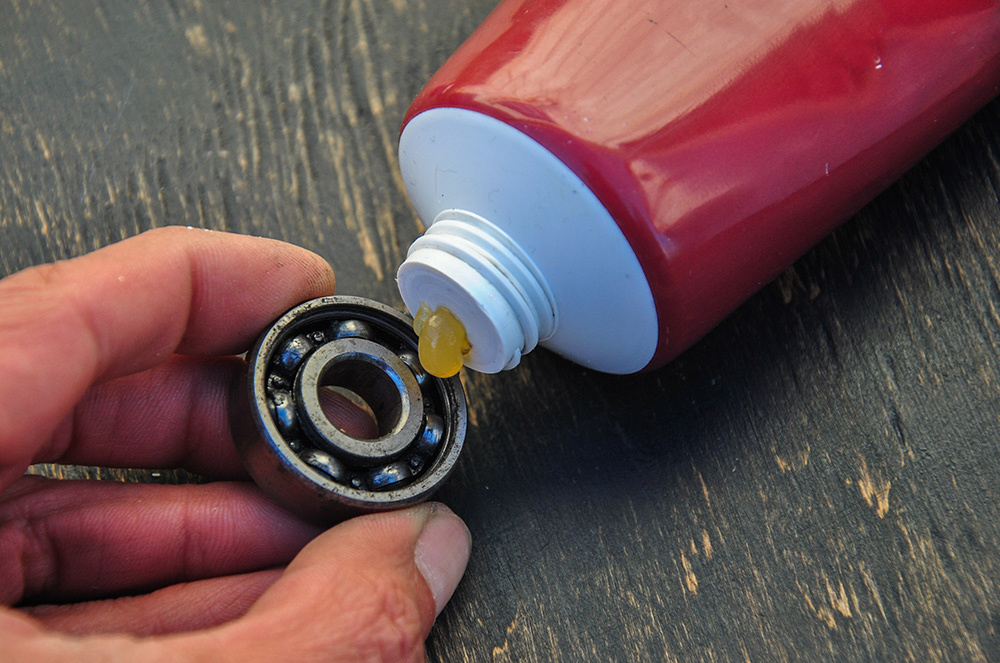
Contaminated or obstructed bearings can increase rolling resistance and create noise or irregular movement.
Sealed bearings may provide additional protection in environments where dust, fibers, moisture, and other contaminants are persistent.
But even sealed bearings do not eliminate the need for housekeeping and inspection.
Protection and prevention work best together.
Axles
Axles are common collection points for stringy debris.
Stretch wrap, tape, fibers, hair-like material, and strapping can wind between the wheel and fork leg.
If that buildup becomes significant, the wheel may no longer rotate freely.
Swivel Sections
A wheel that rolls easily is not much help if the caster does not swivel correctly.
Contamination around the swivel assembly can contribute to resistance during directional changes.
That can be particularly noticeable on:
- Picking carts
- Packing tables
- Kitting carts
- Mobile scales
- Printer stations
- Wire shelving
- Returns carts
These applications often require frequent starts, stops, and directional changes.
Poor swivel action can make the cart feel dramatically heavier than it actually is.
Wheel Treads
Debris can become embedded in, adhere to, cut, or deform the tread.
Damage can change:
- Rolling resistance
- Noise
- Floor protection
- Vibration
- Tracking
Once one wheel behaves differently from the other three, the entire cart may begin behaving differently.
Brakes and Locks
Debris should also be considered around braking components.
Depending on the caster and brake design, contamination can interfere with mechanisms that need to move freely to engage or release.
A brake that feels unusually stiff, does not fully engage, or does not cleanly release deserves inspection.
One Bad Caster Can Change the Whole Cart
One of the reasons caster problems are underestimated is that carts are systems.
Consider a four-caster cart.
Three casters may be working perfectly.
If the fourth wheel is wrapped with stretch film or its swivel section has become contaminated, the employee still has to move the entire cart.
That single caster can cause the cart to:
- Pull to one side
- Resist turning
- Require additional starting force
- Track unpredictably
- Vibrate
- Make more noise
- Feel substantially heavier
Employees compensate instinctively.
They push harder.
They change their body position.
They jerk the cart to get it moving.
They steer against the bad caster.
They may not report the issue because the cart technically still works.
That is how a relatively small maintenance problem becomes an ergonomic problem.
The Ergonomic Cost of Dirty Casters
When companies think about cart ergonomics, attention often goes immediately to load weight.
Weight matters.
But employees do not experience cart weight in isolation. They experience the force required to start, roll, turn, position, and stop the cart.
Caster condition directly affects those forces.
A clean, correctly specified caster should rotate and swivel predictably.

Add contamination, and the employee may have to overcome:
- Additional rolling resistance
- Increased starting resistance
- Poor swivel response
- Wheel drag
- Scrubbing during turns
- Uneven tracking
That means two carts carrying identical loads can feel dramatically different to the employee moving them.
This is also why simply buying a higher-capacity caster does not necessarily improve ergonomics.
Load capacity tells you whether the caster can support the weight.
It does not tell you how easily the cart will move in the actual environment.
Where Packaging Facilities Should Look First
Debris is rarely distributed evenly throughout a building.
Certain processes generate significantly more contamination.
Packing Stations
Tape backing, labels, corrugated fibers, and small packaging scraps frequently accumulate around high-volume packing cells.
Pallet Wrapping Areas
Stretch film becomes a major concern wherever pallets are manually or automatically wrapped.
Loose tails and torn film can migrate into traffic lanes.
Receiving and Pallet Breakdown
This is often one of the harshest areas for caster travel.
Operators may encounter:
- Broken pallet pieces
- Strapping
- Shrink film
- Labels
- Dirt brought in from trailers
- Mixed packaging debris
Returns Processing
Returns operations create unpredictable debris because packaging is being opened, inspected, repacked, and discarded continuously.
Shipping Docks
Dock areas combine packaging debris with dirt, moisture, floor transitions, dock plates, expansion joints, and other challenging conditions.
Conveyor Ends and Sortation Areas
Packages are handled repeatedly in these zones, making them natural collection points for labels, corrugated material, plastic fragments, and other debris.
If the same carts repeatedly fail near the same process, look beyond the caster.
The workflow itself may be contributing to the failure.
How to Prevent Packaging Debris From Destroying Casters
There is no single debris-proof caster.
A better strategy combines facility housekeeping, preventive maintenance, and application-specific caster selection.
1. Treat Caster Travel Paths Like Equipment
The floor is part of the mobility system.
A caster can only perform as well as the surface it travels across.
High-traffic cart routes should be inspected for:
- Stretch wrap
- Tape
- Labels
- Strapping
- Corrugated debris
- Pallet fragments
- Moisture
- Floor damage
- Threshold problems
This is especially important around known debris-generation points.
Cleaning the floor is not separate from caster maintenance.
It is caster maintenance.
2. Make Wheel Inspection Fast and Routine
Employees should not need a maintenance shutdown to notice a wrapped axle.
Simple visual inspections can catch many problems early.
Look for:
- Material wrapped around the axle
- Labels attached to the tread
- Excessive dust buildup
- Embedded debris
- Wheel cuts or chunking
- Wheel wobble
- Uneven wear
- Resistance during rotation
- Swivel binding
- Damaged brakes
- Loose mounting hardware
The goal is to catch contamination before it turns into mechanical damage.
3. Listen to the Cart
Casters frequently give warning signs.
A cart that suddenly develops:
- Clicking
- Grinding
- Squeaking
- Chattering
- Thumping
- Increased vibration
should be inspected.
The same is true when employees report that a cart has become harder to push, harder to steer, or prone to drifting.
A change in how the cart feels is information.
Do not wait for complete failure.
4. Consider Sealed Bearings in Contaminated Environments
Where packaging dust, fibers, dirt, or moisture are persistent, sealed bearing designs may help protect internal rolling components.
This can be especially valuable for equipment that moves frequently through debris-generating areas.
Bearing selection still needs to consider:
- Load
- Wheel size
- Duty cycle
- Speed
- Floor conditions
- Washdown or moisture exposure
- Maintenance practices
There is no universal bearing for every application.
5. Match Wheel Material to the Real Environment
Wheel selection should consider more than capacity.
Evaluate:
- Floor type
- Debris
- Noise requirements
- Push/pull requirements
- Load
- Travel distance
- Speed
- Frequency of movement
Some resilient polyurethane formulations, for example, can offer a useful balance of durability, floor protection, rolling performance, and resistance to certain types of embedded debris.
But the key phrase is certain types.
A wheel that rejects a hard floor contaminant does not magically prevent stretch film from wrapping around an exposed axle.
Different debris requires different strategies.
6. Do Not Assume a Larger Wheel Solves Contamination
Increasing wheel diameter can help a cart roll over:
- Floor joints
- Thresholds
- Small surface irregularities
But wheel diameter does not solve every debris problem.
A six-inch wheel can still collect stretch wrap.
A larger caster can still have contaminated bearings.
A heavy-duty wheel can still be paired with a swivel assembly that does not perform well in the application.
Caster design has to be considered as a complete system.
7. Standardize Replacement Practices
One common maintenance problem begins when an original caster fails and gets replaced with whatever happens to fit.
Eventually, the cart has:
- Different wheel diameters
- Different tread materials
- Different swivel characteristics
- Different levels of wear
That inconsistency can make tracking, turning, and braking unpredictable.
Facilities with large cart fleets may benefit from standardizing approved caster configurations by application.
That also makes spare-parts inventory easier to manage.
8. Track Where Failures Happen
A caster failure is not just a maintenance event.
It is operational data.
Ask:
- Which cart failed?
- Where does it normally travel?
- What debris exists in that area?
- Which caster failed?
- What material was wrapped or embedded?
- How old was the caster?
- Are similar carts failing in the same way?
Patterns can reveal whether the root cause is:
- Housekeeping
- Caster specification
- Cart design
- Floor condition
- Load
- Maintenance
- Workflow
Replacing the caster without answering those questions may simply restart the failure cycle.
Debris Prevention Is a Systems Problem
The most important lesson is that packaging debris should not be treated as an isolated housekeeping issue.
A piece of stretch film on the floor may ultimately affect:
- Caster rotation
- Employee push force
- Cart tracking
- Maintenance frequency
- Wheel life
- Floor condition
- Productivity
- Equipment availability
That is a surprisingly large chain of consequences for something that started as a scrap of plastic.
And that is exactly why mobility problems are often misunderstood.
The component that fails may be the caster.
The root cause may exist somewhere else entirely.
When the Caster Needs to Change
Sometimes better housekeeping and maintenance solve the problem.
Sometimes the application itself is telling you that the current caster is wrong.
Consider reevaluating the caster system when:
- Axles require constant debris removal
- Bearings repeatedly become contaminated
- Wheels develop premature tread damage
- Employees regularly complain about push effort
- Carts pull or resist turning
- Casters require frequent replacement
- Multiple carts fail in the same area
- Downtime continues despite preventive maintenance
At that point, the question should not simply be:
“What replacement caster fits this cart?”
A better question is:
“Why does this caster keep failing in this application?”
The difference between those questions is the difference between replacing a component and solving a mobility problem.
Turn Packaging Debris Into a Caster Needs Evaluation
Packaging and fulfillment environments are demanding because the operating conditions change constantly.
Loads change.
Routes change.
Floor conditions change.
Debris changes.
The correct caster system has to account for all of it.
Caster Connection works with packaging, fulfillment, distribution, and manufacturing facilities to evaluate the complete application, including:
- Cart weight
- Load distribution
- Floor conditions
- Packaging debris
- Push/pull requirements
- Wheel material
- Bearing design
- Caster configuration
- Braking
- Maintenance
- Travel routes
If labels, tape, stretch wrap, strapping, cardboard fibers, or other packaging debris are turning your carts into maintenance problems, replacing the same caster again may not be the answer.
Request a Caster Needs Evaluation.
We will look at what your equipment is carrying, where it travels, what is getting into the caster, and how employees actually use the cart—then help you identify a mobility solution designed around the real environment.
Because sometimes the smallest thing on the floor is the biggest reason your cart is not rolling the way it should.