Restraint vs. Isolation in Seismic Data Centers: Managing Movement, Vibration & Force Transfer

Restraint vs. Isolation in Seismic Data Centers: Managing Movement, Vibration & Force Transfer
Restraint and isolation solve different seismic problems. Restraint helps prevent equipment from drifting, tipping, or migrating during seismic activity. Isolation and damping help reduce the vibration, shock, and acceleration forces transferred into sensitive equipment. In seismic-ready data centers, the strongest strategy often combines restraint, isolation, damping, flexible utility connections, and controlled displacement planning.
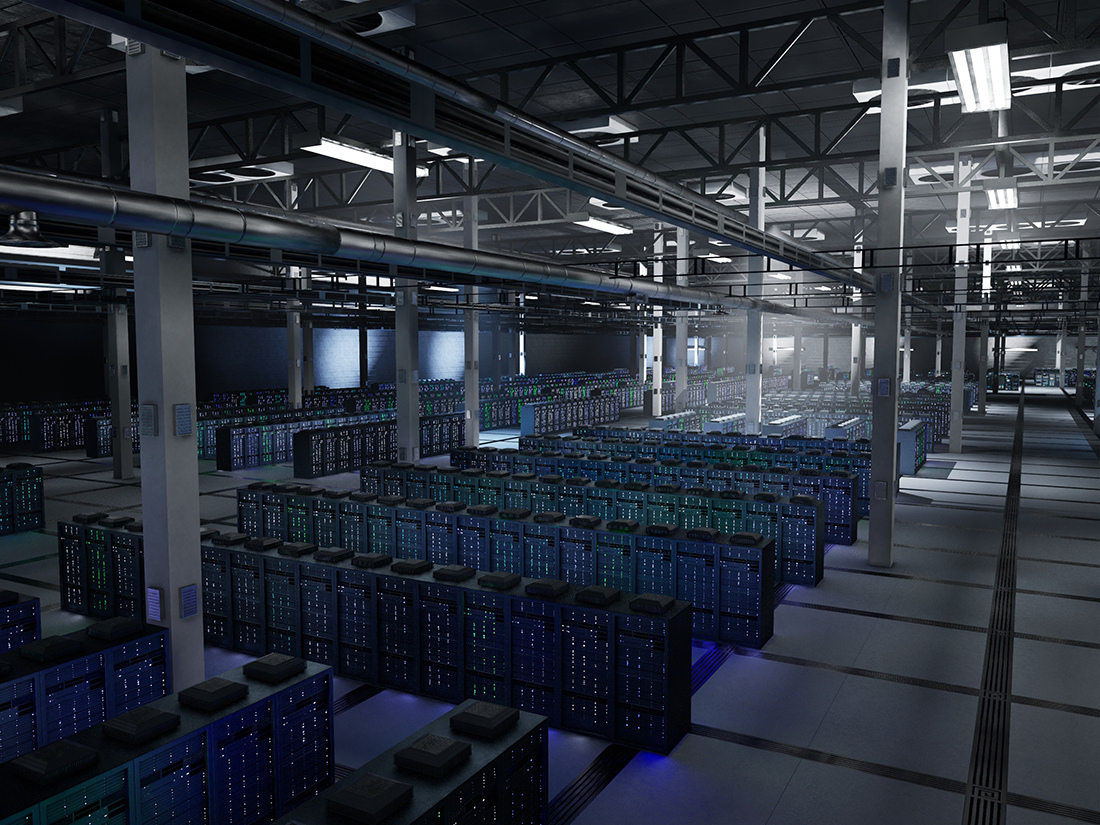
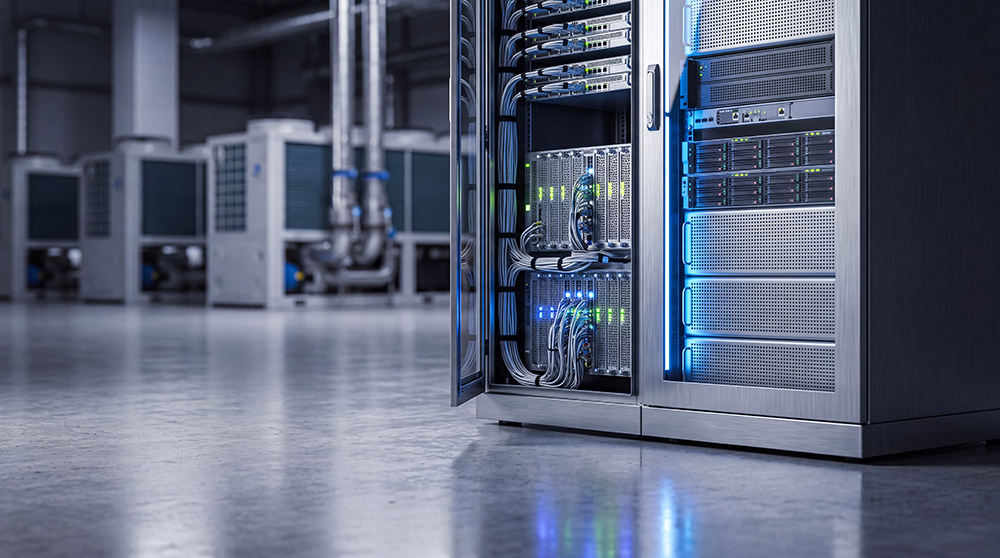
That distinction matters because modern data centers are no longer defined only by the building envelope. Server racks, UPS systems, battery cabinets, cooling equipment, cable pathways, containment systems, and mobility systems all influence how a facility performs during and after seismic activity.
For years, seismic preparation was often framed around a simple goal: keep equipment from moving. That goal is still important. But as data centers become denser, heavier, more thermally complex, and more vibration-sensitive, a more nuanced engineering question has emerged:
How do we limit dangerous movement without unnecessarily increasing damaging force transfer into critical infrastructure?
That question sits at the center of the restraint-versus-isolation conversation.
The Core Engineering Problem: Earthquakes Create Dynamic Force Conditions
Earthquakes do not apply force in a simple or predictable way. During a seismic event, the ground beneath a structure accelerates rapidly and irregularly. That motion travels through the building, the floor system, equipment frames, utility connections, and support systems.
For data centers, seismic activity can create:
- Oscillation
- Dynamic loading
- Acceleration forces
- Resonance effects
- Vibration transfer
- Shifting load paths
- Transient force amplification
- Equipment movement
- Cable and utility strain
- Post-event misalignment
A data center may be structurally sound and still experience equipment-level disruption. A server rack may remain upright but transfer damaging vibration into sensitive components. A UPS system may stay in place but strain its electrical connections. A cooling system may not fail structurally, but movement or vibration may affect alignment, serviceability, or thermal continuity.
During an earthquake, every restraint point can become a pathway for force transfer.
That is the engineering tradeoff. The same connection that helps keep equipment in position may also transmit seismic energy into the equipment structure. The same isolation system that helps reduce vibration may also allow limited displacement that must be planned for. Neither restraint nor isolation should be evaluated alone.
What Restraint Does in a Data Center
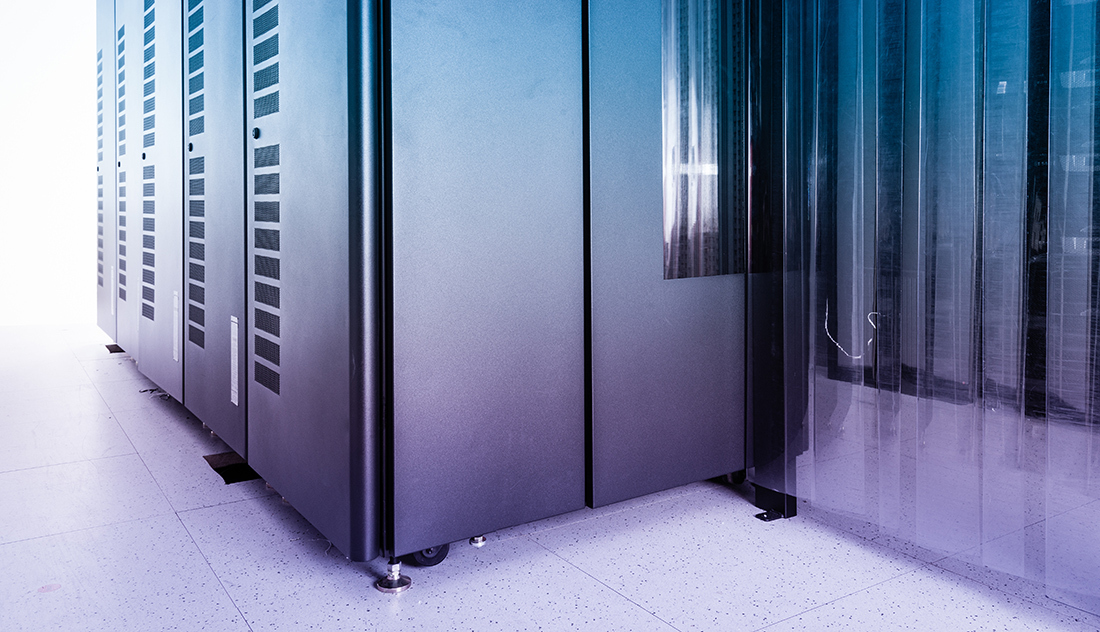
In seismic data center design, restraint refers to methods used to limit or control equipment movement. This can include anchoring, bracing, locking, rack stabilization systems, floor interfaces, or other approaches designed to reduce drift, tipping, sliding, or migration.
Restraint can help:
- Reduce equipment drift
- Limit rack migration
- Prevent tipping
- Maintain approximate equipment position
- Protect aisles, pathways, and access zones
- Support anchoring or stabilization plans
- Reduce the risk of uncontrolled displacement
- Help keep equipment within a defined footprint
For seismic restraint server racks, this function is especially important. Racks often support expensive, sensitive, and interconnected equipment. Movement can affect cables, power distribution, airflow, cooling, maintenance access, and neighboring infrastructure.
However, restraint can also introduce tradeoffs.
A highly rigid restraint system may:
- Increase direct force transfer
- Increase vibration exposure
- Transmit acceleration into equipment frames
- Create stress at attachment points
- Increase sensitivity to resonance depending on system design
- Concentrate force through limited connection points
This does not mean restraint is bad. It means restraint has to be understood as one part of a broader seismic response strategy.
A system designed only to stop movement may perform well for positional stability, but it may not minimize shock or vibration transfer. In dense, vibration-sensitive data centers, that distinction is critical.
What Isolation Does in a Data Center
Isolation and damping systems are designed to reduce the transfer of vibration, shock, or acceleration into supported equipment. Instead of creating a fully rigid connection between equipment and the moving structure, isolation strategies may allow controlled motion or energy dissipation.
Data center vibration isolation can help:
- Reduce shock transfer
- Absorb or redirect energy
- Lower acceleration forces
- Reduce vibration entering sensitive equipment
- Manage resonance effects
- Support controlled displacement
- Protect sensitive components from direct force transmission
Isolation is often counterintuitive because it may involve allowing limited movement. But controlled movement is not the same thing as instability. In many engineered systems, allowing a component to move within defined limits can reduce the forces transmitted into that component.
However, isolation also introduces design questions.
Isolation may create concerns around:
- Allowable displacement
- Cable strain
- Utility connection movement
- Equipment migration
- Clearance requirements
- Maintenance access
- Post-event inspection needs
- Compatibility with rack, floor, or anchoring systems
A vibration isolation system may reduce acceleration transfer, but if cables, power connections, liquid cooling lines, or containment systems cannot accommodate the allowed movement, the isolation strategy may create a different operational risk.
This is why seismic isolation data center infrastructure must be evaluated as a system. Isolation performance cannot be separated from utility flexibility, spacing, rack design, maintenance requirements, and equipment sensitivity.
Why Preventing Movement and Minimizing Vibration Are Separate Priorities
One of the most important lessons in seismic-ready data center design is that preventing movement and minimizing vibration transfer are related, but they are not the same thing.
Consider a server rack that is bolted firmly to the floor. During a seismic event, that rigid connection may help prevent the rack from sliding, drifting, or tipping. From a positional stability standpoint, that is valuable. But the same rigid connection can also transmit seismic energy directly into the rack frame and the sensitive electronics it supports.
Now consider a rack or equipment platform mounted on an isolation system. During shaking, the system may move slightly. That movement may be intentional. The isolation layer can absorb, redirect, or dissipate part of the seismic energy, reducing the acceleration forces transferred into the equipment.
The first system emphasizes restraint. The second emphasizes isolation. Both may be useful. Both may introduce tradeoffs.
Rigid restraint may improve positional stability, while isolation may reduce damaging acceleration. Seismic-ready design requires understanding both outcomes.
This is why maximum rigidity is not always the only answer. In some environments, the safest or most resilient approach may combine restraint, damping, controlled displacement, and flexible connections. The goal is not simply to stop all movement. The goal is to control movement while managing vibration transfer.
For data centers, this distinction becomes more important as infrastructure becomes heavier, denser, and more interconnected.
The Real-World Lesson from the Baja California Earthquake
The 2010 Baja California earthquake offers a useful example of controlled movement in practice. During the magnitude 7.2 event, seismic activity was strongly felt throughout Southern California, including areas with dense technology and data infrastructure.
After the event, operators observed visible movement of server racks and raised concerns about infrastructure displacement, operational instability, and equipment migration. Reports also described systems engineered to allow controlled movement during earthquakes, including server systems mounted on “earthquake gliders.”
That detail is important.
The infrastructure was not simply loose or unmanaged. It was intentionally designed to move in a controlled way. The engineering logic was that limited displacement could reduce damaging force transfer into sensitive equipment.
The lesson is not that data center equipment should be left unsecured. It is not that rigid restraint is ineffective. It is that seismic resilience often depends on balancing restraint and energy dissipation.
Controlled displacement is not uncontrolled instability. It is a planned way to reduce damaging force transfer while keeping equipment movement within acceptable limits.
For data centers, this means design teams should ask not only whether equipment can move, but how it moves, how far it can move, what it is connected to, and what forces are transferred through the system during that movement.
What Semiconductor Facilities Teach Data Centers About Vibration Sensitivity
Few built environments are more vibration-sensitive than semiconductor manufacturing facilities. Semiconductor fabrication equipment can be highly sensitive to acceleration, resonance, micro-vibrations, oscillation, force amplification, and precision alignment disruption.
That is why advanced semiconductor facilities often invest heavily in layered seismic and vibration strategies, including:
- Structural reinforcement
- Seismic anchoring
- Vibration isolation
- Energy dissipation systems
- Floating or specialized foundations
- Process-specific seismic engineering
- Precision alignment controls
Data centers are not semiconductor fabs. They do not have the same process requirements or vibration tolerances in every application. But the comparison is becoming more relevant as data center infrastructure changes.
AI compute clusters, high-density GPU racks, liquid cooling infrastructure, and edge deployments are increasing the importance of vibration, alignment, utility flexibility, and equipment stability. As infrastructure density increases, the consequences of vibration may increase as well.
Data centers do not need to become semiconductor fabs to learn from them. The relevant lesson is that vibration management becomes more important as equipment becomes denser, heavier, more precise, and more interconnected.
For AI data centers especially, equipment movement is not the only concern. Vibration transfer, rack alignment, cooling connections, and utility strain may all influence operational continuity.
The Philosophy of Controlled Stability
Controlled stability means reducing dangerous movement without unnecessarily increasing damaging force transfer into critical infrastructure.
This philosophy moves seismic planning beyond the idea that stability is achieved only through maximum rigidity. Instead, it treats stability as a system outcome that depends on how restraint, isolation, damping, mobility, floor interaction, utility connections, and serviceability work together.
Controlled stability combines:
- Restraint
- Isolation
- Damping
- Controlled displacement
- Flexible utility connections
- Mobility planning
- Floor interaction
- Post-event serviceability
- Vibration management
- Energy dissipation
The concept is especially useful for seismic-ready data centers because operational continuity depends on relationships between systems. A server rack does not exist by itself. It connects to cables, power, cooling, flooring, adjacent racks, containment systems, and maintenance pathways. A UPS system does not only need to remain upright; it must also remain serviceable and safely connected. Cooling infrastructure does not only need to avoid tipping; it must preserve alignment and utility integrity.
Controlled stability asks a more complete set of questions:
- Is the equipment protected from catastrophic displacement?
- Are vibration and acceleration forces being managed?
- Are utility connections flexible enough for expected movement?
- Is the system serviceable after an event?
- Does the equipment remain within acceptable movement boundaries?
- Does the stability strategy create new force-transfer concerns?
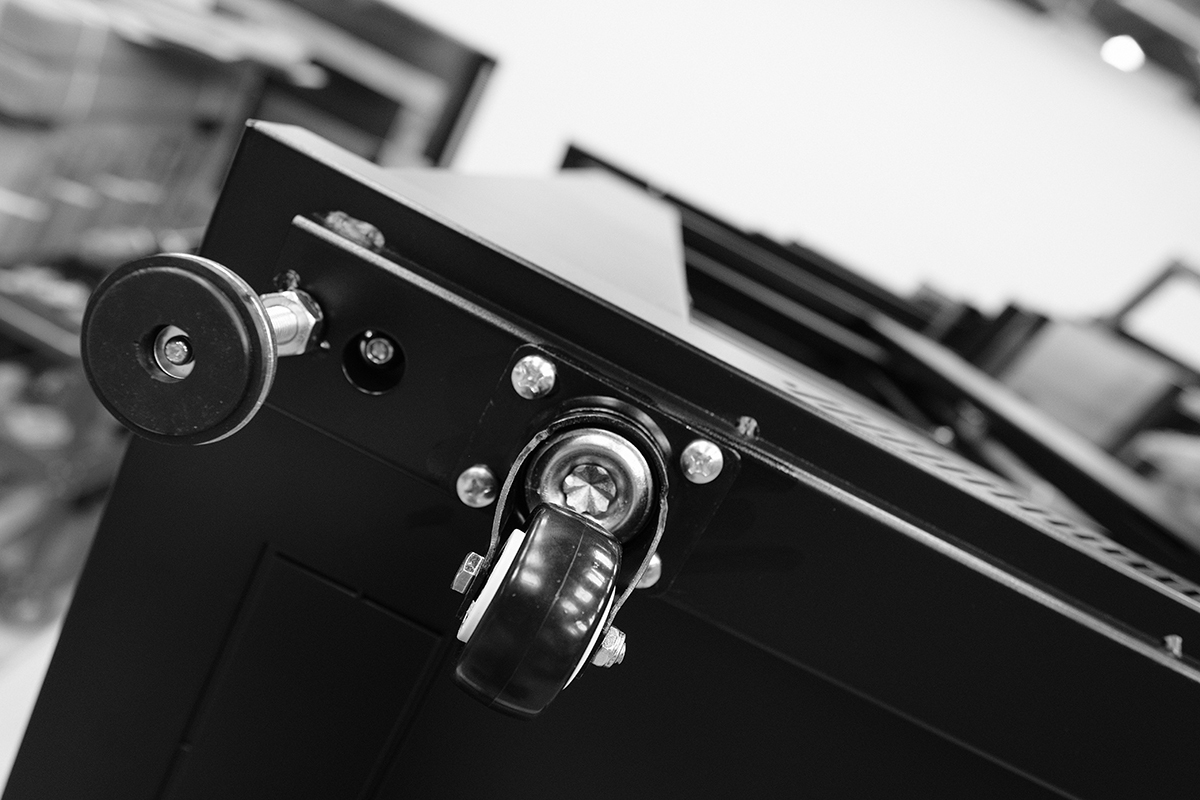
- How do casters, brakes, floor locks, and wheel materials affect the system?
The best seismic strategy is rarely a single product or intervention. It is a coordinated approach that balances movement control with energy management.
Key Questions Engineers and Facility Teams Should Ask
When evaluating restraint vs isolation in seismic data centers, design teams should consider both equipment protection and operational continuity.
Important questions include:
- How sensitive is the equipment to vibration, shock, and acceleration?
- How much controlled displacement is acceptable?
- What cable or utility strain could occur during movement?
- Does the system require precise alignment?
- How is the equipment integrated with the building or floor?
- What serviceability requirements exist before and after a seismic event?
- What seismic zone or risk profile applies to the facility?
- Are restraint and isolation compatible with the broader mitigation plan?
- Will the strategy protect against catastrophic displacement?
- Could the strategy increase force transfer into sensitive infrastructure?
- Are maintenance pathways preserved?
- How will the equipment be inspected after a seismic event?
These questions are especially important for infrastructure with high mass, sensitive electronics, limited cable slack, liquid cooling connections, or tight rack spacing.
For example, a highly rigid anchoring system may keep a rack in place, but it could increase acceleration transfer. An isolation system may reduce shock loading, but it may require more planning for movement clearances and utility flexibility. A combined strategy may be required when equipment must remain positioned while also being protected from damaging vibration.
Why Mobility Systems Should Be Evaluated Inside the Complete Seismic Environment
Mobility systems are often discussed in terms of movement, positioning, and service access. In seismic-sensitive data centers, they should also be evaluated as part of the complete stability and vibration environment.
Casters, wheels, brakes, and floor locks can influence:
- Floor interaction
- Vibration pathways
- Load distribution
- Equipment positioning
- Braking and locking behavior
- Rack migration
- Force transfer
- Maintenance access
- Serviceability after an event
A wheel material may affect shock transfer. A brake may improve positional stability. A floor lock may change how equipment couples to the floor. A caster configuration may influence load distribution. The condition of the floor may affect how the system behaves under both routine movement and vibration.
These details matter because mobility systems can become part of the seismic response pathway.
A mobility solution should not be selected only by static load capacity. It should be evaluated in the context of equipment weight, floor conditions, vibration sensitivity, restraint strategy, utility flexibility, service access, and long-term maintenance.
For example, a caster and brake configuration that works well for a maintenance cart may not be appropriate for a high-density server rack or a UPS system. A floor lock that improves stationary support in one environment may increase direct floor coupling in another. A harder wheel material may support heavy loads efficiently but may also transfer more vibration depending on the application. A softer wheel material may offer damping benefits but may introduce deflection or rolling resistance concerns.
This is where Caster Connection’s application-specific approach becomes valuable. Seismic-sensitive environments require more than a standard caster recommendation. They require a review of how the mobility system interacts with the equipment, floor, operating environment, and broader seismic mitigation strategy.
Engineering Note: No Single Component Solves Seismic Risk
Casters, brakes, floor locks, isolation platforms, and anchoring systems each solve different parts of the seismic stability problem. None should be treated as a standalone solution. The best approach depends on equipment sensitivity, facility design, utility flexibility, floor conditions, and applicable engineering requirements.
Mobility systems should not be positioned as replacements for seismic anchoring, rack certification, or qualified structural and seismic engineering review. Instead, they should be evaluated as one part of a broader strategy for controlled stability, vibration management, operational continuity, and long-term serviceability.
In seismic-ready data centers, the objective is not simply to stop movement at all costs. The objective is to understand how movement, restraint, isolation, damping, and force transfer interact across the infrastructure system.
Talk With Caster Connection About Application-Specific Mobility and Stabilization Requirements
Seismic-sensitive data center environments require careful evaluation of equipment weight, floor conditions, mobility requirements, wheel material performance, braking strategy, vibration considerations, and stabilization goals.
Caster Connection can help assess how mobility systems interact with:
- Server racks and cabinets
- UPS systems
- Battery cabinets
- Cooling infrastructure
- Modular edge deployments
- Maintenance mobility systems
- Seismic-sensitive equipment environments
Our team can help evaluate mobility requirements, braking strategies, wheel material performance, vibration considerations, floor interaction behavior, and long-term serviceability needs.
In seismic-ready environments, mobility is not just about movement. It is about engineered stability.
Talk with Caster Connection about application-specific mobility and stabilization requirements.
Frequently Asked Questions
What is the difference between restraint and isolation?
Restraint limits equipment movement. Isolation reduces the transfer of vibration, shock, and acceleration into the equipment. Many seismic-sensitive environments require both because equipment must remain controlled while also being protected from damaging force transfer.
Is rigid anchoring always best for data center equipment?
Rigid anchoring can reduce movement, tipping, and migration, but it can also increase force transfer into sensitive infrastructure. The best approach depends on the equipment, facility, seismic risk, vibration sensitivity, utility flexibility, and operational requirements.
What is controlled displacement?
Controlled displacement is planned, limited movement that allows equipment or support systems to move within acceptable boundaries while reducing damaging seismic force transfer. It is not uncontrolled movement. It is an intentional engineering strategy used to manage energy and protect equipment.
Why does vibration transfer matter in data centers?
Vibration transfer can contribute to component stress, equipment misalignment, cable strain, cooling instability, and operational disruption. This is especially important in dense, heavy, AI-driven, liquid-cooled, or highly interconnected data center environments.
Can mobility systems affect seismic behavior?
Yes. Wheel material, caster configuration, brake design, floor locks, load distribution, and floor interaction can influence how equipment moves, couples with the floor, and transfers vibration. Mobility systems should be evaluated as part of the broader seismic stability strategy.
Can caster brakes or floor locks replace seismic anchoring?
No. Caster brakes and floor locks should not be treated as replacements for seismic anchoring, rack certification, or structural engineering requirements. They may support positional stability and serviceability when evaluated as part of a broader seismic mitigation plan.
Why are restraint and isolation often used together?
Restraint and isolation address different risks. Restraint helps limit dangerous movement, while isolation and damping help reduce shock and acceleration transfer. Many seismic-ready data centers require a layered strategy that includes both movement control and vibration management.