How to Reduce Downtime in Data Center Construction and Deployment
How to Reduce Downtime in Data Center Construction and Deployment
To reduce downtime in data center construction and deployment, teams should plan equipment mobility before installation begins. That includes evaluating equipment weight, movement paths, staging areas, caster load capacity, wheel materials, brakes, floor protection, installation sequencing, and service access. Efficient mobility helps reduce delays, labor requirements, equipment damage, floor damage, rework, and commissioning disruptions.
Most data center downtime conversations focus on live operations: power interruptions, cooling failures, network outages, equipment faults, or software issues. Those risks matter. Uptime Institute’s Annual Outage Analysis 2025 describes outage prevention as a continuing strategic priority for data center owners and operators, especially as modern architectures become more complex and external risks continue to evolve.
But downtime can begin before a facility ever goes live.

During data center construction and deployment, downtime often appears as idle labor, staging delays, equipment movement bottlenecks, unsafe handling conditions, floor damage, late repositioning, commissioning delays, or rework caused by inefficient physical workflows. These delays may not look like traditional “outages,” but they still slow the project, increase costs, and put pressure on deployment timelines.
For Caster Connection, this is where the mobility conversation becomes critical.
Reducing downtime in data center construction is not only about better scheduling. It is also about improving how physical infrastructure moves through the build environment.
What Does “Downtime” Mean During Data Center Construction?
In data center construction and deployment, downtime refers to any delay, interruption, idle labor, rework, equipment handling issue, staging bottleneck, or installation obstacle that slows the project schedule or prevents infrastructure from moving efficiently toward commissioning.
This can include obvious problems, such as a piece of equipment arriving late or a crew waiting for access. But it can also include smaller friction points that accumulate across the deployment workflow.
Construction and deployment downtime can show up as:
- Crews waiting for equipment to arrive, unload, or move into position
- Equipment staged in the wrong location
- Heavy infrastructure that cannot be moved efficiently through the facility
- Caster or wheel failure during movement
- Finished floors, raised floors, or coatings damaged during equipment transport
- Unsafe handling conditions that stop or slow work
- Delayed installation of server racks, UPS systems, batteries, or cooling equipment
- Rework caused by poor sequencing or blocked access
- Commissioning delays caused by late equipment placement
- Equipment that must be repositioned after installation
- Inadequate mobility for modular or prefabricated assemblies
- Maintenance teams inheriting equipment that is difficult to move or access
Construction downtime is not always a system failure. Sometimes it is a movement failure. If equipment cannot be staged, moved, positioned, stabilized, and accessed efficiently, the project loses time.
That is why data center construction efficiency depends on more than labor scheduling and equipment availability. It also depends on whether the infrastructure can physically move through each phase of deployment without creating bottlenecks.
Why Data Center Deployment Timelines Are Under More Pressure
Modern data center deployment timelines are under pressure from multiple directions. AI growth, hyperscale expansion, edge deployments, liquid cooling, denser racks, larger power systems, and supply chain complexity are changing how data centers are built.
Deloitte’s 2025 AI infrastructure research notes that the AI age is expected to require scaling data centers, grid capacity, and supply chains together. That means deployment coordination is becoming a central infrastructure challenge, not just an operational concern.
Data center construction teams are often working against tighter deployment windows while managing:
- Heavier equipment
- Larger modular assemblies
- Higher rack densities
- More complex power systems
- More complex cooling systems
- Liquid cooling infrastructure
- Larger battery deployments
- Prefabricated and modular construction workflows
- More coordinated trade schedules
- Higher expectations for rapid commissioning
- Greater pressure to bring AI and hyperscale capacity online quickly
In this environment, every avoidable delay matters.
Caster Connection’s hyperscale data center content emphasizes that modern infrastructure such as server racks, containment systems, and battery storage requires heavy-duty casters capable of handling higher loads, and that poor mobility can slow installation, increase labor time, and create downstream delays.
As data center projects become larger, heavier, denser, and more schedule-sensitive, the cost of inefficient equipment movement increases. Mobility planning becomes a deployment strategy, not just a hardware decision.
Where Downtime Happens in Data Center Construction and Deployment
Downtime often accumulates at transition points. Each handoff from one stage to the next creates an opportunity for friction.
Deployment stage | Common downtime risk | Mobility-related cause | Prevention opportunity |
Receiving | Equipment cannot be unloaded efficiently | Dock-to-site movement was not planned | Confirm equipment weight, route, and handling method before delivery |
Staging | Components block work areas | Poor staging layout or limited mobility | Plan staging zones and movement paths early |
Rough construction | Equipment cannot move through active site conditions | Floor transitions, debris, uneven surfaces, or changing routes | Select casters and carts for real site conditions |
Fit-out | Racks, UPS systems, batteries, or cooling units are hard to position | Poor caster selection, tight clearances, or excessive push/pull force | Use application-specific mobility systems |
Commissioning | Equipment requires late repositioning | Access, alignment, or sequencing issues | Plan service access and final placement requirements |
Handoff | Operations teams inherit poor mobility | Installation-only caster decisions | Choose mobility systems for lifecycle use, not only first placement |
Downtime often accumulates at handoff points: receiving to staging, staging to installation, installation to commissioning, and commissioning to operations. Mobility planning reduces friction at each transition.
This is especially important in hyperscale data center construction, where small inefficiencies are repeated across many racks, cabinets, carts, modules, and movement paths.
Why Equipment Mobility Is a Hidden Driver of Data Center Construction Efficiency
Construction teams often focus on major schedule drivers such as permitting, power availability, equipment lead times, skilled labor, commissioning windows, and trade sequencing. Those are critical.
But once infrastructure arrives on-site, physical movement becomes one of the most immediate determinants of progress.
Equipment mobility affects:
- Installation speed
- Labor requirements
- Worker safety
- Floor protection
- Equipment protection
- Trade coordination
- Installation sequencing
- Staging density
- Final positioning
- Rework risk
- Commissioning readiness
- Operational handoff
In data center construction, mobility is the link between logistics planning and installation execution.
A piece of equipment may be delivered on time, but if it cannot be moved safely from the dock to staging, the schedule still suffers. A modular assembly may be ready for placement, but if the cart system cannot handle the load or turn within the required path, installation slows. A server rack may arrive correctly configured, but if the caster system is poorly matched to the floor, the team may need more labor to position it.
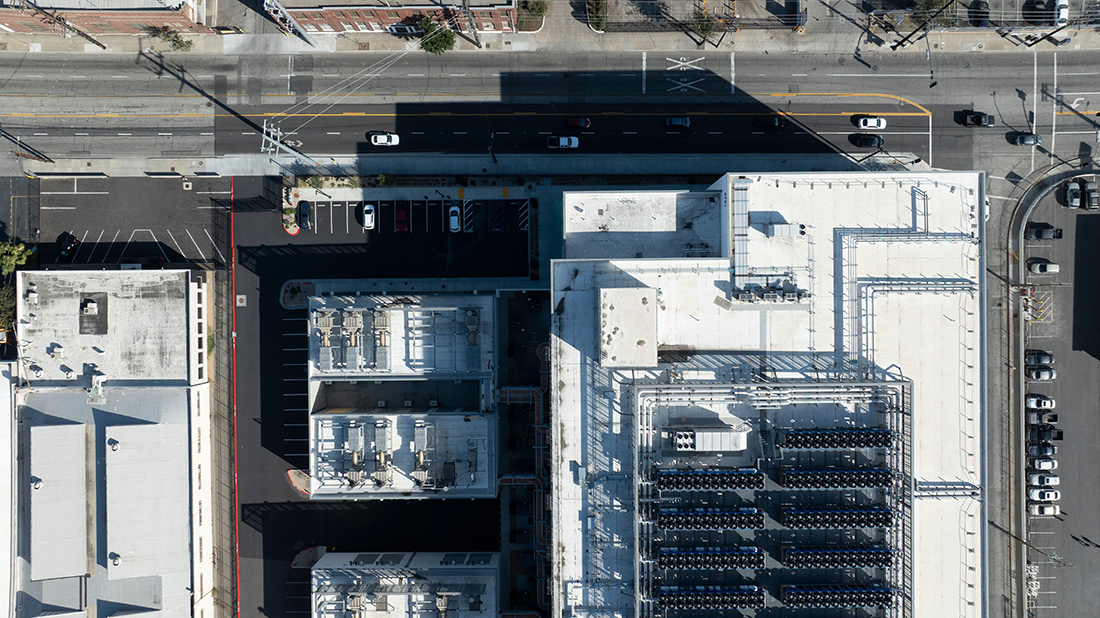
Caster Connection’s data center infrastructure construction case study illustrates this point clearly. A U.S.-based data center infrastructure manufacturer partnered with Caster Connection to engineer a mobility solution for modular assemblies weighing up to and exceeding 20,000 pounds. These assemblies were built on custom carts, rolled into position within active construction environments, and then lifted by crane for permanent installation.
That type of project shows why mobility can be mission-critical during deployment. When the equipment is extremely heavy, expensive, and schedule-sensitive, caster reliability is not a small detail. It is part of the construction workflow.
The Cost of Poor Mobility During Deployment
Poor mobility can create hidden costs across the deployment timeline. These costs may not always appear as a single failure, but they can add up quickly.
Labor Inefficiency
If equipment is difficult to move, teams may need more people to complete basic handling tasks. That increases labor requirements and coordination complexity.
A caster system that produces excessive push/pull force may also slow crews and increase physical strain. Even when the equipment can technically move, the process may be inefficient.
Installation Delays
Equipment that is hard to steer, turn, position, or stabilize can delay installation. When one installation task slows down, downstream trades and commissioning activities may be affected.
In fast-moving data center construction environments, a mobility issue can become a scheduling issue.
Floor and Surface Damage
Finished floors, raised floors, epoxy coatings, and protected movement paths can be damaged by poor caster selection or improper handling.
Floor damage can create additional downtime because damaged surfaces may need repair before work can continue or before equipment can be commissioned.
Equipment Damage
Data center infrastructure is heavy, sensitive, and expensive. Improper movement can stress racks, cabinets, cooling systems, battery units, electrical connections, and sensitive electronics.
Damage during movement can create repair delays, replacement costs, commissioning setbacks, or quality concerns.
Safety Risk
High push/pull forces, poor steering control, unstable loads, failed casters, and inadequate braking can create unsafe handling conditions.
When safety concerns stop work, deployment downtime increases. More importantly, worker safety must always take priority over speed.
Rework and Repositioning
If equipment is difficult to position correctly the first time, teams may need to move it again. Repositioning creates more labor, more handling risk, and more opportunity for floor or equipment damage.
Every unnecessary movement, failed caster, damaged floor, or repositioning event adds friction to the deployment schedule.
Caster Selection Is a Deployment Decision, Not Just a Parts Decision
A caster may be technically capable of holding equipment weight but still fail to support efficient deployment if it does not match the site conditions, movement path, floor surface, load distribution, or workflow.
Caster Connection’s data center caster guidance emphasizes that there is no one-size-fits-all answer for data center equipment because equipment weight, space constraints, environmental requirements, and day-to-day usage all influence the right caster selection.
For data center construction, caster selection should account for the full deployment environment.
Load Capacity
Load capacity is the starting point, but it should not be the only criterion.
Deployment teams should evaluate:
- Total equipment weight
- Fully loaded weight
- Packaging or transport fixture weight
- Uneven load distribution
- Center of gravity
- Static and dynamic loads
- Starts, stops, and turns
- Movement frequency
- Safety factor
- Long-term use conditions
A caster that supports a stationary load may still perform poorly during movement if dynamic forces, floor conditions, or turning requirements are not considered.
Wheel Material
Wheel material affects rolling resistance, floor protection, shock absorption, vibration transfer, noise, debris tolerance, and durability.
For data center deployment, wheel material should be selected based on the real surfaces the equipment will cross. A caster that works well on smooth finished floors may not be the right choice for active construction conditions with transitions, temporary surfaces, or debris exposure.
Wheel Diameter
Wheel diameter can influence rolling effort, clearance, threshold handling, and stability.
Larger wheels may reduce rolling resistance and help with floor transitions, but they may not fit low-profile or clearance-sensitive equipment. Smaller wheels may support compact applications but can be less forgiving on imperfect surfaces.
Bearing and Swivel Design
Bearings and swivel design affect turning effort, maneuverability, long-distance rolling, tight-space control, and maintenance requirements.
In crowded construction environments, the ability to steer equipment precisely can reduce delays and improve safety.
Brake Strategy
Brakes support staging, drift prevention, service access, and final positioning. They should not be treated as an afterthought.
Total lock brakes can be useful when a caster needs to restrict both wheel movement and swivel movement. Caster Connection explains that total lock brakes lock both the rig and the wheel itself, creating a more complete caster lock than wheel-only braking.
Floor Locks and Stationary Support
Floor locks can help provide added stability for stationary carts, tables, and equipment, but they must be used correctly. Caster Connection’s floor lock guidance notes that floor locks are designed for flat, even ground and should be matched to wheel diameter.
Floor locks should not be used as lifting devices. Caster Connection’s floor lock education also notes that floor locks are supplemental support and cannot carry the weight of the entire application.
The right caster for data center construction is not simply the strongest caster. It is the caster that supports the load, protects the floor, reduces movement effort, improves control, and matches the deployment workflow.
How Mobility Planning Reduces Data Center Installation Delays
Mobility planning should happen before equipment arrives on-site. Once equipment is staged incorrectly or mobility problems appear in the field, correcting them can be expensive and disruptive.
Plan Movement Paths Before Equipment Arrives
Map the route from receiving to staging to final placement.
Consider:
- Dock access
- Door widths
- Aisle widths
- Turning radius
- Floor load limits
- Floor transitions
- Slopes or uneven surfaces
- Temporary floors
- Finished floors
- Debris exposure
- Vertical transport
- Crane or lift interfaces
- Staging zones
- Final access paths
A movement path that looks simple on a floor plan may be difficult in practice if the equipment is heavy, tall, wide, or difficult to turn.
Confirm Real Equipment Weight, Not Estimated Weight
Use fully loaded weights whenever possible. Include packaging, frames, batteries, accessories, cabling, coolant-related components, and temporary transport fixtures.
Underestimating equipment weight can lead to inadequate caster selection, unsafe handling, or unexpected movement difficulty.
Match Casters to Dynamic Movement, Not Only Static Load
Starts, stops, turns, load shifts, and uneven weight distribution create additional stresses during movement.
Caster Connection’s guidance on safely moving heavy data center equipment notes that standard casters are often selected based on load capacity alone without considering how they perform during movement.
For deployment teams, this means caster selection should reflect how equipment actually moves, not just how much it weighs while stationary.
Stage Equipment Based on Installation Sequence
Equipment should be staged to support the workflow, not simply placed wherever space is available.
Poor staging can block trades, restrict access, create unnecessary repositioning, or force equipment to be moved multiple times.
Use Braking and Locking Intentionally
Brakes and locks should support staging, positioning, loading, unloading, and service access.
A brake strategy should answer:
- Does the equipment need to remain stationary during staging?
- Does it need to stay aligned during installation?
- Will crews work around or inside the equipment?
- Could drift create a hazard?
- Does the caster need wheel-only braking or total lock braking?
- Would supplemental stationary support be useful?
Protect Floors Before Finished Surfaces Become a Liability
Floor protection should be planned before critical moves occur. The caster and wheel material should match the surface the equipment will actually cross, including temporary surfaces and finished floors.
This matters because floor repair can create avoidable construction downtime.
Inspect Mobility Systems Before Critical Moves
Before high-stakes movement, check:
- Wheels
- Bearings
- Axles
- Mounting hardware
- Swivel assemblies
- Brakes
- Floor locks
- Carts or platforms
- Load distribution
- Signs of wear or damage
A failed caster during a critical move can stop work at the worst possible time.
Reducing Downtime for Specific Data Center Equipment Types
Different data center equipment creates different movement challenges. The best mobility strategy depends on the equipment type, weight, floor conditions, movement frequency, and final use case.
Server Racks and Data Cabinets
Server rack deployment requires careful mobility planning because racks may involve sensitive electronics, tight aisles, low-profile clearance, ESD concerns, cable routing, and precise final positioning.
Caster Connection’s server rack and data cabinet caster offerings are designed for data centers and IT facilities and include low-profile options for height-sensitive installations as well as ESD models to help protect sensitive electronics from static discharge.
Server rack mobility considerations include:
- Fully loaded rack weight
- Low-profile clearance
- ESD requirements
- Cable routing
- Aisle width
- Turning radius
- Brake requirements
- Final positioning
- Floor protection
- Service access
A server rack may not need to move frequently after installation, but when it does move, the movement must be controlled and efficient.
UPS Systems
UPS systems are central to continuity planning and can be extremely heavy. Mobility planning for UPS systems should account for both equipment handling and the need to maintain safe access to critical electrical infrastructure.
UPS mobility considerations include:
- High static load
- Electrical connections
- Service access
- Stability during installation
- Floor loading
- Brake or floor lock strategy
- Movement frequency
- Utility connection protection
UPS mobility planning should account for both heavy-load handling and the need to maintain safe access to critical electrical infrastructure.
Battery Cabinets and Battery Storage
Battery cabinets can concentrate substantial weight in a compact footprint. Battery cabinet mobility should account for safety, load distribution, floor protection, and stationary stability.
Battery storage mobility considerations include:
- Concentrated weight
- Safety-critical positioning
- Floor protection
- Maintenance access
- Connection integrity
- Staging sequence
- Brake requirements
- Stationary stability
Poor mobility can make battery cabinets difficult to position or service, especially in dense infrastructure layouts.
Cooling Infrastructure
Cooling infrastructure is increasingly complex as data centers adopt higher-density and AI-driven architectures. Liquid cooling systems make mobility planning more important because equipment may have sensitive utility connections.
Cooling equipment mobility considerations include:
- Liquid connections
- Alignment
- Vibration sensitivity
- Service access
- Thermal continuity
- Positioning accuracy
- Connection strain
- Floor interaction
A cooling unit that is difficult to reposition may delay installation or maintenance. A mobility system that ignores connection strain may create avoidable risk.
Modular and Prefabricated Infrastructure
Modular data center deployment often involves large assemblies, temporary mobility systems, active construction environments, and coordination with cranes, lifts, or final installation workflows.
Modular infrastructure mobility considerations include:
- Large assembly weights
- Temporary mobility carts
- Crane interfaces
- Active construction site conditions
- Repeated movement cycles
- High-load caster systems
- Safety redundancy
- Scalability across multiple sites
Caster Connection’s extreme-load data center mobility case study is especially relevant here. It describes engineered caster systems for modular assemblies weighing up to and exceeding 20,000 pounds, with carts used to roll assemblies into position before crane installation.
For modular and prefabricated infrastructure, mobility is not just an accessory. It is part of the deployment method.
The Role of Heavy-Duty Casters in Hyperscale Data Center Construction
Hyperscale data center construction magnifies the cost of small inefficiencies.
In hyperscale environments:
- More equipment must be moved.
- Deployment sequences are tightly coordinated.
- Multiple trades depend on equipment being staged correctly.
- Repeated movement multiplies caster performance issues.
- Poor mobility can create downstream delays at scale.
- Small handling inefficiencies can become major schedule inefficiencies.
Caster Connection’s hyperscale data center article specifically connects caster selection to safe handling, reduced downtime, and efficient installation at scale.
Heavy-duty data center casters should be evaluated for:
- Load capacity
- Dynamic load performance
- Wheel material
- Floor compatibility
- Turning effort
- Braking requirements
- Swivel control
- Movement frequency
- Site conditions
- Maintainability
- Replacement planning
- Safety redundancy
In hyperscale data center construction, caster performance is multiplied across every rack, cabinet, cart, module, and movement path. Small mobility inefficiencies can become large schedule inefficiencies.
That is why caster selection for data centers should be part of construction planning, not something addressed only after movement problems occur.
How to Reduce Downtime During Active Construction Site Movement
Active construction environments are different from finished operating environments. The best mobility plan accounts for conditions during the actual phase of movement.
Account for Imperfect Site Conditions
Active construction sites may include:
- Dust
- Debris
- Floor transitions
- Temporary surfaces
- Uneven paths
- Tight access points
- Changing routes
- Protected finished surfaces
- Congested trade activity
A caster designed for smooth finished floors may not be appropriate for construction-phase movement.
Use Carts and Caster Systems Designed for Real Movement Paths
Movement paths should determine the caster system, not the other way around. If equipment must cross thresholds, temporary flooring, floor protection materials, or active construction areas, the caster system must be able to handle those conditions.
Separate Temporary Transport Needs from Permanent Equipment Needs
The best caster for installation may not be the best caster for long-term operation.
Some applications may require:
- Temporary carts
- Engineered transport platforms
- Heavy-duty skates
- Custom caster assemblies
- Crane-compatible carts
- Specialized mobility fixtures
- Permanent casters only after installation
This distinction can reduce downtime because teams avoid forcing permanent mobility hardware to perform construction-phase tasks it was not designed for.
Coordinate Mobility With Rigging, Cranes, and Final Installation
For heavy modules and prefabricated assemblies, caster systems may need to work as part of a larger lift-and-place workflow.
Movement planning should coordinate:
- Caster load capacity
- Cart design
- Rigging requirements
- Crane timing
- Final placement method
- Safety review
- Access clearance
- Staging location
Build Redundancy Into High-Risk Moves
Heavy or high-value infrastructure may require safety-redundant caster assemblies, engineered carts, or custom solutions.
In these applications, caster failure is not just inconvenient. It can stop work, damage equipment, create safety hazards, or delay installation.
The safest and most efficient data center deployment plans treat mobility, rigging, staging, and final installation as one coordinated workflow.
Mobility Planning Checklist for Data Center Construction
Use this checklist before moving critical equipment on-site.
Data Center Construction Mobility Checklist
- Has the full equipment weight been confirmed?
- Is the weight evenly distributed?
- Has the center of gravity been identified?
- Are the casters rated for static and dynamic movement conditions?
- Is the wheel material compatible with the floor surface?
- Are finished floors, raised floors, or coatings protected?
- Does the caster system support the required turning radius?
- Are aisles, doorways, ramps, and transitions mapped?
- Has the movement path been cleared of debris and obstacles?
- Are brakes or locks required during staging?
- Are floor locks being used only where appropriate?
- Is equipment staged in installation sequence?
- Are utility connections protected during movement?
- Are push/pull forces acceptable for the crew?
- Has the movement plan been coordinated with other trades?
- Are caster assemblies inspected before critical moves?
- Are replacement wheels or casters available if needed?
- Has a Caster Needs Evaluation been completed for high-load or high-risk applications?
A data center construction mobility plan should include equipment weight, load distribution, movement paths, caster ratings, wheel material, floor protection, turning radius, braking strategy, staging sequence, trade coordination, safety review, and inspection before critical moves.
This checklist can help teams identify mobility problems before they become deployment delays.
How Mobility Planning Supports Commissioning and Handoff
Deployment downtime does not end when equipment reaches the data hall. Final positioning, access, stabilization, inspection, and handoff all depend on mobility planning.
Poor mobility can create late-stage problems such as:
- Equipment not aligned correctly
- Service access blocked
- Cable or utility strain
- Damaged floors
- Repositioning requirements
- Delayed inspection
- Difficulty replacing temporary caster systems
- Maintenance teams inheriting equipment that is hard to move
- Commissioning teams losing time to physical access issues
Commissioning depends on equipment being installed correctly, accessible, and ready for operation. If physical infrastructure is difficult to reposition or service, commissioning can become slower and more complicated.
A strong construction mobility strategy should support both immediate deployment and long-term operations. That means the caster system should not be selected only for the first move into place. It should also support serviceability, replacement, future upgrades, and maintenance access where applicable.
Common Mistakes That Increase Data Center Deployment Downtime
Avoiding common mobility mistakes can help reduce downtime before it happens.
Mistake 1: Waiting Until Equipment Arrives to Plan Movement
Movement planning should happen before delivery. Once equipment is on-site, teams may have limited options if movement paths, staging areas, or caster requirements were not considered.
Mistake 2: Selecting Casters by Static Load Rating Alone
Static load rating does not account for starts, stops, turns, load shifts, uneven surfaces, or movement frequency.
A caster can support the load but still make movement inefficient or unsafe.
Mistake 3: Ignoring Floor Conditions
Finished floors, raised floors, epoxy coatings, construction debris, temporary surfaces, and floor transitions all influence caster performance.
Floor conditions should be evaluated before selecting wheel material and caster configuration.
Mistake 4: Underestimating Equipment Weight
Use fully loaded and configured weights whenever possible. Early estimates may not include batteries, cabling, accessories, racks, transport frames, or temporary fixtures.
Mistake 5: Treating Brakes as Optional
Brakes support staging, positioning, drift prevention, service access, and safety.
They should be part of the deployment plan, not an afterthought.
Mistake 6: Using Permanent Casters for Construction-Phase Movement Without Evaluation
Construction-phase movement may require different mobility support than permanent operation.
Temporary carts, skates, platforms, or engineered caster systems may be more appropriate for certain heavy-load moves.
Mistake 7: Not Inspecting Casters Before Critical Moves
Caster damage, worn wheels, loose hardware, or brake failure can stop a move at the worst possible time.
Inspection before critical moves is a simple way to reduce avoidable downtime.
Mistake 8: Not Involving Mobility Experts Early Enough
The earlier mobility is evaluated, the easier it is to prevent delays.
A late caster change may require redesign, schedule adjustment, or field modification. Early mobility planning helps avoid those problems.
How a Caster Needs Evaluation Can Reduce Deployment Downtime
A Caster Needs Evaluation can be especially valuable before a large data center deployment because mobility problems are easier to prevent than to fix after equipment is staged or installed.
Caster Connection describes its Caster Needs Evaluation as a complementary service that helps take the guesswork out of caster selection and maintenance by identifying issues, improving efficiency, and extending caster lifespan.
A Caster Needs Evaluation can help identify:
- Incorrect caster load capacity
- Poor wheel material selection
- Excessive push/pull force
- Floor compatibility issues
- Brake requirements
- Floor lock requirements
- Staging risks
- Replacement needs
- Maintenance concerns
- Inefficient movement paths
- Safety risks
- High-load application requirements
- Custom caster or cart needs
Caster Connection’s solutions and services page also describes Caster Needs Evaluation as an in-person, onsite, or virtual process that helps clients solve unique caster challenges with a customized caster plan.
By evaluating weight, movement paths, floor conditions, caster configuration, wheel material, brakes, and long-term service requirements, Caster Connection can help construction and deployment teams reduce avoidable friction before it slows the project.
Request a Caster Needs Evaluation before your next data center deployment to reduce equipment movement delays, improve installation efficiency, and support safer heavy-load handling.
Practical Steps to Reduce Downtime Before Your Next Data Center Deployment
Use these steps before your next data center construction or deployment project.
1. Identify Critical Equipment Moves Early
Map every heavy-load movement from dock to final placement. Include temporary staging, vertical transport, crane interfaces, and final positioning.
2. Confirm Equipment Weights and Load Distribution
Do not rely only on early estimates. Use final configured weights wherever possible.
3. Match Caster Systems to the Real Movement Environment
Consider floor surfaces, site conditions, turning radius, thresholds, ramps, debris exposure, and movement frequency.
4. Use the Right Wheel Material for the Floor and Load
Evaluate rolling resistance, floor protection, shock transfer, durability, and site conditions.
5. Plan Staging Around Installation Sequence
Stage equipment so it supports workflow rather than blocking trades, access zones, or movement paths.
6. Select Brakes and Floor Locks Intentionally
Stabilization affects safety and efficiency. Brakes and floor locks should be selected based on equipment, floor conditions, load, and workflow.
7. Inspect Caster Systems Before Critical Moves
Check wheels, bearings, mounting hardware, swivel assemblies, brakes, and floor locks before equipment enters a high-stakes movement path.
8. Separate Temporary Construction Mobility From Permanent Operational Mobility
The right solution may differ by project phase. Some equipment may require temporary carts or engineered movement platforms during construction.
9. Involve Caster Connection Early
Early evaluation helps prevent mobility issues before they become schedule issues.
The fastest way to reduce data center deployment downtime is to prevent equipment movement problems before they happen. Mobility planning should be part of construction sequencing, staging, floor protection, safety planning, and commissioning readiness.
Conclusion: Downtime Reduction Starts Before the Data Center Goes Live
Reducing downtime in data center construction and deployment requires more than faster schedules. It requires fewer movement bottlenecks, safer heavy-load handling, better staging, cleaner installation sequencing, and equipment that can be positioned correctly the first time.
Mobility is often overlooked because it happens at floor level. But in data center construction, the floor is where deployment either moves forward or slows down.
Casters, wheels, brakes, floor locks, carts, and engineered mobility systems can all influence how efficiently infrastructure moves from delivery to staging to final installation. When those systems are selected correctly, they can help reduce labor friction, protect equipment, preserve floors, support commissioning, and improve deployment efficiency.
In data center construction, uptime begins before the facility goes live.
It begins with how efficiently the infrastructure gets into place.
Request a Caster Needs Evaluation
Reduce equipment movement delays before they become deployment delays.
Caster Connection can help evaluate equipment weight, floor conditions, movement paths, caster configuration, wheel materials, brakes, staging requirements, and long-term service needs before mobility problems slow your project.
Whether you are deploying server racks, UPS systems, battery cabinets, cooling infrastructure, modular assemblies, hyperscale infrastructure, or heavy construction carts, our team can help identify application-specific mobility solutions that support safer handling and more efficient deployment.
Request a Caster Needs Evaluation to support safer heavy-load handling, better staging, smoother installation, and more efficient data center construction workflows.
Frequently Asked Questions
What causes downtime in data center construction?
Downtime in data center construction can be caused by equipment delivery delays, staging bottlenecks, poor installation sequencing, floor damage, unsafe movement conditions, heavy equipment handling issues, rework, trade coordination problems, and commissioning delays. Mobility issues can also create downtime when equipment cannot be moved, positioned, or stabilized efficiently.
How can equipment mobility reduce data center deployment downtime?
Equipment mobility reduces downtime by helping teams move, stage, position, stabilize, and install infrastructure more efficiently. Proper caster selection can reduce labor effort, protect floors, improve positioning, support safer handling, and prevent delays caused by difficult or unsafe movement.
Why does caster selection matter in data center construction?
Caster selection matters because data center equipment can be heavy, sensitive, expensive, and difficult to reposition. The right caster system supports load capacity, floor protection, movement control, turning efficiency, braking, staging, and deployment workflow.
What are the best casters for data center construction?
The best casters for data center construction depend on equipment weight, floor conditions, movement path, turning radius, staging requirements, braking needs, and whether the casters are being used for temporary construction movement or permanent operation. There is no one-size-fits-all caster for every data center application.
How do heavy-duty casters help hyperscale data center deployment?
Heavy-duty casters help hyperscale deployment by supporting larger equipment loads, improving movement efficiency, reducing labor strain, protecting floors, and helping teams position infrastructure more efficiently at scale. In hyperscale projects, small mobility inefficiencies can multiply across many equipment moves.
What should be included in a data center construction mobility plan?
A data center construction mobility plan should include equipment weight, load distribution, center of gravity, movement paths, floor conditions, caster ratings, wheel material, braking strategy, floor protection, staging sequence, trade coordination, safety review, and inspection before critical moves.
Can poor mobility delay data center commissioning?
Yes. Poor mobility can delay commissioning if equipment cannot be positioned correctly, service access is blocked, floors are damaged, infrastructure must be repositioned late in the schedule, or maintenance teams inherit equipment that is difficult to move or inspect.
When should teams request a Caster Needs Evaluation?
Teams should request a Caster Needs Evaluation before equipment arrives on-site, before moving heavy or high-value infrastructure, when deployment involves complex staging, or when existing caster systems are creating movement, safety, floor protection, or downtime concerns.
Are floor locks the same as caster brakes?
No. Caster brakes restrict caster movement, while floor locks add stationary support by contacting the floor. Floor locks should be used on level surfaces, matched to wheel diameter, and treated as supplemental support rather than lifting devices or full-load supports.
Can caster selection help reduce data center construction rework?
Yes. Proper caster selection can help reduce rework by improving equipment positioning, protecting floors, reducing movement-related damage, supporting staging plans, and helping crews place equipment correctly the first time.