Quiet Meal-Cart Casters for Healthcare

Quiet Meal Rounds: Specifying Casters for Hospitals and Senior Living
At 5:30 in the morning, a meal-delivery cart can announce itself long before breakfast reaches a patient’s room.
The sound may begin as a low rumble across hard flooring. Then comes a swivel that chatters, a wheel that clicks at every rotation, or an abrupt impact at an elevator gap. Trays, pans, doors, and utensils begin vibrating—and the entire cart becomes a rolling amplifier.
That noise is more than an inconvenience.
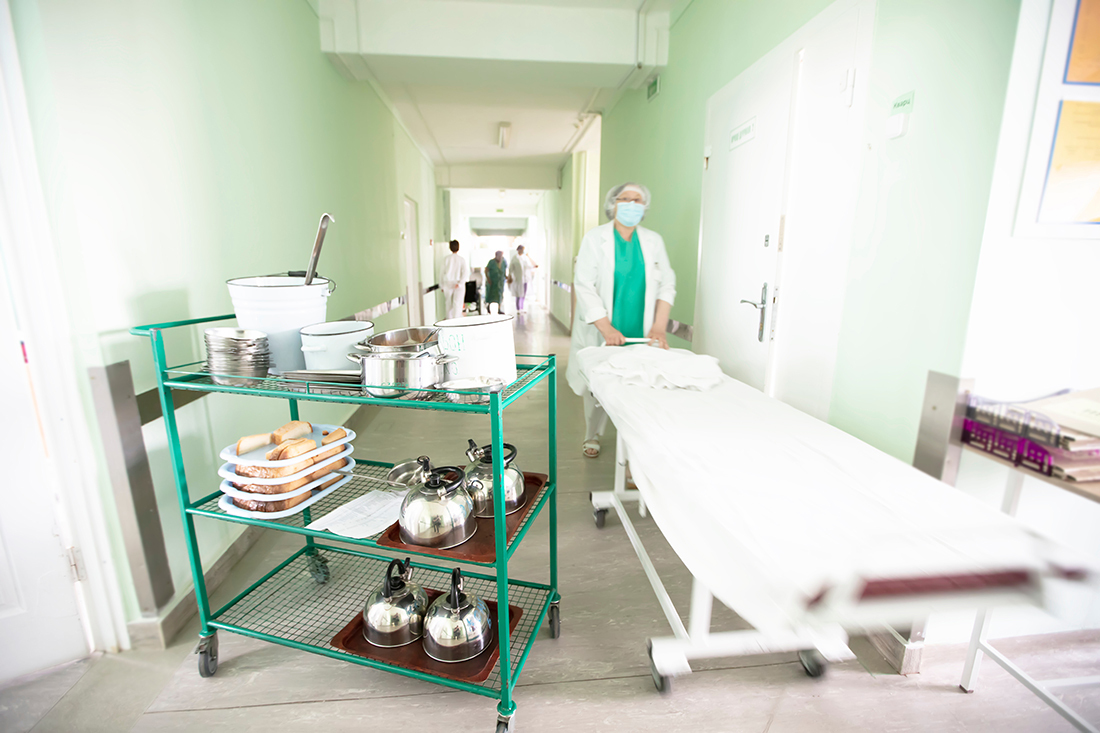
Hospitals, rehabilitation centers, skilled-nursing facilities, assisted-living communities, and other healthcare environments depend on meal carts to move substantial loads through patient and resident areas. Those carts must maneuver predictably, protect finished floors, withstand frequent cleaning, provide effective braking, and remain manageable for dietary and foodservice employees.
They also need to move quietly.
The caster is where the cart meets the building. Selecting the right caster system can help reduce rolling noise, vibration, push/pull effort, unstable movement, and premature component wear.
Why Quiet Meal-Cart Mobility Matters
Healthcare facilities operate around the clock, but patients and residents still need opportunities to rest.
The current Hospital Consumer Assessment of Healthcare Providers and Systems survey includes questions about whether patients were able to get the rest they needed and whether the area around their room was quiet at night. These questions are part of the survey’s assessment of the restfulness of the hospital environment. Learn more about HCAHPS from CMS.
Meal delivery may occur early in the morning, during rest periods, and near rooms occupied by patients who are recovering, sleeping, or receiving treatment. In senior-living communities, carts may also travel through residential hallways where maintaining a calm, home-like atmosphere is important.

Quiet performance, however, cannot come at the expense of ergonomics.
A heavily loaded cart with wheels that are soft but difficult to roll may reduce some impact noise while increasing the force employees need to start, turn, and sustain movement. A harder wheel might reduce deformation under load but transmit more vibration into the cart.
The goal is not simply to select the softest wheel. It is to create a balanced mobility system that supports:
- Quiet rolling
- Low starting and sustained rolling force
- Controlled turning
- Predictable tracking
- Effective braking
- Floor protection
- Washdown and chemical resistance
- Sufficient load capacity
- Long-term durability
Shop Casters for Quieter, Easier Meal Rounds
A meal cart should not force a facility to choose between quiet operation and manageable movement.
The right caster system can help reduce rolling noise and vibration while supporting maneuverability, braking, sanitation, floor protection, and employee ergonomics. Getting there requires more than matching a replacement to the diameter of the old wheel.
Caster Connection evaluates the complete meal-cart application, including loaded weight, caster configuration, floor conditions, travel route, cleaning exposure, maneuverability, braking, noise, and push/pull requirements.
Explore our casters for meal-delivery carts and medical cart caster solutions.
What Makes a Meal-Cart Caster Quiet?
A quiet meal-cart caster typically combines a properly selected resilient wheel tread with smooth bearings, controlled swivel action, secure mounting, and enough load capacity to operate without excessive deformation.
But quietness is a system outcome—not merely a product label.
The sound produced by a meal cart can be affected by:
- Wheel material and tread hardness
- Wheel diameter and width
- Wheel and swivel bearings
- Swivel-raceway condition
- Caster mounting
- Cart construction
- Loose shelves, trays, doors, or hardware
- Wheel flat spots
- Debris wrapped around axles
- Floor joints and elevator gaps
- Transitions between carpet and hard flooring
- Uneven load distribution
- Cart speed
- Maintenance practices
Installing a quiet wheel on a worn, loose, or improperly sized caster does not guarantee a quiet cart. Likewise, replacing casters will not eliminate noise caused by loose tray racks, door latches, panels, or internal cart components.
The complete cart and travel route should be evaluated.
Common Sources of Meal-Cart Noise
Different sounds can point toward different mobility problems.
What Employees Hear or Feel | Possible Areas to Inspect |
Continuous rumbling | Hard wheel tread, rough flooring, worn tread, excessive cart vibration |
Repeated clicking | Flat spot, embedded debris, wheel damage, loose hardware |
Swivel chatter | Worn swivel section, loose mounting, caster flutter, uneven loading |
Squeaking or grinding | Wheel bearing, axle, swivel bearing, corrosion, lack of maintenance |
Abrupt banging | Small wheel diameter, elevator gap, threshold, floor joint, excessive speed |
Cart-body rattling | Vibration transmitted through wheels into trays, doors, panels, or shelves |
Pulling to one side | Uneven wear, mismatched casters, floor slope, alignment, load distribution |
These symptoms are useful starting points, but they are not substitutes for inspecting the cart under its normal operating conditions.
Nine Factors to Consider When Specifying Meal-Cart Casters
1. Maximum Loaded Cart Weight
Begin with the cart’s maximum operating weight—not its empty weight.
Include:
- The cart frame and enclosure
- Trays
- Food and beverages
- Plates and utensils
- Heating or refrigeration components
- Batteries and controls
- Accessories
- Any additional supplies routinely carried
Do not automatically divide the total load by the number of casters and assume each caster carries an equal share. Uneven floors, cart-frame deflection, concentrated equipment weight, and uneven loading can place more weight on certain casters.
An appropriate safety margin should be established for the actual cart design and operating environment.
2. Floors and Travel Route
A meal cart may encounter several surfaces during a single delivery round:
- Luxury vinyl tile
- Sheet vinyl
- Terrazzo
- Ceramic tile
- Sealed concrete
- Carpet
- Grouted joints
- Door thresholds
- Elevator gaps
- Expansion joints
- Ramps or sloped corridors
The same caster may perform differently on each surface.
Before specifying a replacement, map the cart’s complete route from the kitchen or staging area to patient or resident rooms. Identify the most difficult turn, largest gap, roughest floor, tightest doorway, steepest slope, and most common transition.
These conditions frequently determine which caster is appropriate.
3. Wheel Material
Wheel material affects noise, rolling resistance, floor protection, vibration transmission, load capacity, chemical compatibility, and service life.
Common material families include:
Resilient or high-rebound polyurethane

These wheels may provide a useful balance of load support, quiet operation, floor protection, and rolling performance. Formulations vary, so the specific wheel should be tested under the cart’s normal load.
Rubber and thermoplastic elastomers
Resilient rubber-type wheels may help cushion movement and reduce impact noise. Capacity, rolling resistance, flat-spotting, chemical exposure, tread wear, and floor-marking requirements should be reviewed.
Standard polyurethane
Polyurethane wheels are available in many hardness levels and constructions. Some provide excellent capacity and durability, but harder formulations may transfer more vibration and sound into the cart.
Nylon, phenolic, and other hard materials
Hard wheels may offer capacity or environmental advantages in certain applications, but they generally provide less cushioning and may transmit more floor impact and vibration.
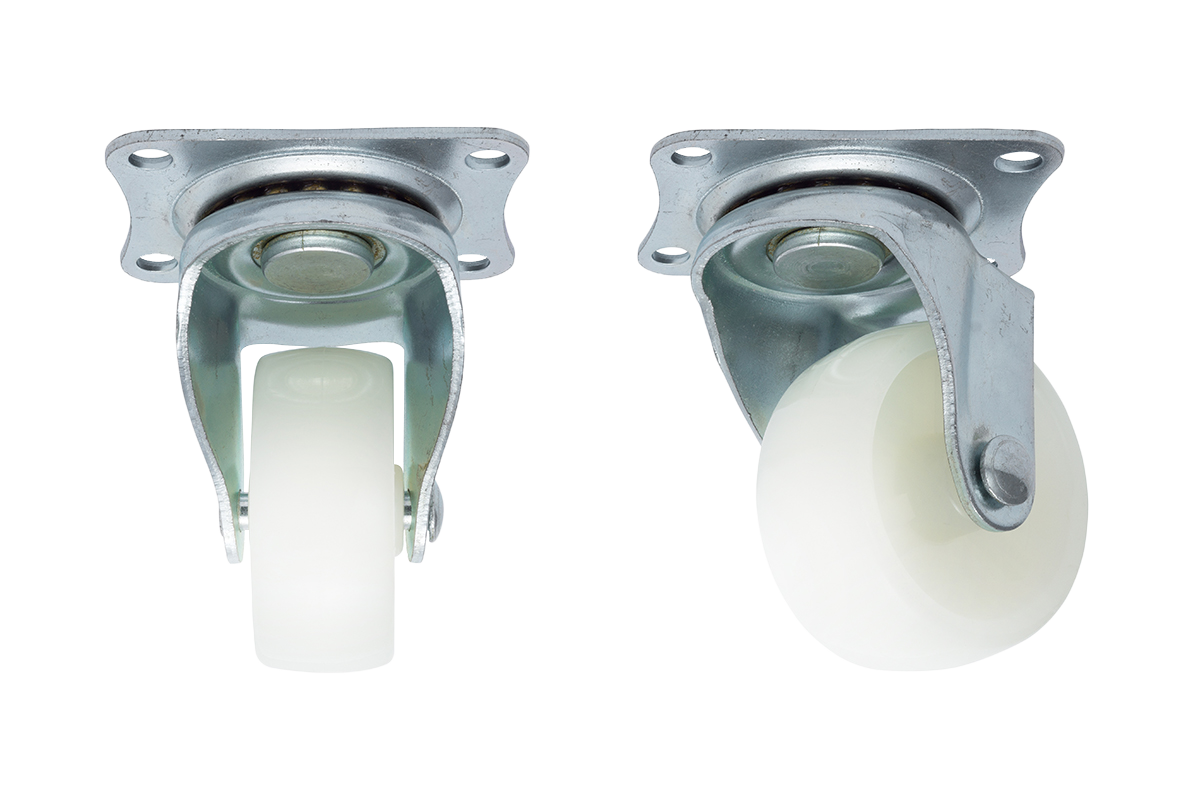
No wheel material is automatically best for every healthcare meal cart. The correct choice depends on load, floor, wheel diameter, duty cycle, cleaning practices, and the facility’s performance priorities.
4. Wheel Diameter and Width
Wheel diameter affects more than overall cart height.
A larger wheel will generally negotiate floor joints, debris, thresholds, and elevator gaps more easily than a smaller wheel. OSHA’s hospital ergonomics guidance recommends large, low-resistance wheels capable of rolling easily over mixed flooring and elevator gaps when selecting carts. Review OSHA’s hospital cart guidance.
Increasing wheel diameter, however, may change:
- Cart deck height
- Handle height
- Center of gravity
- Equipment clearance
- Brake accessibility
- Fit beneath heating or refrigeration components
Wheel width also influences load distribution, maneuverability, and contact with the floor. Wider is not automatically better; it must be evaluated with the wheel material and expected load.
5. Wheel and Swivel Bearings
The wheel is only one part of the caster.
Bearings influence how easily the wheel rotates and how smoothly the caster changes direction. Worn, contaminated, corroded, or poorly matched bearings can increase noise and operator effort even when the wheel tread remains usable.
For meal-delivery applications, consider:
- Expected load and travel frequency
- Manual, powered, or towed movement
- Washdown exposure
- Cleaning chemicals
- Exposure to food, grease, hair, or debris
- Bearing seals
- Maintenance requirements
- Swivel resistance under load
A caster that swivels freely when unloaded may behave very differently beneath a fully loaded meal cart.
6. Caster Configuration and Maneuverability
Caster layout affects both tracking and turning.
A traditional cart with two rigid and two swivel casters generally tracks predictably through long corridors. A four-swivel configuration can provide excellent maneuverability in tight spaces but may be more difficult to control over longer distances.
Directional locks can allow selected swivel casters to function temporarily like rigid casters, giving employees more control when transitioning between long hallways and confined serving areas.
The best configuration depends on:
- Cart length and width
- Turning radius
- Corridor length
- Elevator size
- Frequency of lateral positioning
- Handle location
- Loaded center of gravity
- Employee operating practices
Long or specialized meal carts may require a different caster pattern, but these configurations should be engineered and field-tested before being standardized.
7. Braking and Parking Requirements
Meal carts may need to remain stationary while employees open doors, remove trays, serve residents, or position the cart inside an elevator.
Possible braking options include:
- Wheel brakes
- Total-lock brakes
- Directional locks
- Central braking systems
- Specialty floor or directional locks
A wheel brake is not the same as a total-lock brake. A wheel brake restricts wheel rotation, while a total-lock brake typically restricts both wheel rotation and swivel movement.
Brake selection should account for employee reach, pedal access, footwear, load, floor slope, placement, and the number of brakes required. Unless a system is specifically rated and tested for the condition, a brake should not be assumed to hold a loaded cart safely on an incline.
Review common caster brake configurations.
8. Cleaning, Washdown, and Corrosion Resistance
Meal carts operate in an environment where sanitation is essential. Their casters may be exposed to water, food residue, grease, cleaning chemicals, disinfectants, and repeated washdown.
When reviewing caster construction, consider:
- Rig and mounting material
- Wheel material
- Wheel and swivel bearings
- Axles and fasteners
- Brake components
- Thread guards
- Lubrication
- Water temperature
- Cleaning-chemical concentration
- Washdown pressure
- Drying practices
A stainless-steel rig alone does not make the entire caster suitable for washdown. Bearings, axles, fasteners, seals, brakes, and wheel materials must also be compatible with the cleaning environment.
9. Movement Frequency and Duty Cycle
A meal cart that moves a few times per day has different requirements from one used continuously across multiple meal periods, floors, and shifts.
Document:
- Number of daily delivery rounds
- Approximate travel distance
- Maximum loaded weight
- Average cart speed
- Number of starts, stops, and turns
- Time spent stationary under load
- Use in elevators
- Manual versus powered movement
- Cleaning frequency
- Expected service life
Long stationary periods can also matter. Certain resilient wheel materials may develop temporary or permanent flat spots when left under load, particularly if the wheel is overloaded or poorly matched to the application.
Hospital and Senior-Living Applications Are Not Identical
Hospitals and senior-living communities share many foodservice mobility challenges, but their operating environments can differ.
Hospital Meal Carts
Hospital dietary carts may travel between kitchens, service elevators, nursing units, patient rooms, and staging areas. They may encounter long corridors, frequent elevator transitions, strict cleaning procedures, varied flooring, and meal rounds scheduled around clinical care.
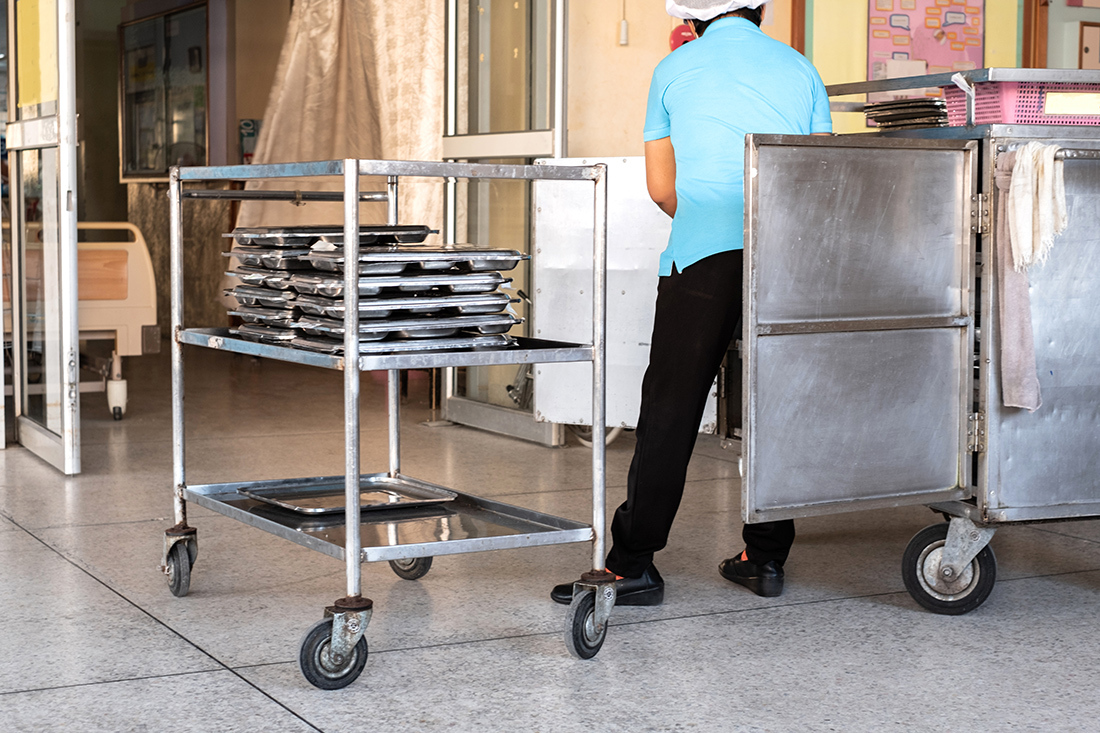
Important priorities may include:
- Quiet movement near patient rooms
- Low push/pull force
- Elevator-gap performance
- Maneuverability around medical equipment
- Washdown resistance
- Reliable brakes
- Frequent, multi-shift operation
Senior-Living Meal Carts
Assisted-living, skilled-nursing, and continuing-care communities often combine healthcare requirements with a residential atmosphere. Meal carts may move through carpeted corridors, dining rooms, resident hallways, smaller elevators, and common areas.
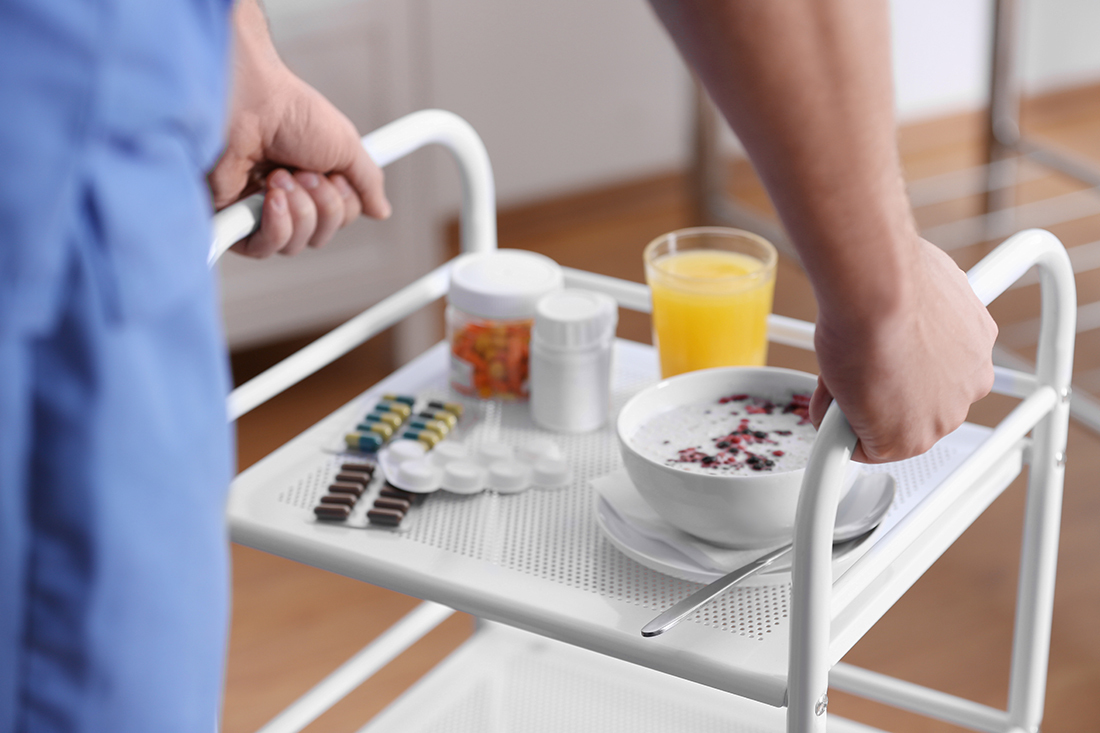
Important priorities may include:
- Quiet operation in residential spaces
- Smooth transitions between carpet and hard flooring
- Controlled positioning during room service
- Easy maneuverability for foodservice employees
- Floor protection
- Appearance
- Reliable performance during repeated meal rounds
The correct specification should reflect the actual facility rather than relying solely on the label “hospital caster” or “foodservice caster.”
Why Softer Is Not Always Better
When a cart is noisy, selecting the softest available wheel may appear to be the obvious solution.
A softer tread can help absorb vibration and reduce impact noise, but it may also deform more under load. Excessive deformation can increase rolling resistance, make turning harder, create heat, accelerate wear, or contribute to flat spotting.
A harder wheel may roll efficiently on a smooth floor but transmit more vibration through the cart frame.
The best-performing solution is often a wheel that provides enough resilience to reduce noise and vibration while retaining sufficient rebound, capacity, and dimensional stability for the load.
That balance is why field testing matters.
What One Hospital Learned From a Two-Cart Trial
An Ohio hospital wanted to make maintenance carts easier to push, but an initial harder-wheel solution increased noise. Caster Connection recommended testing CC Apex wheels on two carts before expanding the change.
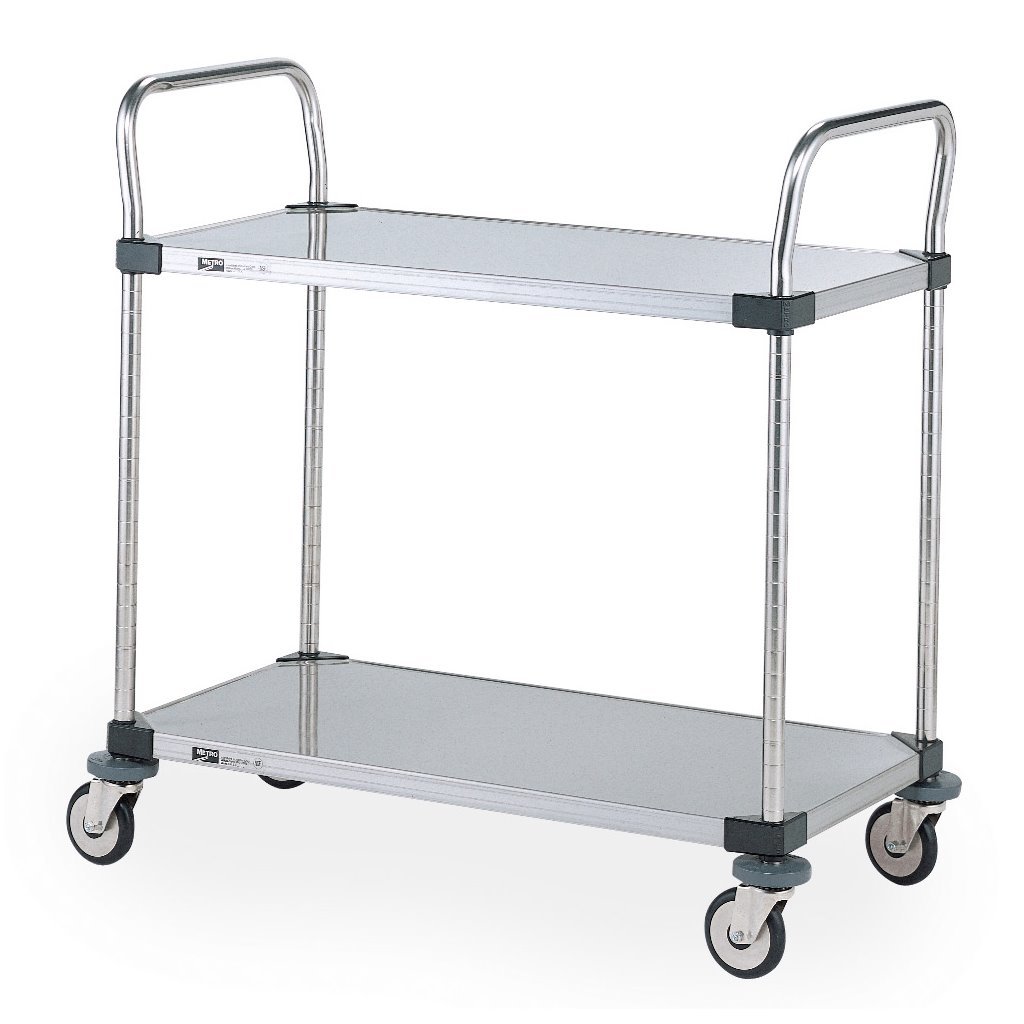
After the trial, the hospital’s maintenance team reported a substantial reduction in noise along with smoother, easier cart movement. The hospital then began converting additional carts.
The result was specific to that hospital’s carts, loads, floors, and operating conditions, so it should not be interpreted as a guarantee for every application. It does demonstrate the value of testing a candidate wheel on a limited number of carts before changing an entire fleet.
A Practical Field Test for Replacement Meal-Cart Casters
Caster performance should be validated on the facility’s cart, floor, route, and load before a large fleet conversion.
A practical trial can follow these steps:
1. Establish the Baseline
Record the existing caster model, wheel material, diameter, mounting, overall height, brake arrangement, age, and visible condition.
Document the problems employees experience, such as:
- Excessive noise
- Difficult starting
- High sustained push force
- Poor turning
- Cart wandering
- Vibration
- Brake difficulty
- Wheel damage
- Frequent replacement
2. Recreate Normal Operating Conditions
Load the cart as it would be during a typical or demanding meal round. Test the cart on the actual route at a normal walking speed.
Include:
- Straight corridors
- Tight turns
- Elevators
- Door thresholds
- Carpet transitions
- Patient or resident hallways
- Staging and serving positions
3. Compare Under Consistent Conditions
Test the existing and candidate caster systems with the same:
- Cart
- Load
- Route
- Operator or operator group
- Approximate speed
- Floor conditions
This creates a more useful comparison than rolling two unloaded wheels across a workbench.
4. Evaluate More Than Noise
Capture observations for:
- Starting force
- Sustained rolling effort
- Turning effort
- Tracking
- Swivel response
- Vibration
- Threshold impact
- Braking
- Pedal accessibility
- Cart stability
- Employee feedback
- Cleaning performance
A sound meter may provide additional comparative data when measurements are taken consistently. A phone recording can help document obvious differences, but it should not be treated as a calibrated noise study.
5. Continue the Trial
A short demonstration may not reveal flat spotting, tread wear, corrosion, debris accumulation, or brake deterioration.
Inspect the trial casters after an appropriate operating period and document changes in performance before approving a fleet-wide replacement.
Preventive Maintenance for Quiet Meal Carts
Even a properly specified caster can become noisy or difficult to move if it is damaged, contaminated, or neglected.
OSHA recommends keeping carts in good repair, maintaining wheels, and ensuring wheel size and construction are appropriate for the facility’s flooring. Its nursing-home ergonomics guidance also recommends full-bearing wheels suited to the floor surface, accessible handles, wheel locks, and brakes for heavy carts.
A meal-cart inspection should check for:
- Debris wrapped around axles
- Hair, string, plastic, or food residue
- Flat spots
- Cracked, chunked, or separated tread
- Wheel wobble
- Worn or contaminated bearings
- Excessive swivel play
- Loose mounting hardware
- Bent caster legs
- Corrosion
- Damaged or difficult-to-operate brakes
- Mismatched wheel diameters
- Uneven caster height
- Cart-frame or mounting-plate damage
Employees should also listen for changes. A new click, squeak, grind, or rumble may be an early warning of wear or damage.
Inspection intervals should reflect cart usage, cleaning exposure, load, and facility maintenance procedures. High-use carts may require more frequent attention than backup equipment.
Meal-Cart Caster Specification Checklist
Before requesting a recommendation, gather as much of the following information as possible:
- Cart type and manufacturer
- Empty cart weight
- Maximum loaded weight
- Cart dimensions
- Number and configuration of casters
- Existing wheel diameter and width
- Existing overall caster height
- Mounting-plate or stem dimensions
- Floor surfaces
- Elevator-gap and threshold sizes
- Travel distance and frequency
- Manual, powered, or towed movement
- Desired caster configuration
- Brake or directional-lock requirements
- Washdown practices
- Cleaning chemicals
- Temperature exposure
- Current noise or mobility complaints
- Photos of the caster, mounting, cart, and floor transitions
Do not include patients, residents, personal information, or confidential facility information in application photos.
Frequently Asked Questions About Meal-Cart Casters for Healthcare
What are the best casters for hospital meal carts?
The best caster depends on the cart’s loaded weight, wheel size, flooring, travel route, maneuverability, washdown, braking, noise, and ergonomic requirements. Resilient polyurethane or rubber-type wheels are often considered for quiet operation, but the complete application must be evaluated.
What wheel material is quietest for a foodservice cart?
Resilient wheel materials generally absorb more floor impact than harder materials. However, tread formulation, load, diameter, bearings, floor condition, and cart construction all influence actual noise. A field trial is the most reliable way to compare candidate wheels.
Will a softer caster wheel make a meal cart harder to push?
It can. If a wheel deforms excessively under load, rolling and turning force may increase. The goal is to balance resilience with rebound, load capacity, and rolling efficiency.
Can larger wheels reduce meal-cart noise?
Larger wheels may cross floor joints, thresholds, and elevator gaps with less abrupt impact. They may also improve rolling performance. Their effect on cart height, center of gravity, clearance, and brake access must be considered.
Why is our meal cart still noisy after replacing the wheels?
The noise may be coming from worn swivel sections, loose mounting hardware, bearings, brakes, tray racks, doors, shelves, panels, or other cart components. The complete cart should be inspected under load.
Do hospital meal carts require stainless-steel casters?
Stainless construction may be appropriate for carts exposed to frequent washing, moisture, food residue, or corrosive chemicals. The correct rig, bearings, axles, brakes, and wheel materials depend on the facility’s sanitation procedures and operating environment.
Can existing meal carts be retrofitted with quieter casters?
Often, yes. The replacement must match the mounting dimensions and maintain appropriate overall height, load capacity, clearance, stability, and brake access. Changes in wheel diameter or caster height should be evaluated before installation.
Should casters be tested before replacing an entire fleet?
Yes. A controlled trial on one or more representative carts can reveal how the caster performs under actual loads, floors, turns, thresholds, cleaning procedures, and employee workflows.
Need Help Specifying a Quiet Meal-Cart Caster?
Complete a Complimentary Caster Needs Evaluation.
Share information about your cart, load, current casters, flooring, cleaning procedures, and mobility concerns. Our Caster Nerds will evaluate the application and help identify a caster system suited to your equipment, facility, and workflow.
Quiet the cart. Support your staff. Help protect the care environment.