Caster, Wheel & Brake Selection for Seismic-Sensitive Data Center Equipment

Caster, Wheel & Brake Selection for Seismic-Sensitive Data Center Equipment
Caster, wheel, and brake selection can affect data center equipment stability, vibration transfer, floor interaction, serviceability, and movement control. In seismic-sensitive environments, mobility systems should be evaluated alongside equipment weight, load distribution, floor conditions, restraint strategy, vibration sensitivity, utility flexibility, and braking requirements.
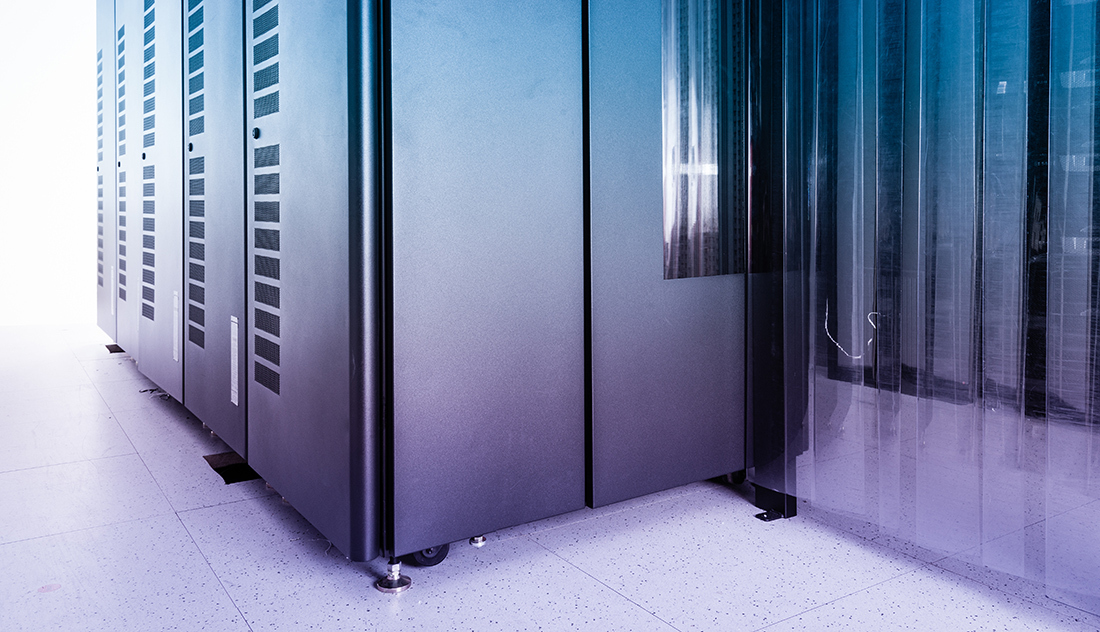
For modern data centers, mobility is no longer just about moving equipment from one place to another. Server racks, UPS systems, battery cabinets, cooling infrastructure, modular deployments, and maintenance systems all depend on physical stability. In seismic-ready environments, that stability is influenced by more than anchoring alone.
Earthquakes introduce acceleration, vibration, oscillation, displacement, and force transfer throughout a facility. Even when a building remains structurally sound, the equipment inside it may experience rack migration, cable strain, utility connection stress, floor interaction changes, vibration-induced component stress, or post-event serviceability issues.
That is why data center caster selection should be treated as part of a broader engineered stability strategy. Casters, wheels, brakes, and floor locks may seem like small components compared to racks, cooling systems, or power infrastructure, but they help define how equipment interfaces with the floor, how it moves, how it stops, how it remains positioned, and how it may respond to vibration.
In seismic-sensitive data centers, the right question is not simply, “What caster can carry this load?”
The better question is:
How does the mobility system support stability, vibration management, serviceability, and operational continuity within the complete infrastructure environment?
Why Mobility Systems Are No Longer Just Operational Conveniences
Historically, casters and mobility systems were often viewed as practical accessories. They made equipment easier to move, position, maintain, or reconfigure. That function is still important, especially in data centers where service access, equipment installation, modular deployment, and maintenance workflows depend on controlled mobility.
However, seismic-sensitive facilities require a deeper view.
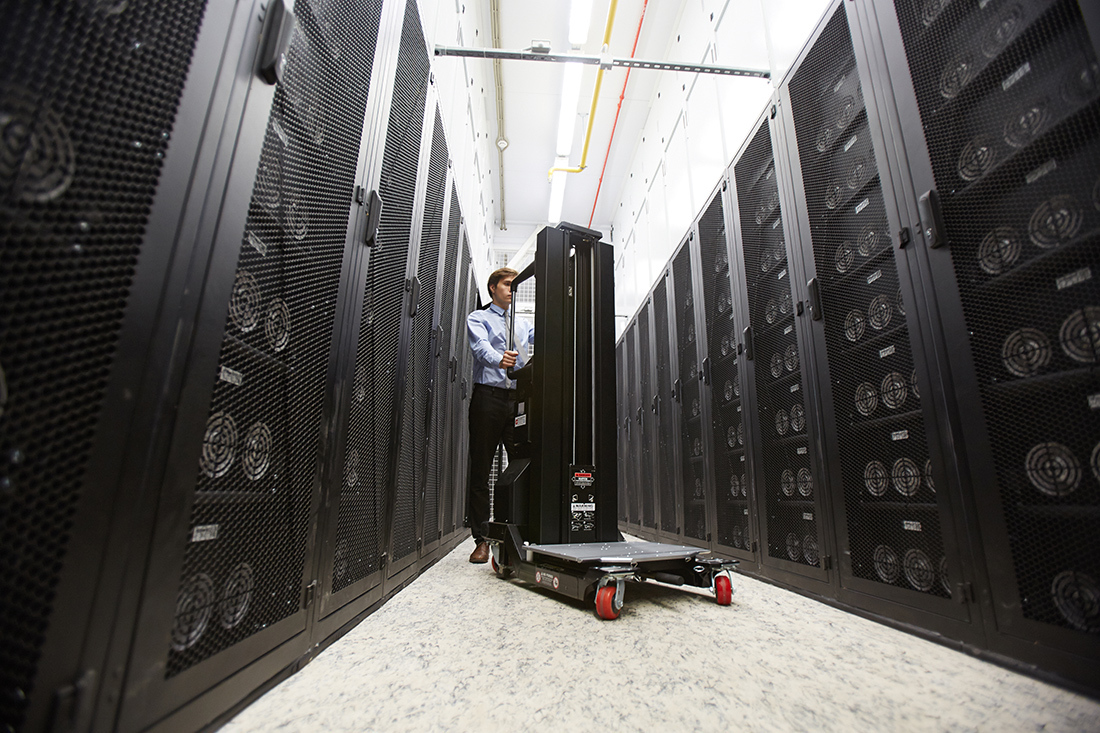
In these environments, mobility systems can influence how equipment behaves before, during, and after disruptive vibration or ground movement. A caster system is not isolated from the rest of the infrastructure. It is part of the connection between equipment, floor surfaces, load paths, brakes, vibration pathways, and service access.
Mobility systems can affect:
- Vibration transfer pathways
- Floor coupling behavior
- Energy dissipation
- Rack stability
- Acceleration transfer
- Movement control
- Load distribution
- Operational resilience
- Serviceability
- Maintenance access
- Equipment positioning
- Floor protection
For example, a heavy server rack on casters interacts with the floor differently than a rigidly anchored rack. A UPS system supported by heavy duty data center casters may create different load distribution and vibration considerations than a lightweight maintenance cart. A battery cabinet may require careful attention to weight concentration, floor protection, and positional stability. Cooling infrastructure with liquid connections may need mobility planning that accounts for both movement and utility flexibility.
In seismic-ready environments, mobility systems should be evaluated as part of the equipment’s full stability profile.
The Mobility System Is Part of the Infrastructure Response
During routine operation, a caster system supports movement, positioning, and load-bearing requirements. During a seismic event or vibration event, the same mobility system may influence how equipment couples with the floor, how forces move through the equipment, and how stable the equipment remains within its operating footprint.
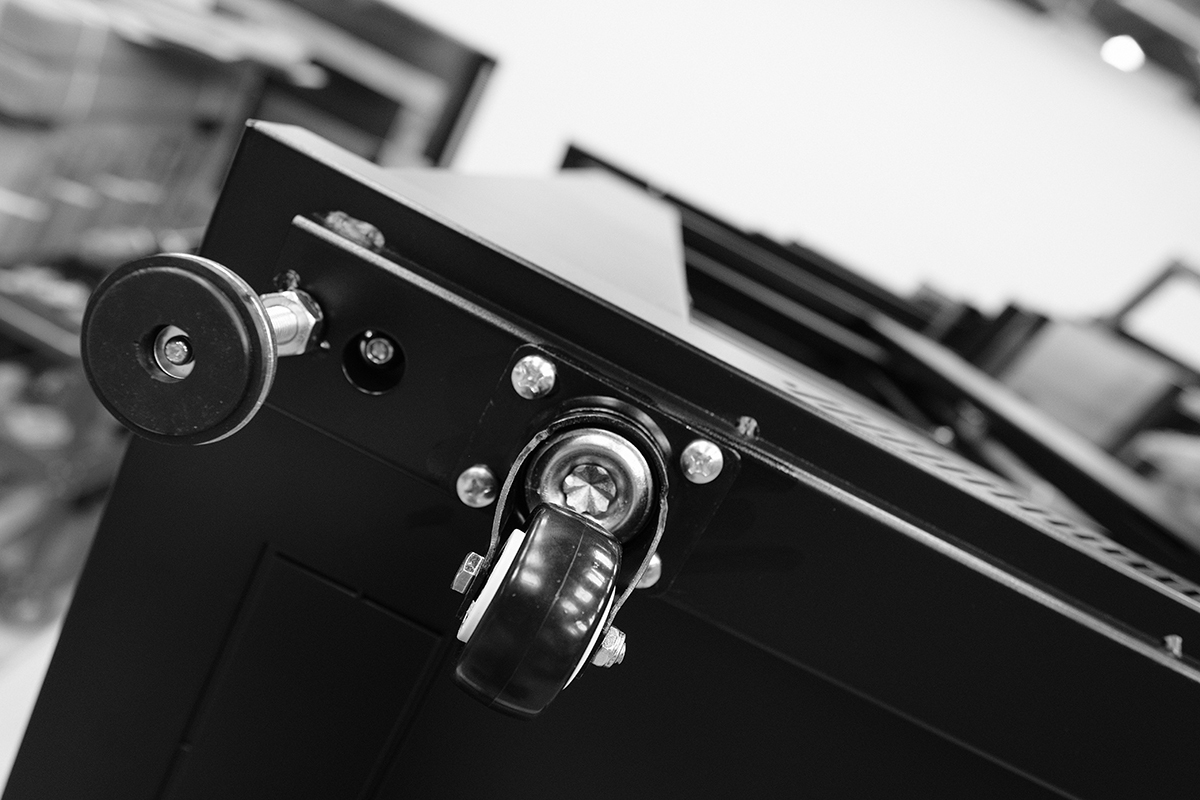
Caster performance depends on the interaction between:
- Wheel material
- Wheel diameter
- Load capacity
- Brake design
- Swivel geometry
- Bearing selection
- Floor interface
- Floor condition
- Load distribution
- Rack or equipment structure
- Utility connections
- Vibration isolation systems
- Equipment center of gravity
- Service access requirements
In seismic-sensitive facilities, a caster should not be evaluated only by load capacity. It should also be evaluated by how it interacts with vibration, braking, floor conditions, equipment sensitivity, and maintenance requirements.
This is especially important for dense data center environments where even limited displacement can create operational consequences. A small shift in equipment position may strain cables. A vibration pathway may increase stress on sensitive electronics. A floor lock or brake may improve positional stability but also change how forces transfer through the system. A wheel material may improve damping but increase rolling resistance or deflection.
The mobility system is one piece of a larger infrastructure response.
That larger response includes restraint, isolation, damping, controlled displacement, utility flexibility, cable management, rack design, floor conditions, and post-event inspection planning. Selecting the right caster, wheel, brake, or floor lock requires understanding how those elements interact.
Wheel Materials and Vibration Behavior
Wheel material is one of the most important factors in data center caster selection. It affects not only how equipment moves, but also how equipment interacts with vibration, shock, floors, and load.
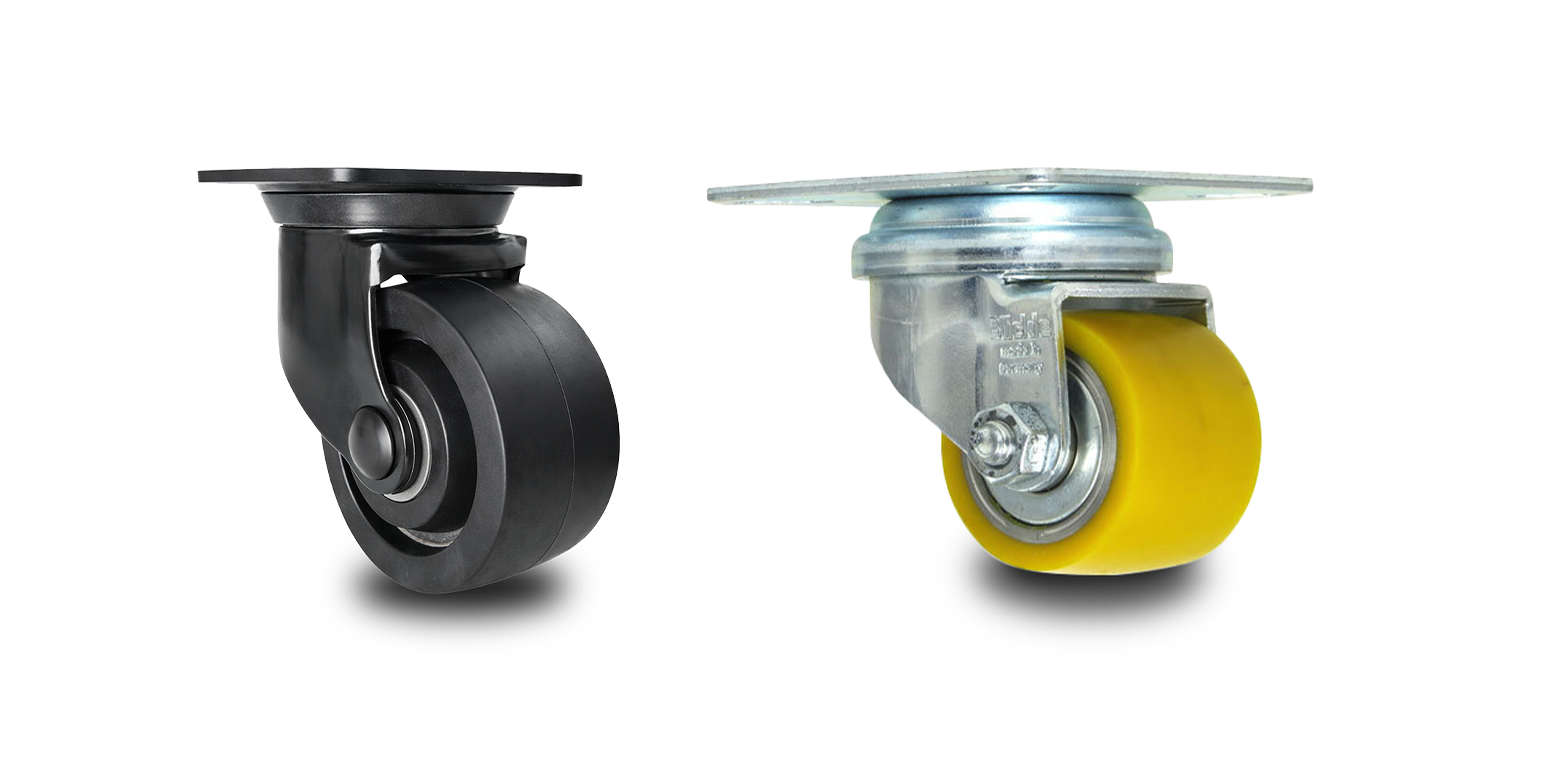
In seismic-sensitive environments, wheel material can influence:
- Vibration transmission
- Damping behavior
- Shock transfer
- Rolling resistance
- Floor protection
- Energy absorption
- Oscillation characteristics
- Equipment movement effort
- Load distribution
- Long-term serviceability
This matters because wheel selection is not just a mobility decision. It can affect how force travels between the floor and the equipment.
A wheel that performs well for rolling efficiency may not offer the same damping behavior as another material. A wheel that absorbs vibration well may introduce more deflection under load. A material that protects floors in one environment may not be ideal for another floor surface, load profile, or movement requirement.
There is no universal best wheel material for every seismic-sensitive data center application. The right choice depends on equipment weight, floor conditions, vibration sensitivity, movement frequency, braking requirements, environmental conditions, and operational goals.
Softer or Elastomeric Wheel Materials
Softer or elastomeric wheel materials may be useful where damping, shock absorption, noise reduction, or floor protection are important.

Potential benefits may include:
- Greater vibration absorption
- Reduced shock transfer
- Improved damping characteristics
- Quieter movement
- Better floor protection in some applications
- Reduced harshness when moving equipment across floor irregularities
These characteristics can be valuable in facilities where sensitive equipment may be affected by vibration, where floors must be protected, or where movement should be smoother and quieter.
However, softer wheel materials also involve tradeoffs.
Potential tradeoffs may include:
- Increased deflection
- Higher rolling resistance
- Altered dynamic response under load
- Possible limitations under very high loads or harsh conditions
- Greater push/pull effort depending on equipment weight and floor surface
For heavy AI racks, UPS systems, battery cabinets, or dense equipment platforms, deflection and rolling resistance can become significant. A wheel that provides damping benefits may still need to be evaluated carefully against load capacity, floor conditions, and operational movement requirements.
Harder Wheel Materials
Harder wheel materials may be preferred in applications where high load capacity, reduced deformation, and rolling efficiency are primary concerns.
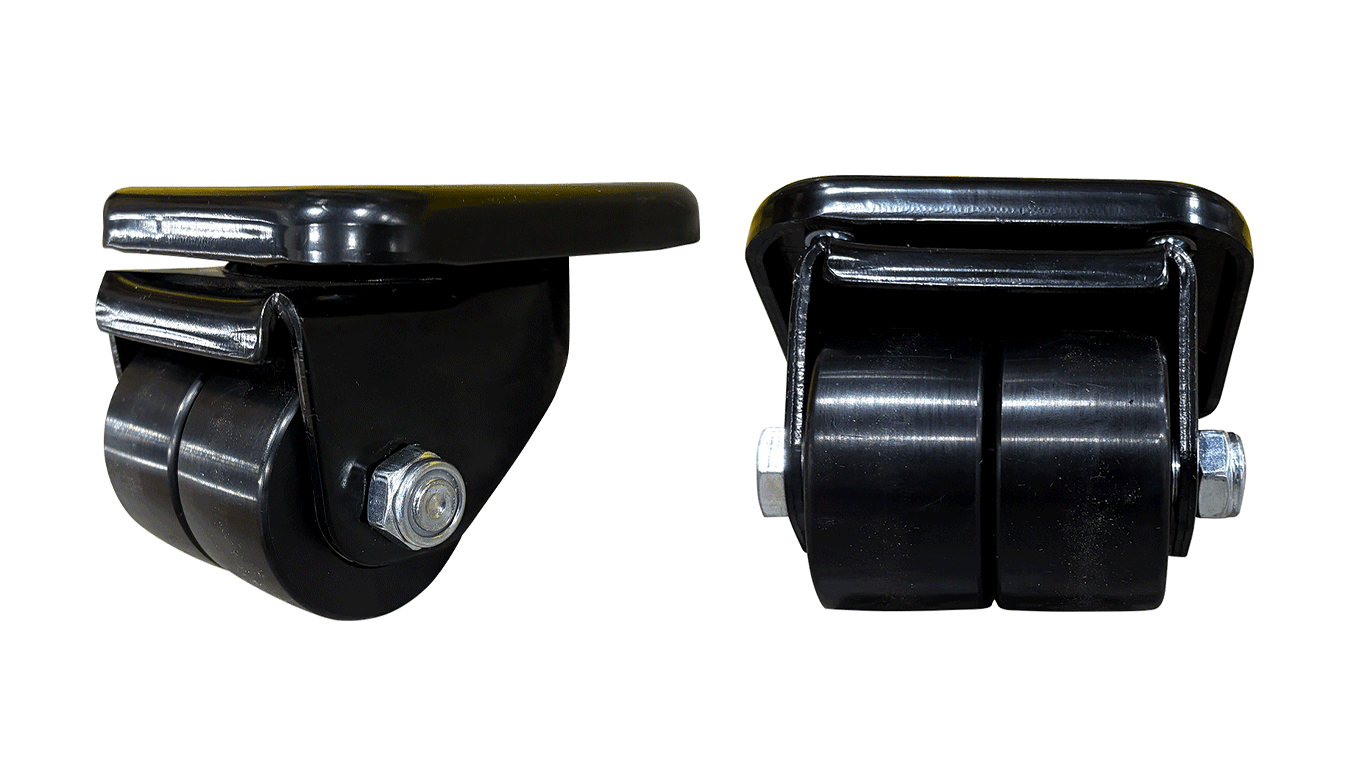
Potential benefits may include:
- Improved rolling efficiency
- Reduced deformation
- Higher load capacity
- Better performance under certain heavy-load conditions
- Lower rolling resistance in some applications
- Improved durability depending on floor conditions and use case
These characteristics can be useful for heavy duty data center casters, high-load equipment, or applications where frequent movement and efficient rolling are priorities.
However, harder wheel materials may also create tradeoffs.
Potential tradeoffs may include:
- Increased vibration transfer
- Reduced damping capability
- More direct energy transmission
- Greater potential floor impact depending on surface and load
- Less forgiveness over uneven or imperfect flooring
In seismic-sensitive environments, these tradeoffs matter. A harder wheel may support the load and roll efficiently, but it may also transmit more vibration into the equipment structure. That does not make it the wrong choice. It simply means wheel material should be selected based on the complete application.
The goal is not to choose the softest or hardest wheel by default. The goal is to select the wheel material that best supports load, floor protection, vibration behavior, movement control, and serviceability.
Why Wheel Selection Is Part of the Seismic Engineering Conversation
Wheel selection is no longer simply a mobility decision. In seismic-sensitive environments, it can influence vibration behavior, force transfer, floor interaction, and equipment stability.
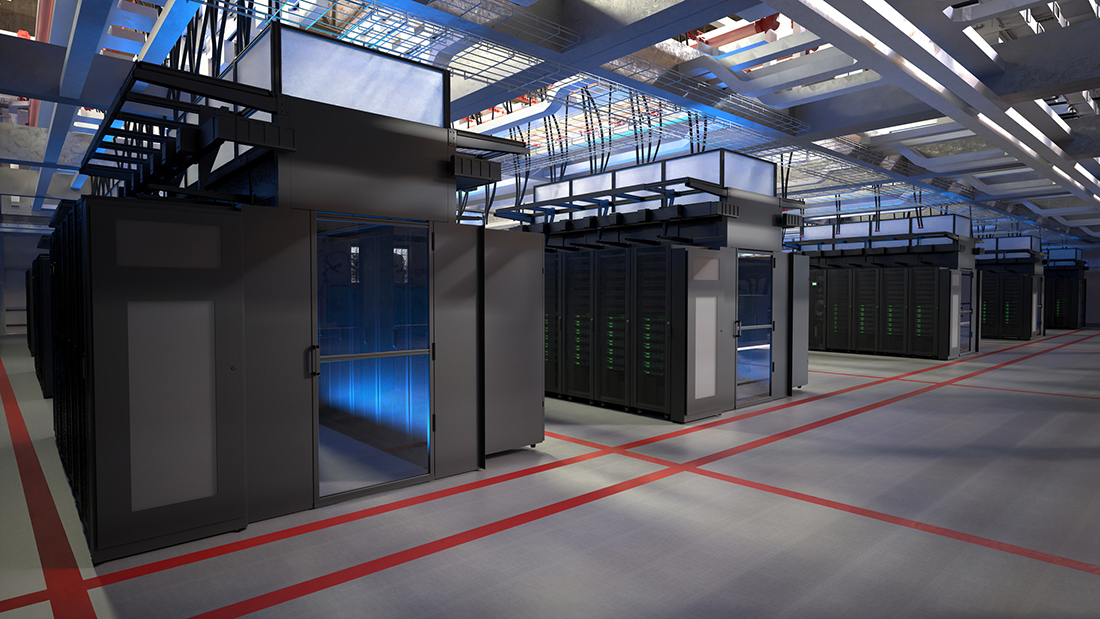
This is a critical point for data center operators and facilities teams. A caster wheel is part of the interface between equipment and the facility floor. That interface can affect how movement begins, how movement stops, how vibration is transferred, and how the equipment behaves when exposed to dynamic forces.
For seismic-ready data centers, wheel selection should be evaluated in relation to:
- Equipment weight
- Center of gravity
- Load distribution
- Floor condition
- Floor flatness
- Surface material
- Movement frequency
- Shock and vibration sensitivity
- Brake strategy
- Floor lock usage
- Utility flexibility
- Maintenance access
- Rack or equipment structure
For example, server rack casters may need to support precise positioning, controlled movement, and sensitive equipment protection. Casters for UPS systems may need to account for high static loads and service access. Battery cabinet casters may need to address concentrated loads and floor protection. Cooling equipment casters may need to account for liquid connections and alignment.
In each case, wheel selection influences more than whether the equipment can roll. It can influence how that equipment behaves as part of a seismic-sensitive infrastructure system.
Braking Systems as Stabilization Systems
Braking systems are often discussed as movement-control features. They help keep equipment from rolling, drifting, or moving unintentionally during stationary use, service, or positioning.
In seismic-sensitive environments, braking systems should also be viewed as stabilization interfaces.
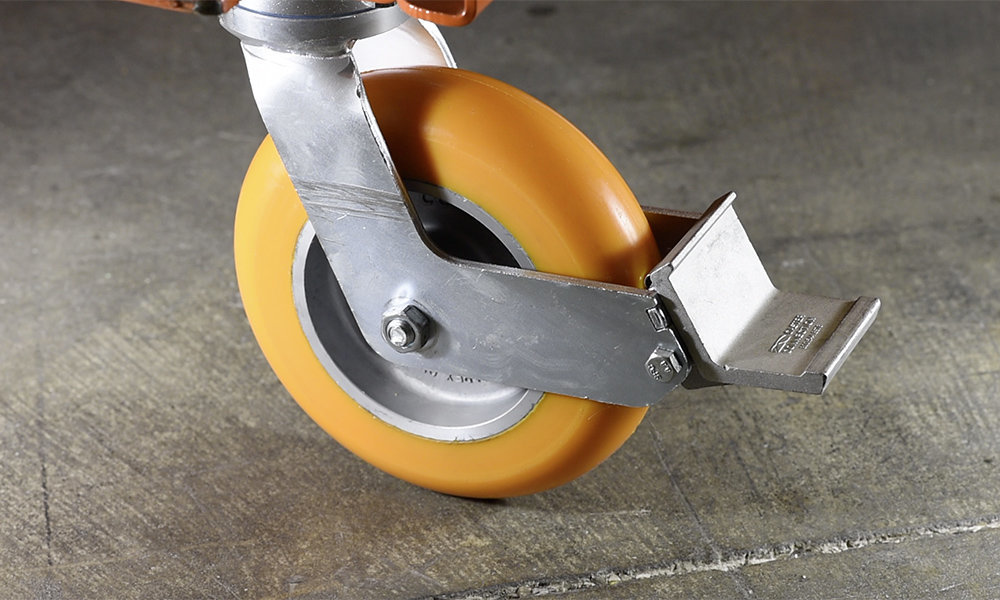
Caster brakes for data centers can influence the relationship between:
- Equipment
- Casters
- Floor surfaces
- Vibration pathways
- Force transfer mechanisms
- Maintenance access requirements
- Positional stability
- Serviceability
This does not mean a brake alone creates seismic readiness. It does not. But a braking strategy can play an important role in how equipment is positioned, stabilized, and maintained.
Brakes should be evaluated based on the full application, including equipment weight, caster configuration, wheel material, floor conditions, vibration sensitivity, and service requirements. In some cases, braking may support controlled placement and reduce drift. In other cases, a highly rigid braking configuration may affect how force transfers into the equipment.
That is why braking systems should not be selected in isolation.
Total Lock Brakes and Positional Stability
Total lock brakes are designed to restrict both wheel rotation and swivel movement. This makes them different from brake types that only stop wheel rotation.

For data center equipment, total lock brakes may help:
- Reduce caster drift
- Improve positional stability
- Reduce equipment migration
- Support controlled placement
- Stabilize equipment during service or stationary use
- Maintain equipment orientation more effectively than wheel-only brakes
- Improve operator control during maintenance or reconfiguration
In a data center, this can be especially useful for equipment that must remain precisely positioned during service or operation. Server racks, maintenance systems, carts, and certain support equipment may benefit from controlled positioning and reduced caster swivel movement.
However, important nuance is required.
Highly rigid locking systems may also increase direct force transfer into the equipment structure, which is why braking systems should be evaluated within the complete seismic environment rather than selected in isolation.
A total lock brake may improve positional stability, but the broader system still needs to account for vibration transfer, floor interaction, utility flexibility, equipment sensitivity, and applicable engineering requirements. Total lock brakes should be considered one component of a larger mobility and stabilization strategy.
Floor Locks and Force Coupling
Floor locks are another important consideration for data center equipment stability. Unlike caster brakes, which act on the caster or wheel assembly, floor locks create direct contact with the floor to add stationary support.
Floor locks can:
- Add stationary support
- Reduce wheel-based movement
- Improve equipment stabilization
- Help resist migration during vibration events
- Support stationary service or maintenance conditions
- Reduce reliance on wheel contact alone when equipment is parked
In some applications, floor locks for data center equipment may help stabilize carts, racks, service platforms, or other mobile systems when they are not being moved.
However, floor locks also create direct coupling between the equipment and floor. That can change how forces transfer through the system.
Direct floor coupling may:
- Create stronger force transfer pathways
- Change the equipment’s vibration response
- Depend heavily on floor construction, equipment mass, and damping strategy
- Affect how the equipment behaves under vibration
- Require careful coordination with the broader stability plan
Floor locks should not be presented as replacements for seismic anchoring, rack certification, or structural engineering requirements. They are one potential component of a broader stabilization strategy.
The best use of floor locks depends on the equipment, floor surface, load, movement requirements, service access, and vibration sensitivity. In some cases, they may improve stationary stability. In others, they may need to be combined with damping materials, isolation strategies, flexible utilities, or other mitigation measures.
Mobility Considerations for Specific Data Center Equipment
Different data center systems create different mobility challenges. A caster configuration that works for one type of equipment may not be appropriate for another. This is why application-specific evaluation is essential for seismic-sensitive environments.
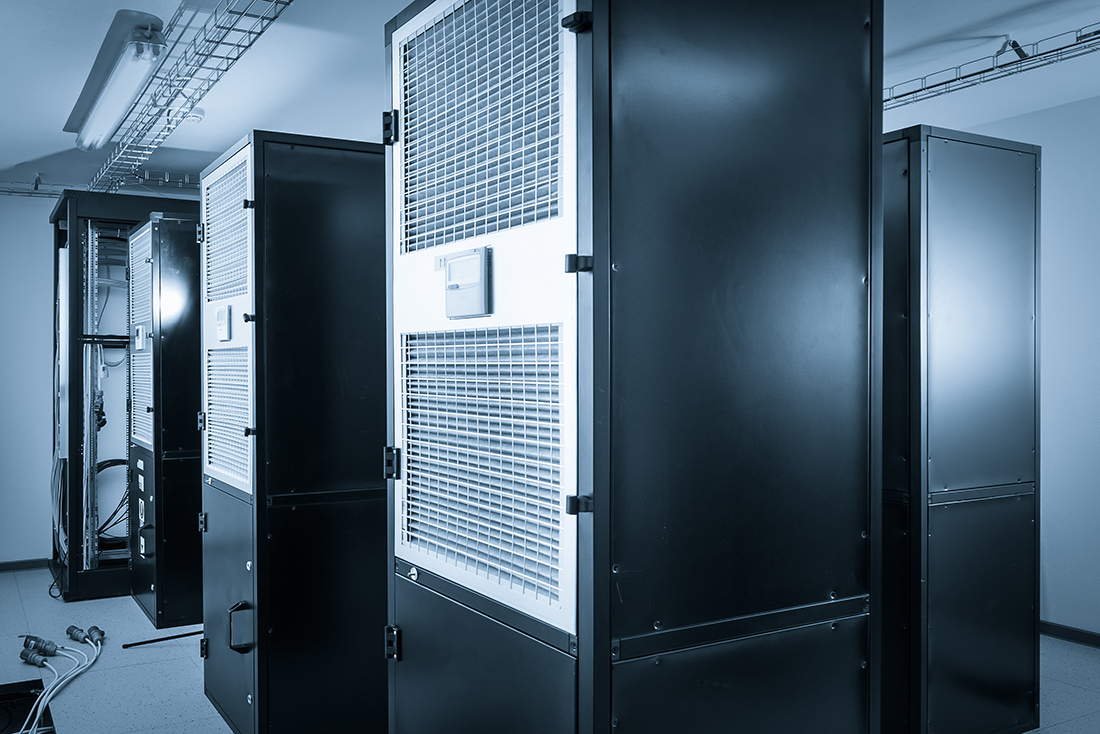
Server Racks and Cabinets
Server racks and cabinets are often the first equipment category people think of when discussing data center caster selection. In seismic-sensitive environments, server rack casters should be evaluated carefully because racks may support dense, expensive, and highly interconnected technology.
Key considerations include:
- Rack weight
- Load distribution
- Center of gravity
- Cable strain
- Alignment needs
- Floor conditions
- Vibration sensitivity
- Service access
- Brake requirements
- Utility connection flexibility
A server rack that moves unexpectedly may create cable strain, alignment issues, aisle obstruction, or maintenance hazards. A rack that is too rigidly coupled may transfer more vibration into sensitive equipment. The right mobility strategy depends on how the rack is used, whether it must be moved for service, what equipment it supports, and how it fits into the broader seismic mitigation plan.
UPS Systems
UPS systems often involve high static loads, critical electrical connections, and strict serviceability requirements. Casters for UPS systems should be evaluated with both mobility and stability in mind.
Key considerations include:
- High static load
- Maintenance requirements
- Battery and electrical connections
- Stability during service
- Floor loading
- Brake or floor lock strategy
- Movement frequency
- Utility connection protection
Because UPS systems support operational continuity, their mobility systems should not be selected based only on load rating. Floor interaction, braking strategy, vibration exposure, and service access may all influence the final caster recommendation.
Battery Storage Systems
Battery cabinets and battery storage systems can create concentrated load and stability challenges. Battery cabinet casters should be evaluated carefully because these systems may be heavy, sensitive, and safety-critical.
Key considerations include:
- Weight concentration
- Load distribution
- Safety-critical positioning
- Utility connections
- Service access
- Floor protection
- Stationary stability
- Inspection requirements
Battery storage systems may require mobility for installation, maintenance, or replacement, but they also need stable positioning. Wheel material, brake selection, floor locks, and load capacity should be considered alongside the facility’s broader equipment layout and seismic-sensitive requirements.
Cooling Infrastructure
Cooling infrastructure is becoming more complex, especially as liquid cooling expands in high-density and AI data centers. Mobility planning for cooling systems should account for both mechanical stability and utility flexibility.
Key considerations include:
- Liquid connections
- Vibration sensitivity
- Alignment
- Thermal continuity
- Maintenance access
- Connection strain
- Equipment positioning
- Floor interaction
Cooling equipment may be sensitive to movement because it often depends on alignment, piping, hoses, pumps, or other utility connections. A mobility system must support serviceability without creating unnecessary risk to thermal continuity or connection integrity.
Modular Edge Deployments
Modular and edge data center deployments may face different mobility challenges than traditional centralized facilities. These environments may involve smaller footprints, varied site conditions, and regional seismic exposure.
Key considerations include:
- Smaller footprints
- Variable site conditions
- Regional seismic exposure
- Maintenance mobility
- Space constraints
- Local floor conditions
- Access limitations
- Equipment reconfiguration needs
Because edge environments can vary widely, caster and brake selection should be based on site-specific conditions. Mobility systems for modular deployments may need to account for installation, reconfiguration, maintenance, transport, and stabilization within tight spaces.
AI Infrastructure and the Next Phase of Mobility Engineering
AI infrastructure is changing the physical demands placed on data centers. As GPU density grows, rack weights increase, and liquid cooling expands, mobility systems may need to support heavier, denser, and more interconnected equipment.
AI infrastructure may require:
- Higher-capacity mobility systems
- More sophisticated damping strategies
- Better stabilization methods
- Careful wheel material selection
- Integrated vibration isolation planning
- Greater attention to utility connection flexibility
- More detailed load distribution analysis
- Stronger focus on serviceability and floor interaction
As AI racks become heavier and more thermally complex, caster selection must account for more than movement. It must account for load concentration, vibration behavior, floor interaction, braking strategy, and long-term serviceability.
This is especially important because AI environments often combine several risk factors at once: heavy equipment, dense layouts, expensive hardware, liquid cooling lines, tighter operational tolerances, and high uptime expectations.
A mobility system for AI data center rack mobility should consider:
- Total equipment weight
- Weight distribution across the caster footprint
- Wheel material and floor protection
- Push/pull effort
- Braking and locking requirements
- Vibration and shock transfer
- Cable and liquid-cooling connection flexibility
- Maintenance access
- Post-event inspection requirements
AI infrastructure does not eliminate the need for mobility. In many cases, it makes mobility planning more important because equipment is heavier, more valuable, and more tightly connected to surrounding systems.
Seismic Mobility Evaluation Checklist
A seismic mobility evaluation can help data center teams identify where caster, wheel, brake, and floor lock decisions may affect stability, vibration behavior, and serviceability.
Use the following checklist as a starting point.
Data Center Seismic Mobility Evaluation Checklist
- Identify all mobility components supporting critical infrastructure, including casters, wheels, brakes, and floor locks.
- Assess the facility’s seismic zone and anticipated intensity.
- Evaluate equipment sensitivity to vibration, acceleration, and shock.
- Review existing restraint and isolation strategies.
- Confirm equipment weight, center of gravity, and load distribution.
- Examine wheel material compatibility with floor conditions and vibration goals.
- Review brake and floor lock requirements.
- Evaluate utility, cable, and liquid-cooling connection flexibility.
- Check whether vibration-damping materials, isolation pads, or platforms are used.
- Consider serviceability before, during, and after disruptive events.
- Document how mobility, restraint, isolation, and braking systems interact.
- Schedule periodic inspection and maintenance reviews.
This checklist should be used as part of a broader infrastructure review. It does not replace structural engineering, seismic anchoring analysis, equipment manufacturer requirements, or applicable code review.
However, it can help facilities teams ask better questions before selecting or replacing caster systems. It can also help identify whether a standard caster recommendation is sufficient or whether the application requires a more specialized evaluation.
Why Application-Specific Evaluation Matters
A mobility system optimized for one use case may not fit another. Data center equipment varies widely in weight, sensitivity, movement frequency, floor interaction, utility connections, and maintenance requirements.
For example:
- Heavy AI racks may need one caster, wheel, and brake strategy.
- Cooling infrastructure may require another.
- UPS systems may require another.
- Battery cabinets may require another.
- Maintenance carts may require another.
- Edge deployments may require another.
A caster system that performs well under a maintenance cart may not be appropriate for a battery cabinet. A wheel that provides helpful damping in one application may create too much deflection in another. A brake that supports positional stability in one environment may need to be paired with different stabilization or utility-flexibility measures in another.
Application-specific evaluation helps answer practical questions:
- What is the total equipment weight?
- How is the load distributed?
- What floor conditions will the caster encounter?
- How often will the equipment move?
- Does the equipment need to remain precisely aligned?
- Are there sensitive cables, hoses, or cooling connections?
- Is vibration damping a priority?
- Is rolling efficiency a priority?
- Are brakes or floor locks required?
- What happens after a vibration or seismic event?
- How will the system be inspected and maintained?
These questions are especially important in seismic-sensitive environments because mobility decisions can affect more than movement. They can affect stability, vibration transfer, force coupling, serviceability, and operational resilience.
How Caster Connection Approaches Seismic-Sensitive Applications
At Caster Connection, data center caster selection is not simply about matching a load rating to a wheel. It is about understanding the application, the environment, and the operational priorities behind the equipment.
Caster Connection can help assess:
- Mobility requirements
- Load capacity
- Equipment weight and center of gravity
- Wheel material performance
- Braking strategy
- Floor lock use cases
- Vibration considerations
- Floor interaction behavior
- Stabilization objectives
- Long-term serviceability
- Maintenance needs
- Floor conditions
- Movement frequency
- Operator effort
- Utility and cable flexibility
This application-specific approach is especially valuable for seismic-sensitive environments. In these settings, the caster system may influence how equipment interfaces with the floor, how it remains positioned, how it transfers vibration, and how it can be serviced over time.
Caster Connection can support conversations around:
- Server rack casters
- Heavy duty data center casters
- Casters for UPS systems
- Battery cabinet casters
- Cooling equipment mobility
- Maintenance carts and platforms
- Modular edge deployment mobility
- Brake and floor lock selection
- Wheel material vibration damping
- Shock absorbing casters
- Long-term caster maintenance
The goal is to help data center teams move beyond standard assumptions and toward mobility systems that align with their real operating environment.
Request a Caster Needs Evaluation
In seismic-ready environments, mobility is no longer just about movement. It is about engineered stability. Request a Caster Needs Evaluation to review your equipment, floor conditions, load requirements, braking strategy, vibration considerations, and mobility goals with Caster Connection’s team.
A Caster Needs Evaluation can help identify the caster, wheel, brake, and floor lock considerations that matter most for your application. Whether you are evaluating server racks, UPS systems, battery cabinets, cooling infrastructure, modular deployments, or maintenance mobility systems, Caster Connection can help assess the factors that influence stability, serviceability, and long-term performance.
Request a Caster Needs Evaluation today to support a smarter, more application-specific mobility strategy for seismic-sensitive data center equipment.
Engineering Note
Caster, wheel, brake, and floor lock recommendations should be evaluated alongside the facility’s seismic design criteria, rack specifications, equipment manufacturer requirements, utility connections, floor conditions, and applicable codes. Casters and mobility systems should not be presented as replacements for seismic anchoring, rack certification, or qualified structural engineering review. They should be considered one part of a broader seismic mitigation, vibration management, and operational continuity strategy.
Frequently Asked Questions
What caster wheel material is best for reducing vibration in data centers?
There is no universal best material. Softer wheel materials may provide better damping and shock absorption, while harder materials may offer higher load capacity and lower rolling resistance. The right choice depends on equipment weight, floor conditions, vibration sensitivity, movement frequency, floor protection goals, and service requirements.
Are total lock brakes useful for data center equipment?
Total lock brakes can help improve positional stability by locking both wheel rotation and swivel movement. They may help reduce caster drift, support controlled placement, and stabilize equipment during service or stationary use. They should be evaluated as part of the complete equipment, floor, and seismic mitigation strategy.
Are floor locks the same as caster brakes?
No. Caster brakes lock or restrict caster movement. Floor locks create direct contact with the floor to add stationary support. They serve different purposes and should be selected based on the equipment, floor conditions, load, movement requirements, and stabilization goals.
Can casters make data center equipment seismic-rated?
Casters alone should not be described as making equipment seismic-rated. Seismic readiness depends on the full system, including racks, anchoring, restraint, isolation, floor conditions, utility connections, and engineering requirements. Casters may support stability, serviceability, and movement control when evaluated as part of a broader seismic-sensitive mobility strategy.
Why is caster selection important for AI data centers?
AI data centers often involve heavier racks, denser equipment, liquid cooling, and tighter operational tolerances. These conditions make load capacity, vibration behavior, braking strategy, floor interaction, utility flexibility, and long-term serviceability more important.
What is the difference between total lock brakes and floor locks?
Total lock brakes restrict wheel rotation and swivel movement. Floor locks add stationary contact with the floor. Total lock brakes help control caster movement, while floor locks provide supplemental stabilization when equipment is stationary. Both should be evaluated within the complete application.
What should be included in a seismic mobility evaluation for data centers?
A seismic mobility evaluation should review equipment weight, center of gravity, load distribution, caster configuration, wheel material, brake and floor lock requirements, floor conditions, vibration sensitivity, utility flexibility, existing restraint and isolation strategies, and long-term maintenance needs.